What Happens Now?

On my last day in Stirling, I checked out early and dragged myself to the old bridge to watch the imposing Firth of Forth dissect the landscape into the future and the past: to its South ran the train lines that would take me to Edinburgh, kick-starting a 12-hour journey back to Nürnberg through Berlin; on its other side nestled the university, framed by the towering Wallace Monument and the Ochi Hills, the Scottish highlands further beyond, from where I just came out of a 3-day conference organised by the British Association for Contemporary Literary Studies (BACLS). After uncharacteristically sunny weather, the day had finally turned a more familiar grey, and between the overcast and the gaping hole vacated by the intense intellectual intimacy fostered over a period of time, I returned to myself, allowing the theme of the conference, What Happens Now?,” to percolate in my head. I am thinking of the 1967 film, The Graduate, where a torrid love affair between Benjamin Braddock (Dustin Hoffman), Elaine Robinson (Katharine Ross), and Elaine’s mother, Mrs Robinson (Anne Bancroft) culminates in a kinetic closing scene at the church, as Benjamin arrives to break up Elaine’s marriage to one Carl Smith (Brian Avery). Benjamin’s reckless gesture of love succeeds. Benjamin and Elaine fight off dissenting wedding guests and escape onto a bus, with Elaine still in her wedding gown. But as the bus drives on, their expressions turn from ecstatic to blank – “what do we do now?” – and the screen fades to black.

La Chimera

Weeks of unvarnished sunshine gave way to clouds and scattered thunderstorms, bringing about the sudden sense that summer was coming to an end, languid days and sweat quickly unspooling before me to evoke a dread that is not unlike the feeling you get before the roller coaster drops. Out of an instinct to insulate myself against the darkening days, I found myself retreating into a melancholic interiority, burnished by faithful company from raccoon memes, my Nintendo Switch, and the occasional nihilism, the third of which I had sought to escape from by indulging in my Yorck Unlimited subscription. In two weeks of false spring or doomed summer or a hugely misconceived notion of what the weather foretold, I caught about one movie every two days.

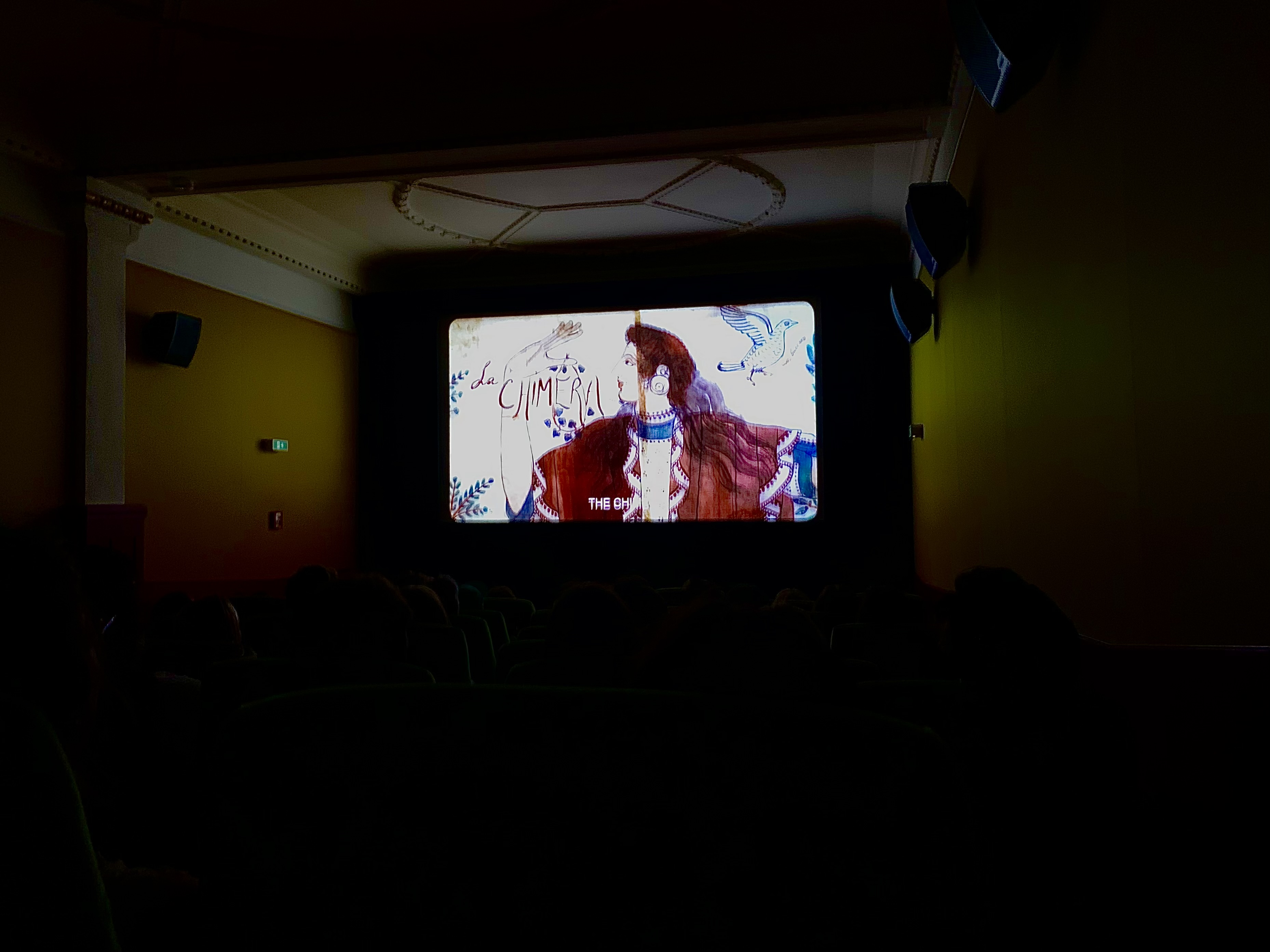
On my 2nd viewing of Alice Rohrwach’s La Chimera, a rare incursion of beauty. The film follows a British archaelogist, Arthur, who in his besotten white suit and foreign Italian accent, looks severely out of place in 1980s Tuscany. Arthur fills his time consorting with a band of local graverobbers to profit and be merry, except we see that he is not really merry. The source of his misery seems to be connected to a mysterious woman, who appears in dreamlike sequences, leaving behind the red thread of her knitted dress which Arthur tries to follow but fails. We later find out that the woman is Benamina, a former lover who has died. Throughout the film, Arthur is continually seized by his memory of her, and the audience is seized by the terrible truth that Arthur can unearth as many Etruscan treasures as he wants, but he can never recover a past forever lost to him. Interwoven with this symbolism of lost love is the myth of Eurydice and Orpheus. To symbolize their love, Orpheus ties a red string around Eurydice’s finger, promises he will find her wherever she goes, even in the underworld. Naturally a lot of the film involves the underworld, the underground digging for totemic offerings, the seedy underbelly of art-trafficking, but its most poignant iteration is also its most literal: towards the end, Arthur gets buried alive. He yells at first, beats his fists against the earth. But then he notices a red thread, follows it into an opening. Emerging from the ground, he sees Benamina and falls into her embrace.

A Tour Guide (믿을 수 있는 사람) 

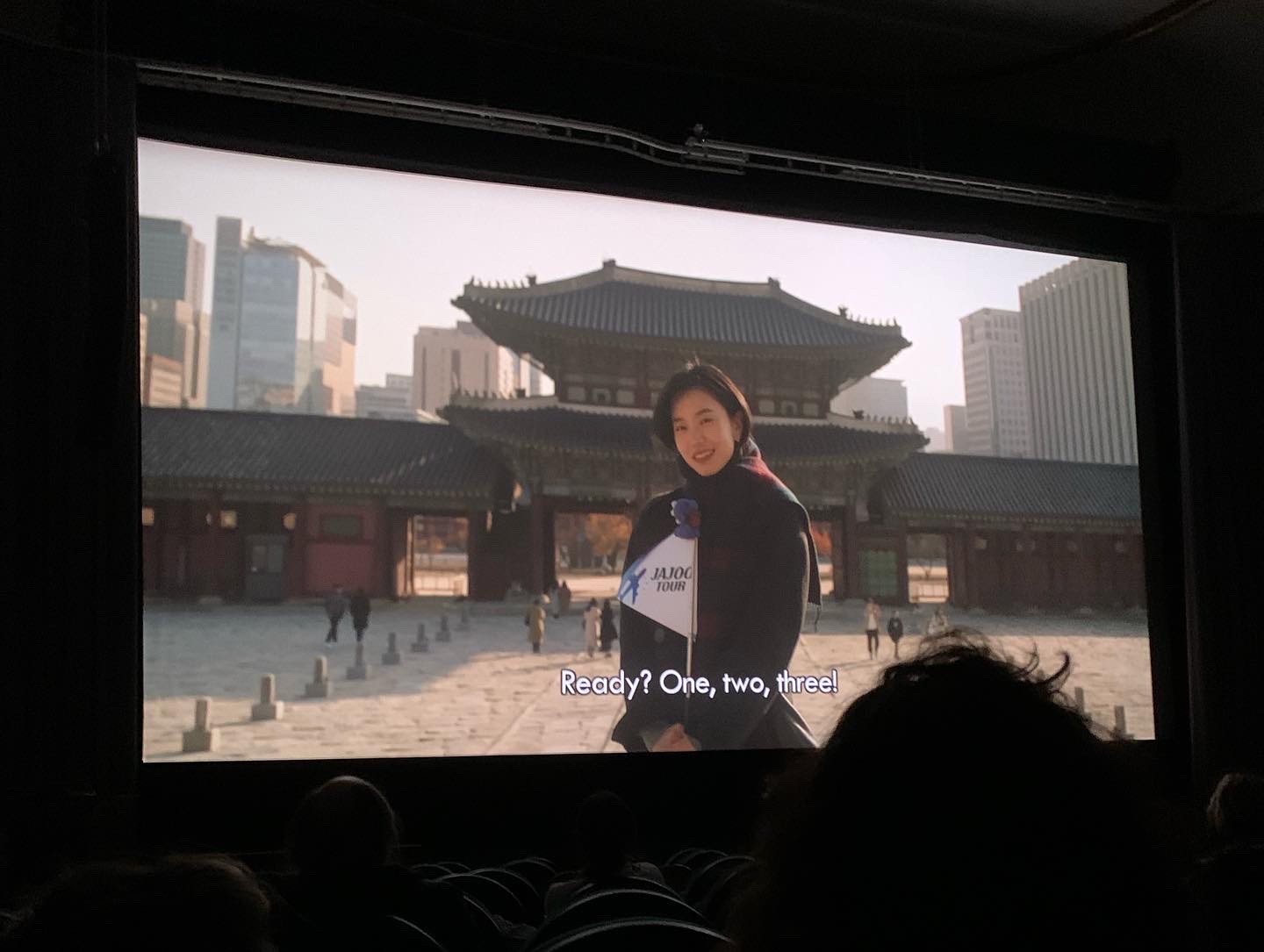
Kwak Eun-mi’s debut film, A Tour Guide (믿을 수 있는 사람), spotlights the life of a North Korean defector living in South Korea (Han-young, played by the effervescent Lee Seol), who works as a tour guide for Chinese tourists, introducing famous South Korean landmarks she is alienated from. Han-young may look like a South Korean but her accent and status as a refugee elicit constant consternation and suspicion and she struggles to make a home out of a foreign land. The limbo facing a refugee is captured superbly by Eun-mi as the audience are shown, in a slice-of-life manner, Han-young’s life in South Korea, three years of struggles punctuated with some happy moments.

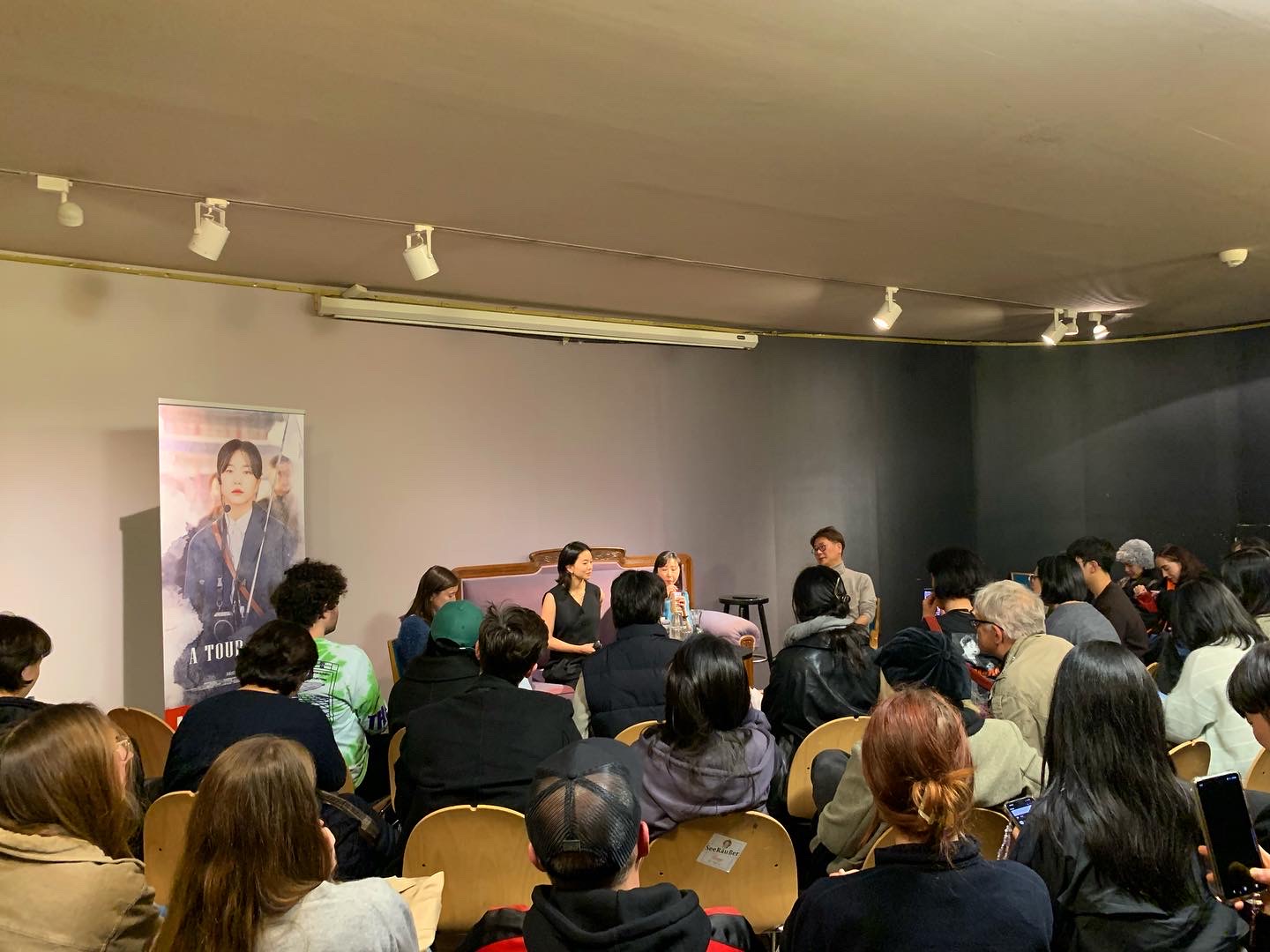
During the Q&A session after the movie, Lee Seol spoke briefly about her role as Desdemonda in Shakespeare’s Othello. It brought to my mind Desdemonda’s quote from Act 4 Scene 2: “His unkindness may defeat my life/But never taint my love.” It is these lines I paired with Han-young’s face of defiance in the movie’s ending shot, just as she is about to leave South Korea for an unknown destination. The dearth of kindness dealt to Han-young is reciprocated in equal measure, her unwavering resolve to forge a home for herself. It matters not where Han-young goes in the end, whether back to North Korea to see her mom, or to Germany to see her best friend, Jung-mi (played by the equally impressive Kyung-Hwa Oh), a fellow North Korean defector, or to somewhere else entirely. Especially for a migrant leading a precarious existence, home is not a single destination but a journey.

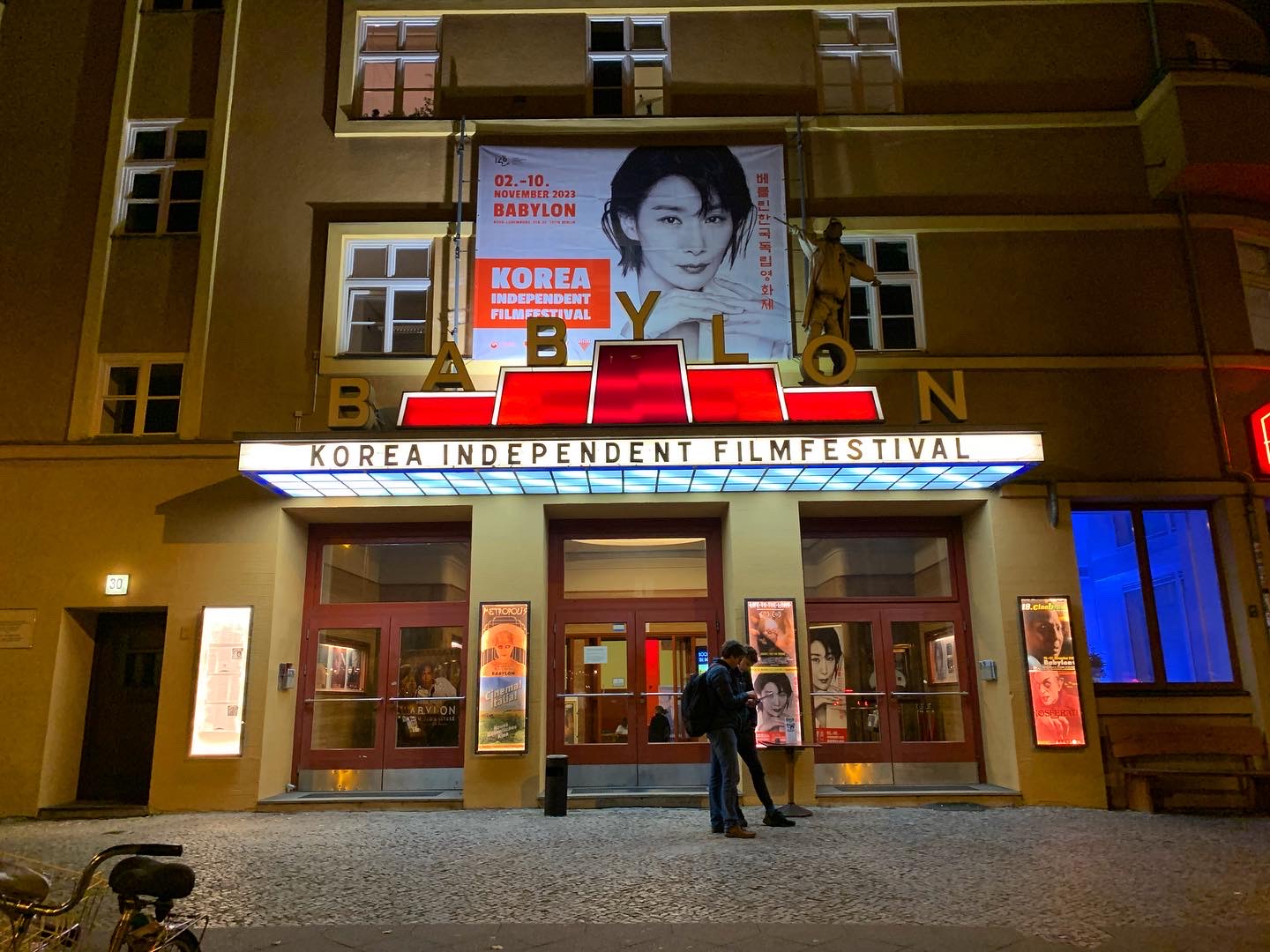
The Korean Independent Film Festival is screening at Babylon Berlin from 2 November to 10 November. More info can be found here: https://babylonberlin.eu/programm/festivals/korea-independent