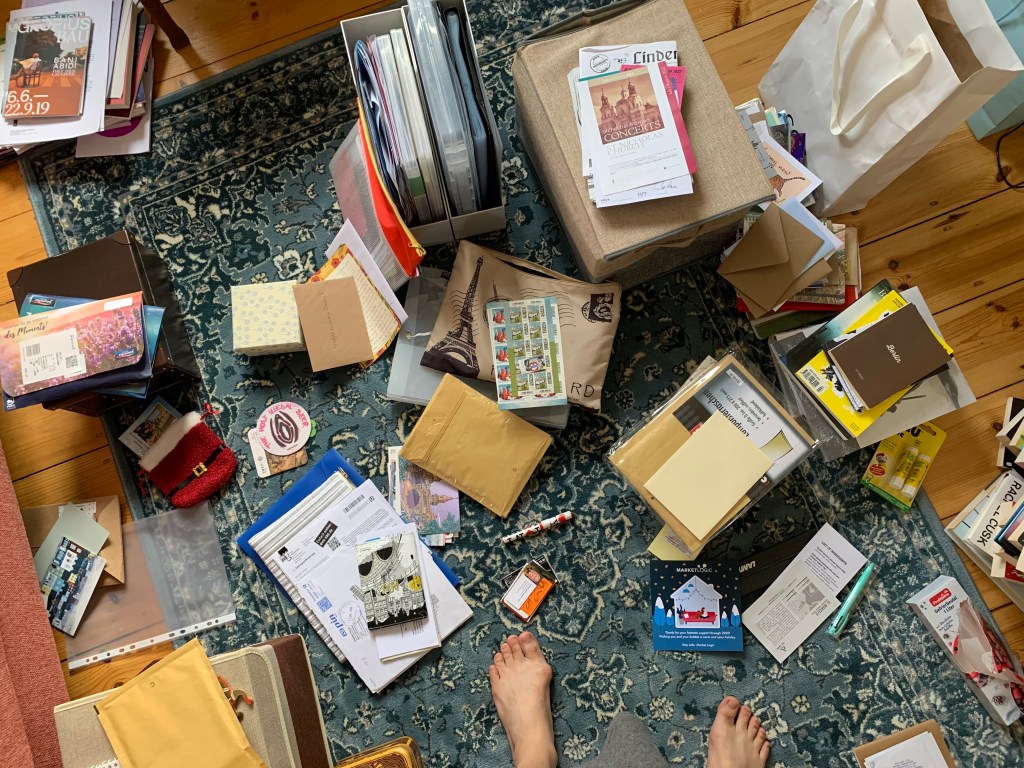
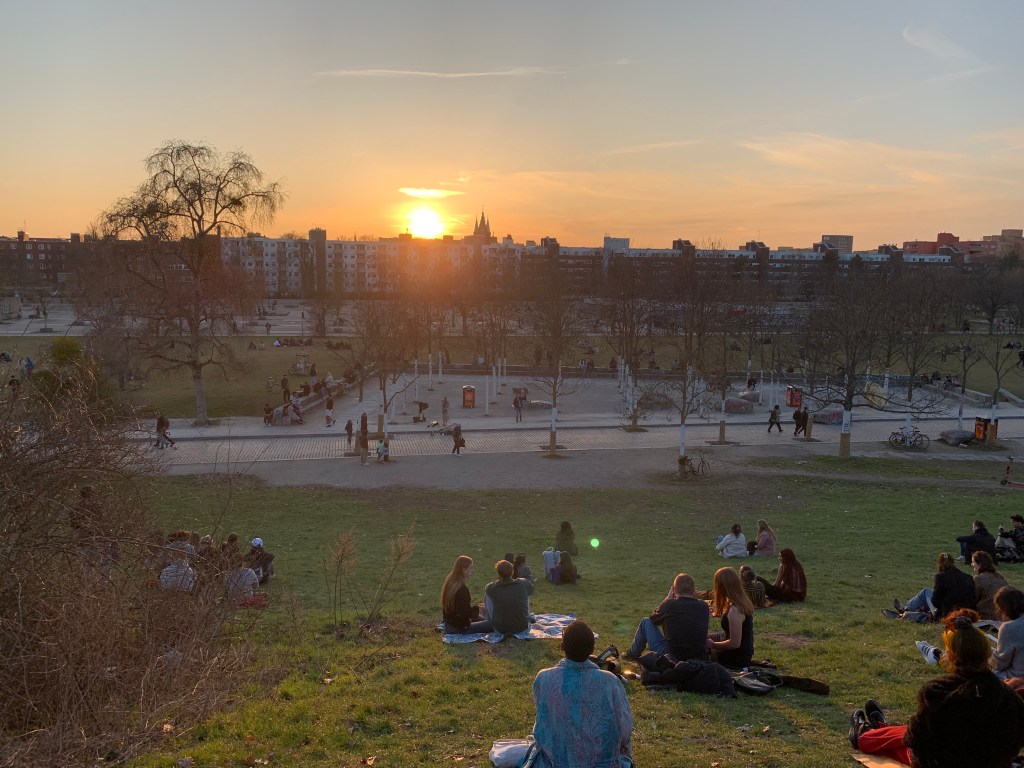
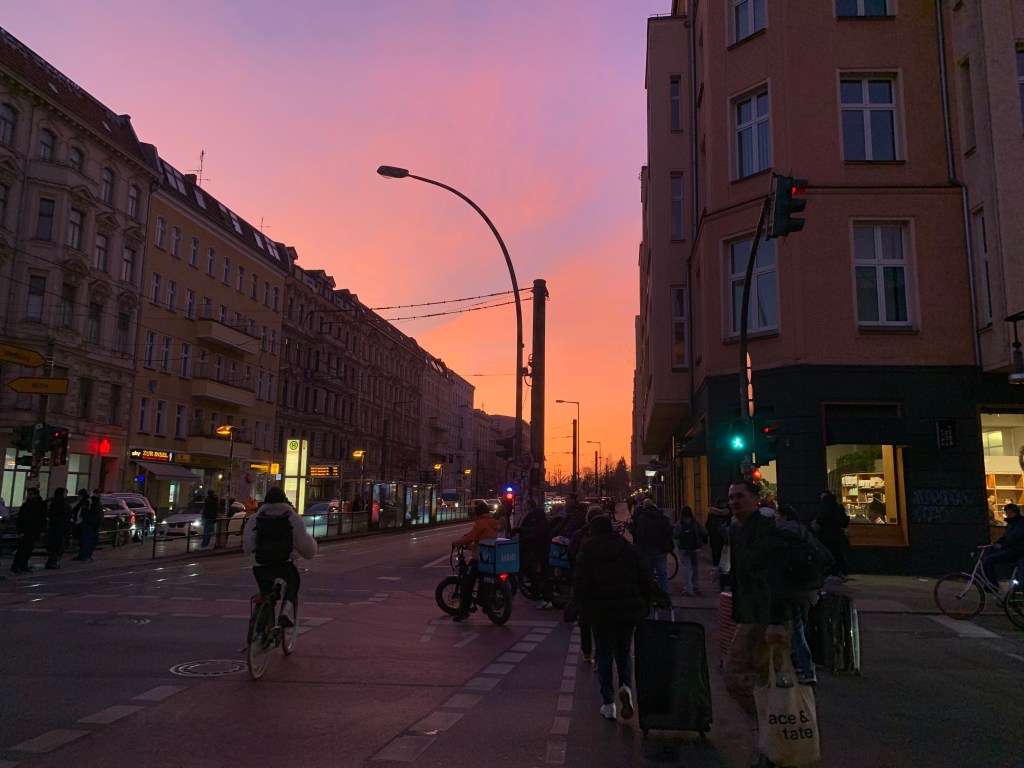
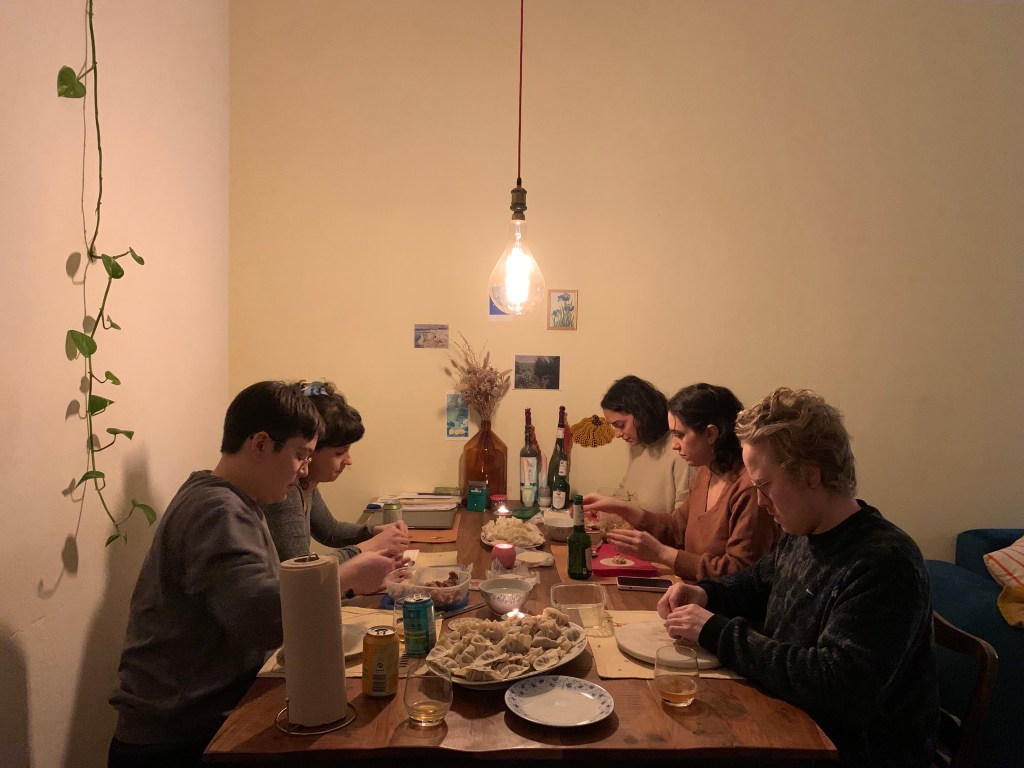
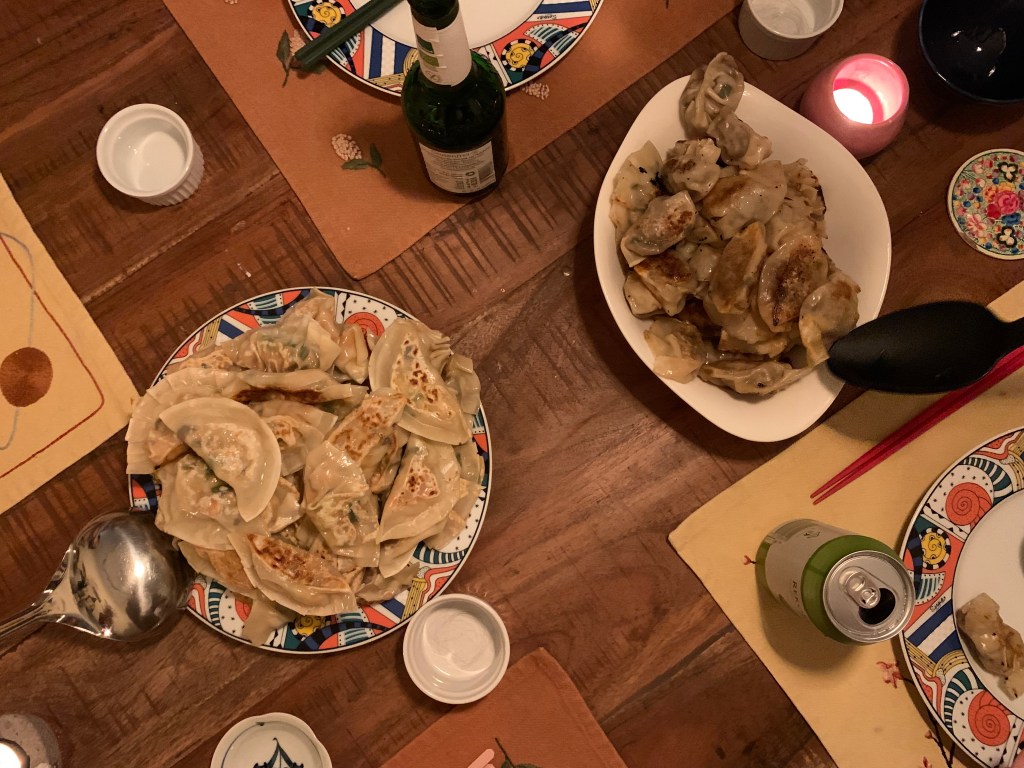
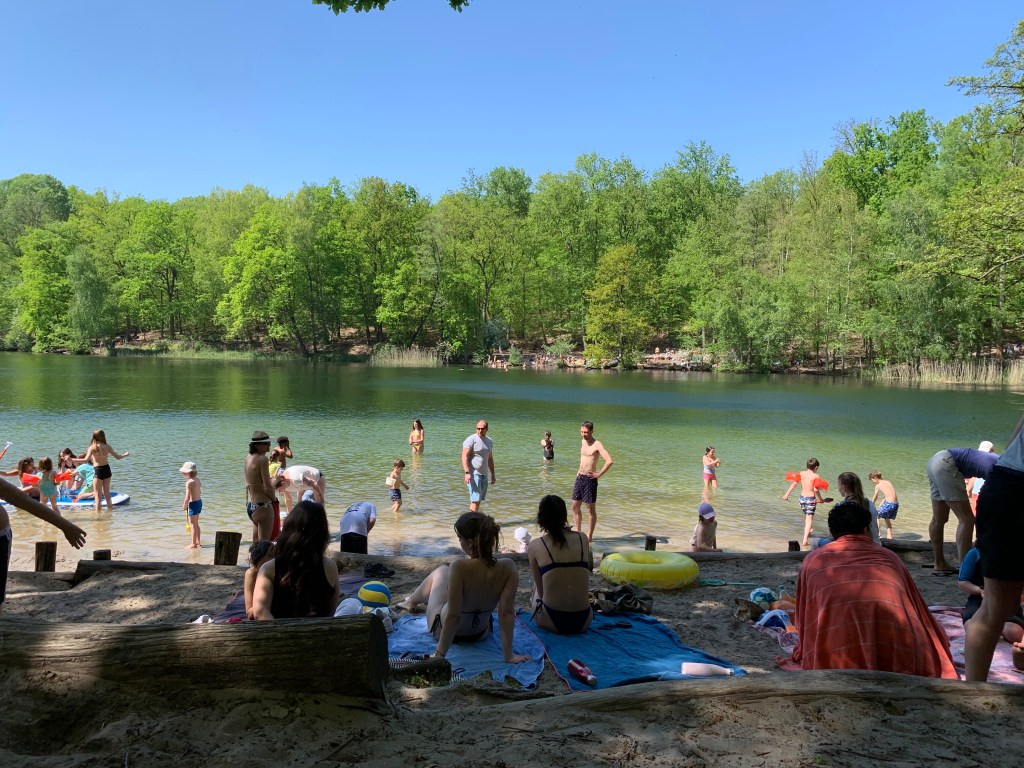
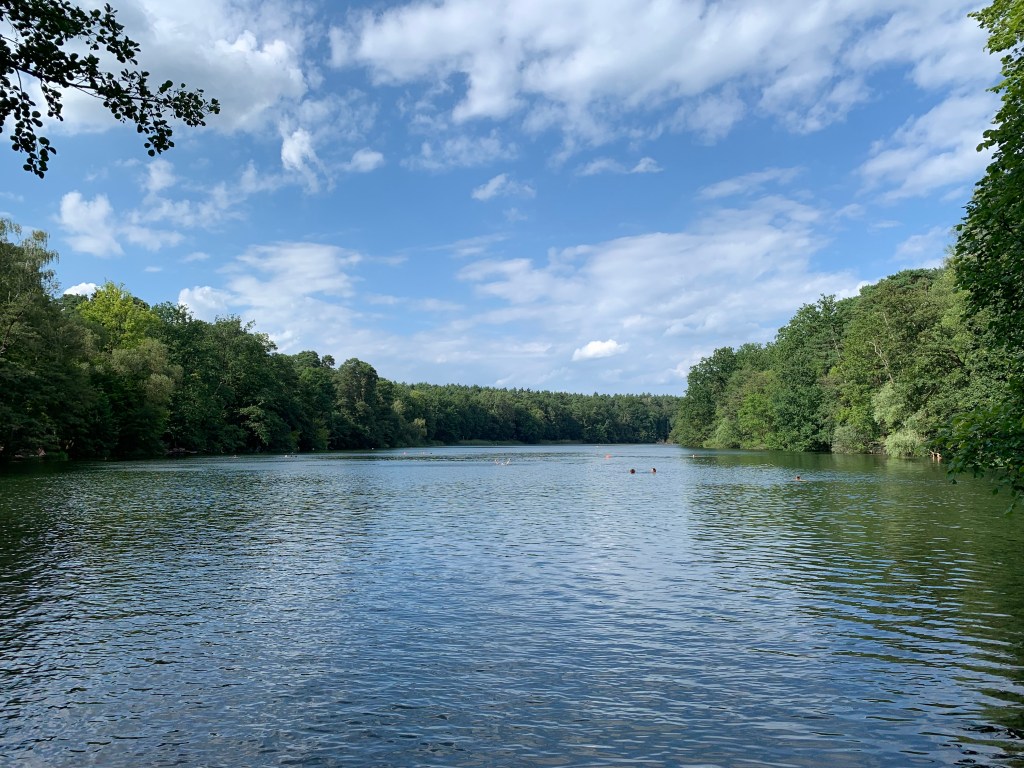
I packed almost 9 years of #berlin life into 7 boxes, 3 backpacks, and 2 luggages. But how do you pack the non-material things, the grey miserable winters alleviated by spontaneous coffee dates and cat cradles, the hilltop view over Mauerpark on dusky evenings, the staggered walk home after a house party, carrying a headache that continues to pulse with party music and lively conversations. And the people? How do you condense the people, the votive flames that keep the temple of my heart lit. How do you keep the light burning on memories? Of their idiosyncrasies, their hopes and dreams, of the moments together when time briefly dilates, like when we sat around the table folding dumplings or laid by the lake to look up at the blue sky as the blackbirds sang?
Over the next few days, I suspect I’ll process these feelings more, perhaps give a better shape to them; it’s not quite like love, not quite like sadness, but something more infinite.
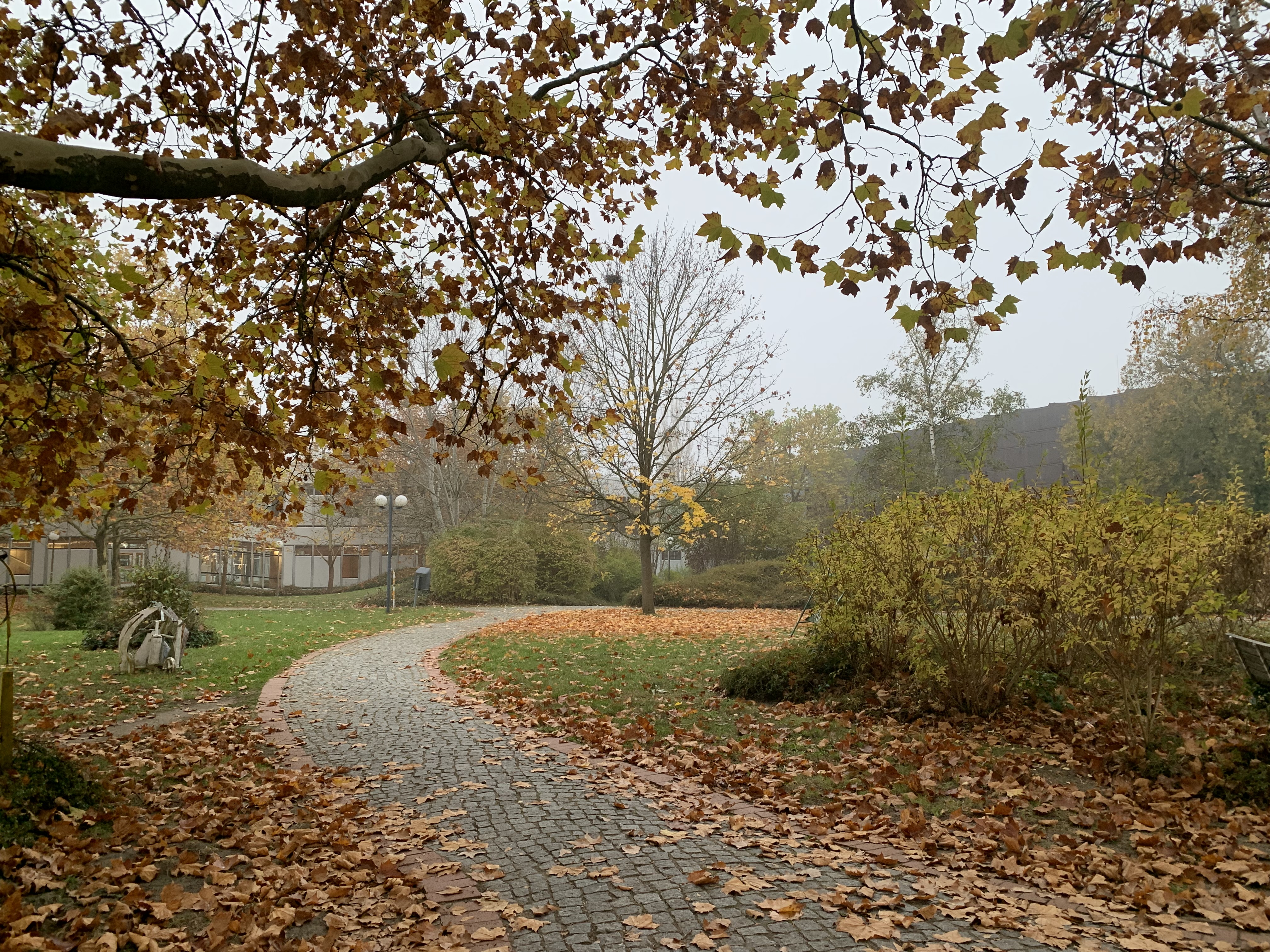
A thin fog descended as I was emerging out of the station at Dahlem, adding a veil to a day that had already attained a darker tenor from Trump’s reelection, a topic which later too coloured most of my conversation with my doctoral supervisor, who was coincidentally, supervising my project about boring apocalypses. What would the world look like when it ends? In fire and brimstone? Or a mundane descent into darkness? These scenarios clouded my head on my way back to the station as I dug my hands deep into my jacket pockets to brace myself against a sudden gale of air that portended an extra cold and gloomy winter.
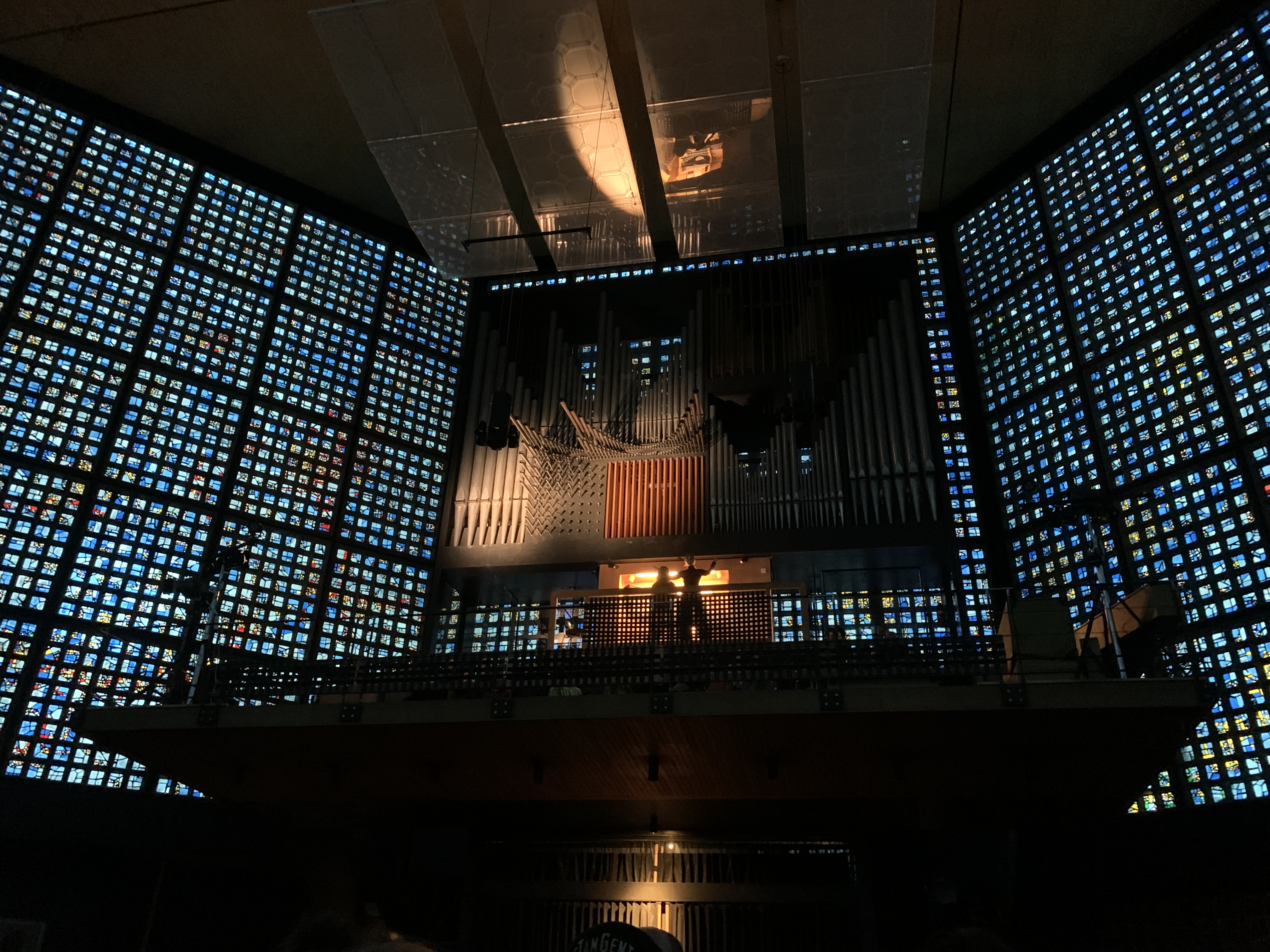
Later in the evening, on the hallowed ground where the Kaiser Wilhelm Memorial Church stood, it was perhaps fitting then that Kali Malone’s concert prolonged my considerations of doomsday’s advent. There were to be no revelations from her extended organ chords, no angel heralds or Christ-like saviours. The music droned on mournfully, almost endlessly, one long note leading to the next, between silence, hushed murmurs, a cough or two. For an instance, I couldn’t tell if these were the voices from the church or from her music, the hypnotic collapse of dichotomies, between the sacred and the profane, between the apocalyptic and the ordinary, a mere constant of the human condition. In the cycle of repetitions, I was suddenly reminded of Beckett’s plays and his adage that there is “better hope deferred, than none.”
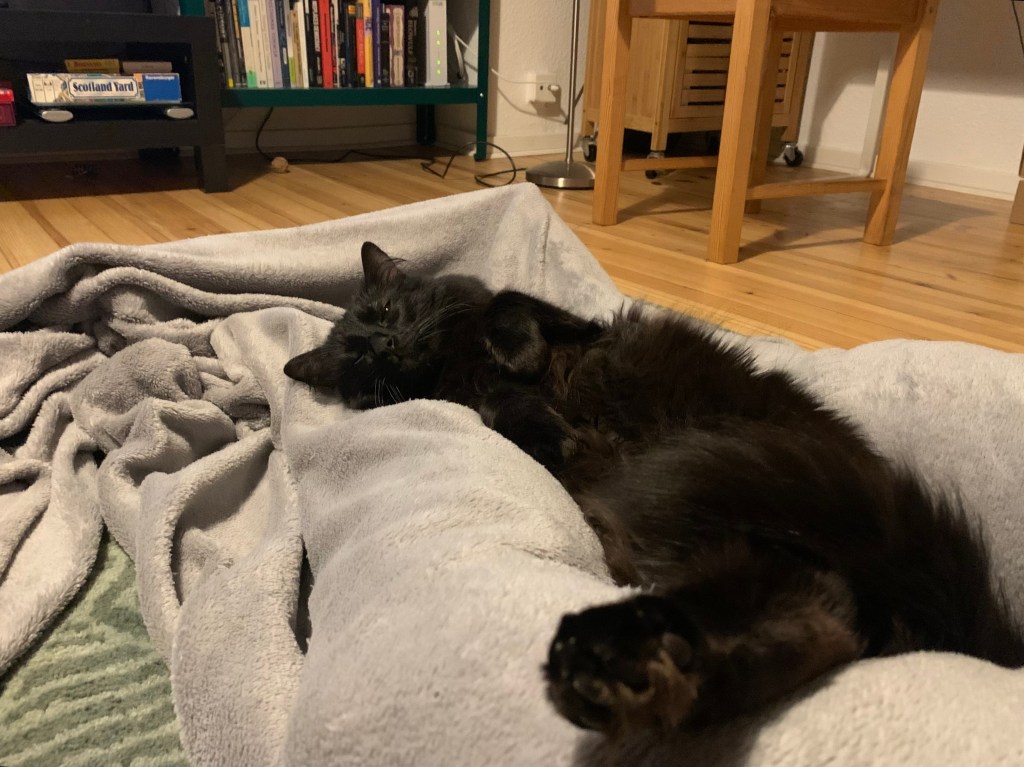
July ends with me thinking about my place in this dying planet, sweaty and flushed in what my phone says is weather 5 degree celsius warmer than usual, as Gobs sits on my face at 6am sharp before he runs off at the sound of his feeder dispensing a fresh batch of dried goodies, leaving me smelling like cat butt and surviving on 5 hours of sleep. Food 1 Charles 0.
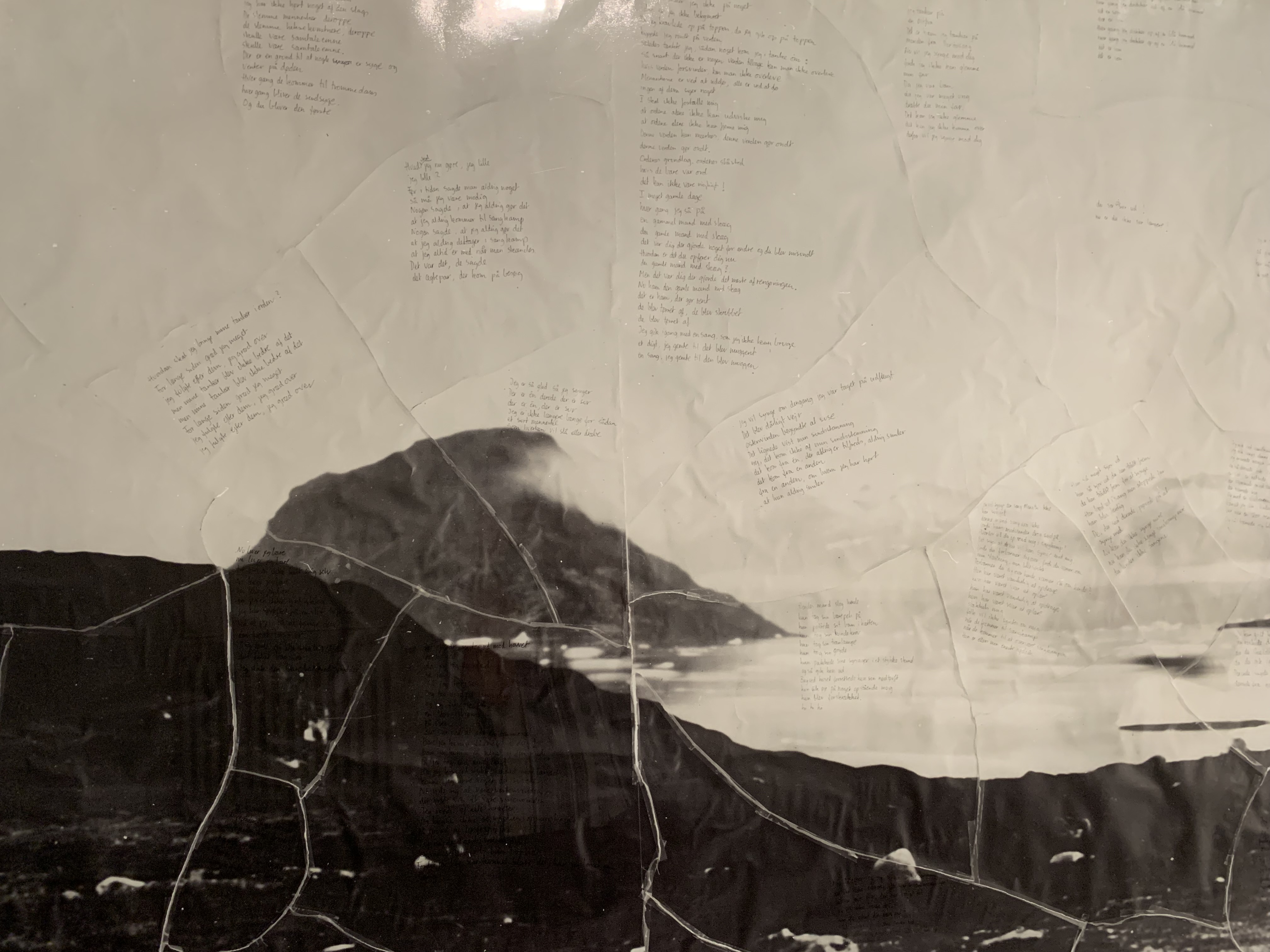
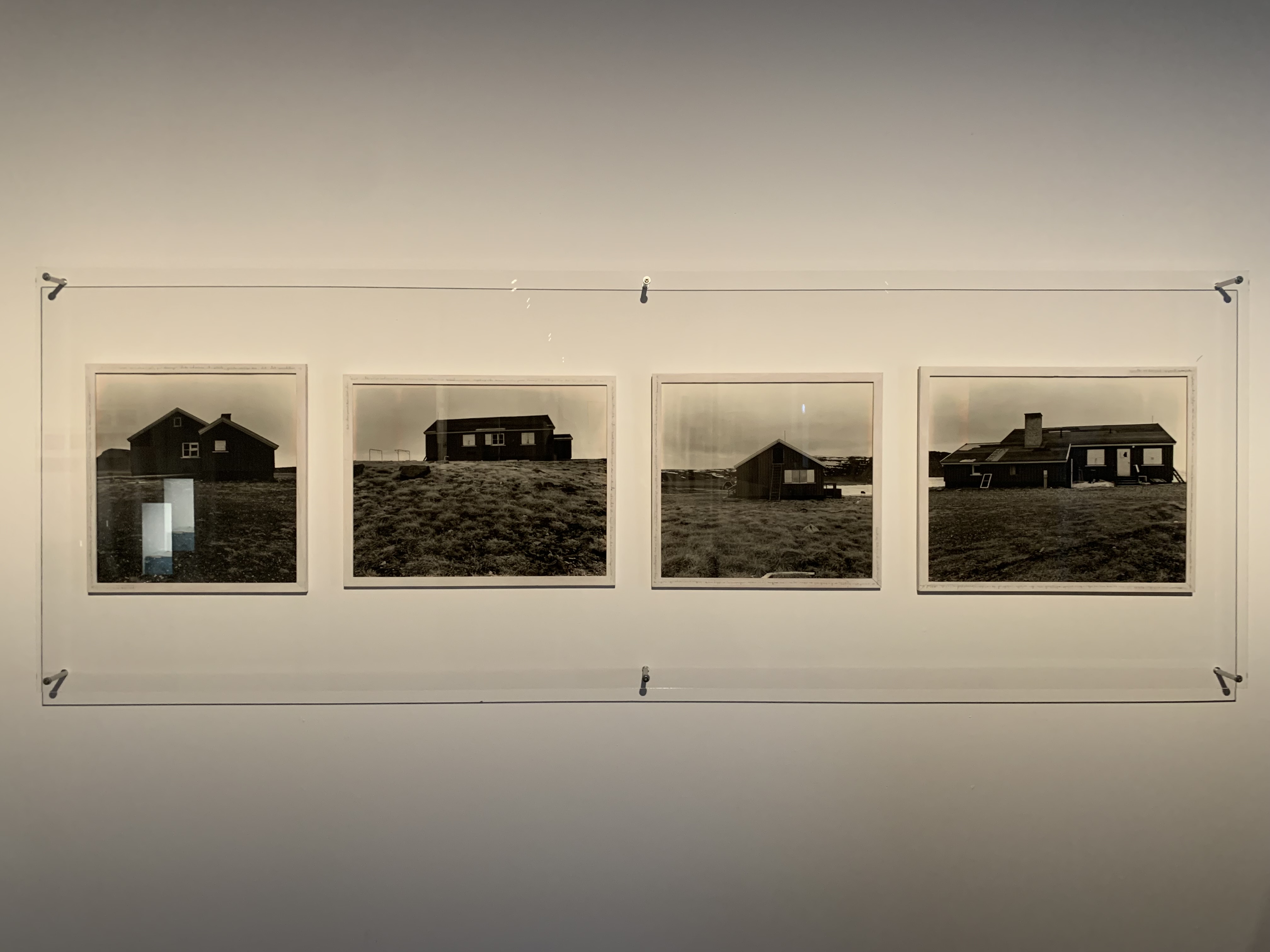
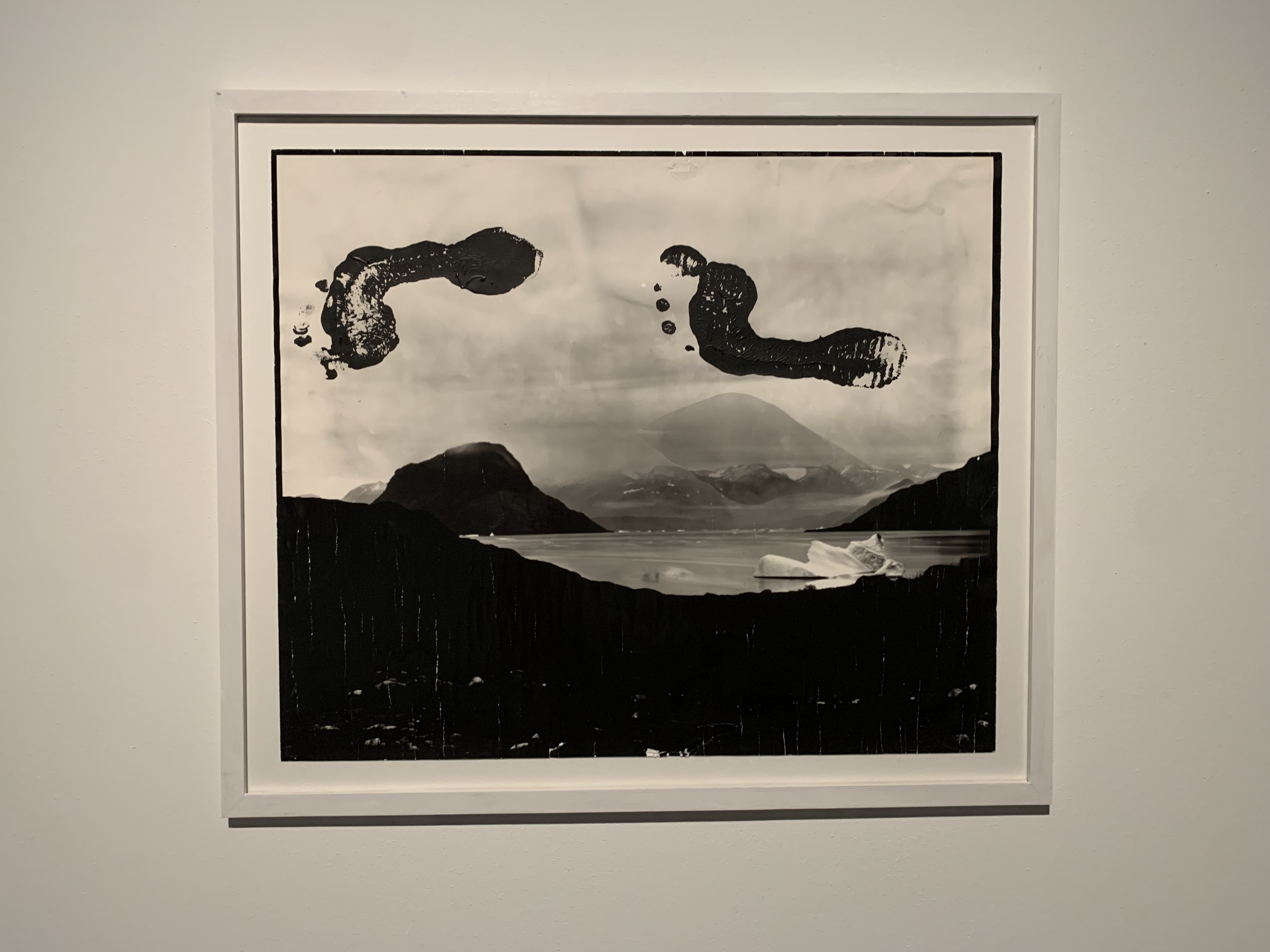
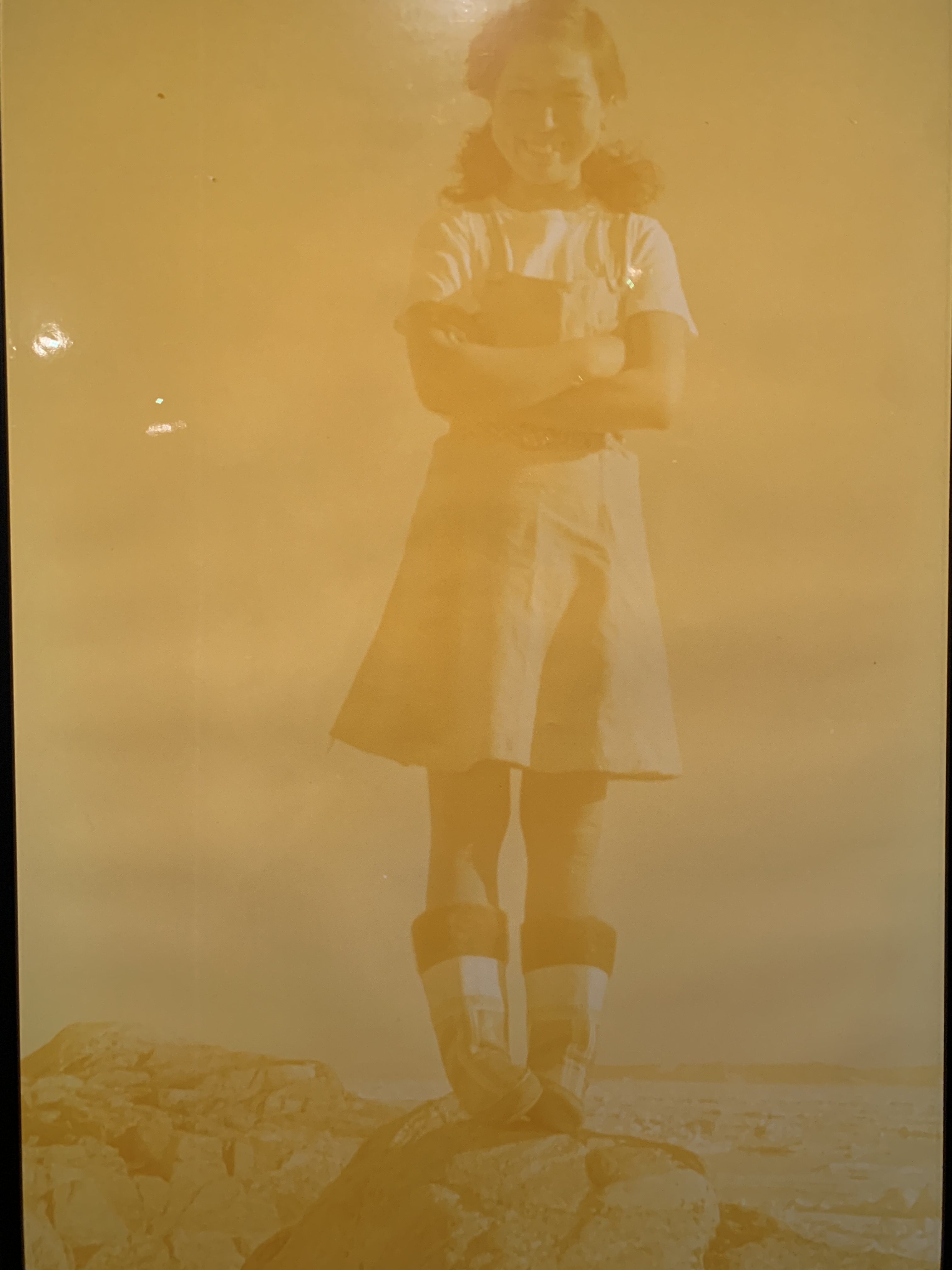
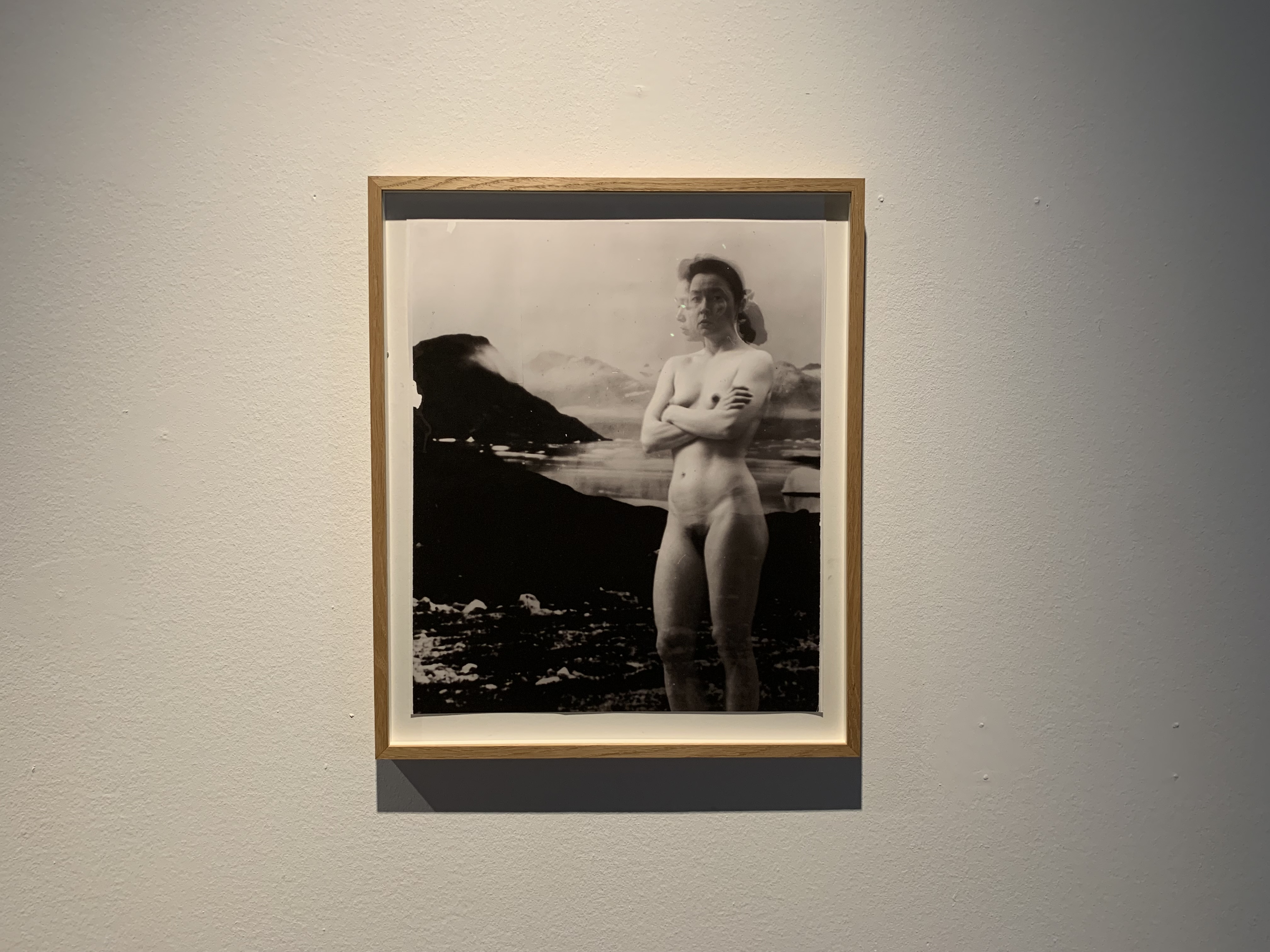
In the opening pages of Ben Lerner’s Leaving the Atocha Station, the narrator goes to the Prado as part of his morning routine in Madrid. Standing in his usual spot is a man looking at Van der Weyden’s Descent of the Cross. The man suddenly breaks down crying, presumably because he was “having a profound experience of art.” This leads the narrator to reflect upon whether he was capable of feeling the same thing; I have never cried in front of a work of art, no matter how brilliant I found it, but at the Pia Arke exhibition at the KW Museum in Berlin, I came close to what was probably a “profound experience of art.” I did not cry, but it triggered something primordial in me, something I can only describe as perfectly captured in Sufjan Stevens’s song, Casimir Pulaski Day, something about the human condition and life, that “[it only] takes [and it] takes [and it] takes.” And that was what I found mesmerizing about Pia’s work: about the colonization of Greenland by Denmark, about her being both an Inuit and a Dane, and not really belonging anywhere, not by choice, but by life’s cruel circumstances. “[And it] takes [and it] takes [and it] takes.” Bit by bit from her Inuit heritage, bit by bit from her Danish inheritance, until she is stripped naked, quite literally in some of her portraits, a lone figure standing in front of a landscape that is pristine only in memory.
Weeks of unvarnished sunshine gave way to clouds and scattered thunderstorms, bringing about the sudden sense that summer was coming to an end, languid days and sweat quickly unspooling before me to evoke a dread that is not unlike the feeling you get before the roller coaster drops. Out of an instinct to insulate myself against the darkening days, I found myself retreating into a melancholic interiority, burnished by faithful company from raccoon memes, my Nintendo Switch, and the occasional nihilism, the third of which I had sought to escape from by indulging in my Yorck Unlimited subscription. In two weeks of false spring or doomed summer or a hugely misconceived notion of what the weather foretold, I caught about one movie every two days.
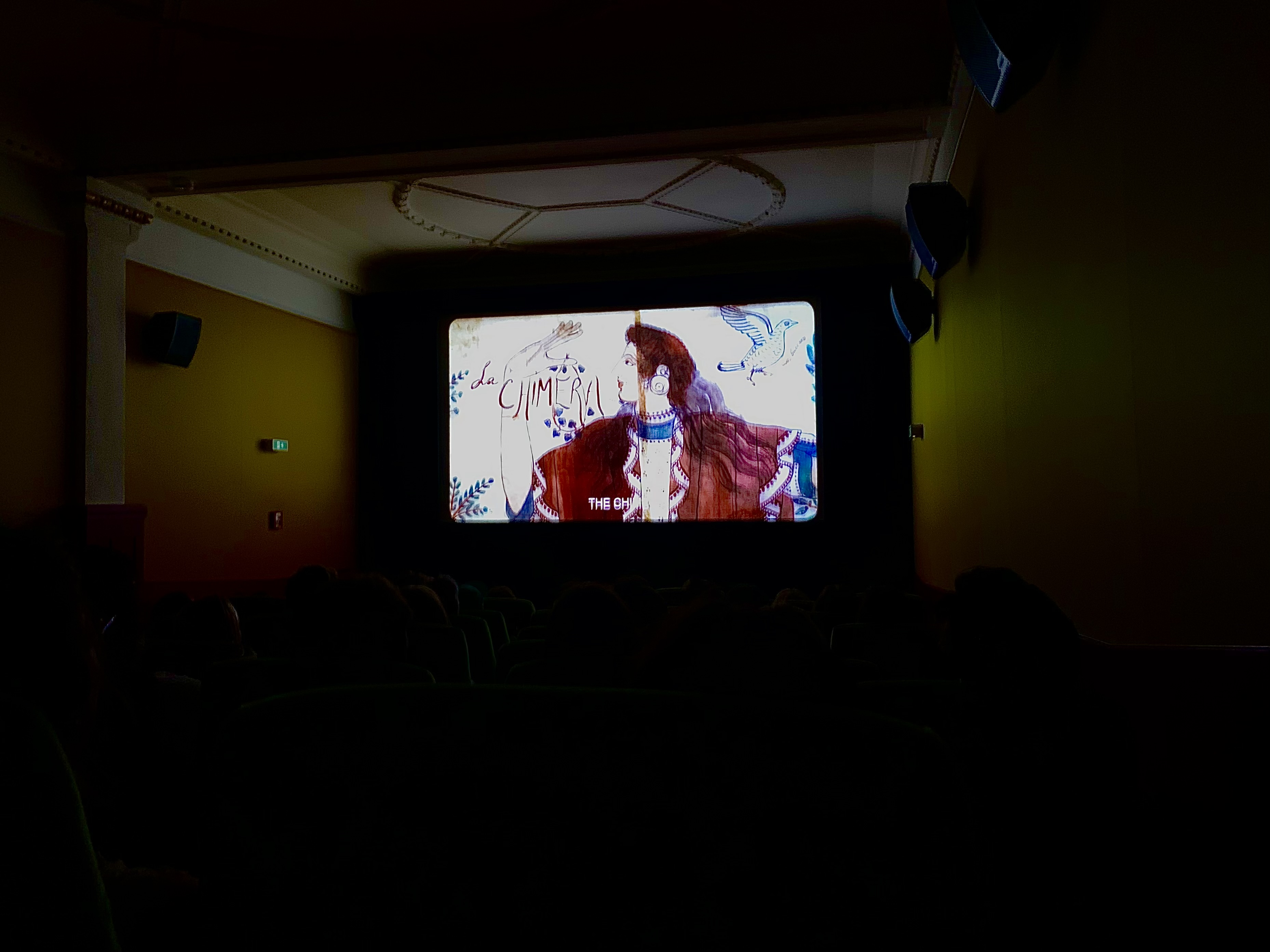
On my 2nd viewing of Alice Rohrwach’s La Chimera, a rare incursion of beauty. The film follows a British archaelogist, Arthur, who in his besotten white suit and foreign Italian accent, looks severely out of place in 1980s Tuscany. Arthur fills his time consorting with a band of local graverobbers to profit and be merry, except we see that he is not really merry. The source of his misery seems to be connected to a mysterious woman, who appears in dreamlike sequences, leaving behind the red thread of her knitted dress which Arthur tries to follow but fails. We later find out that the woman is Benamina, a former lover who has died. Throughout the film, Arthur is continually seized by his memory of her, and the audience is seized by the terrible truth that Arthur can unearth as many Etruscan treasures as he wants, but he can never recover a past forever lost to him. Interwoven with this symbolism of lost love is the myth of Eurydice and Orpheus. To symbolize their love, Orpheus ties a red string around Eurydice’s finger, promises he will find her wherever she goes, even in the underworld. Naturally a lot of the film involves the underworld, the underground digging for totemic offerings, the seedy underbelly of art-trafficking, but its most poignant iteration is also its most literal: towards the end, Arthur gets buried alive. He yells at first, beats his fists against the earth. But then he notices a red thread, follows it into an opening. Emerging from the ground, he sees Benamina and falls into her embrace.
My compendium of sleepless nights is mostly febrile, drenched in wiki-dumpster diving and inchoate thoughts, relieved only by brief moments of clarity. In one such moment last year I discovered the music of Ghostly Kisses, named after a line in William Faulkner’s poem, Une ballade des dames perdues: “And brush my lips with little ghostly kisses.” The debut album – Heaven, Wait – was my entry point, waxing and waning between heavy synth beats and stripped-down classical arrangements to aestheticise the themes of transition and rebirth, written about reflecting on difficult times from a more grounded present. “Heartbeat” for instance captures the insecurities of young love; “Carry Me” looks at the people lost along the way. / I couldn’t sleep tonight. Margaux’s ethereal voice continued to hang softly in the air long after the concert ended. But as dawn broke, I sensed the trees shiver with the anticipation of spring.
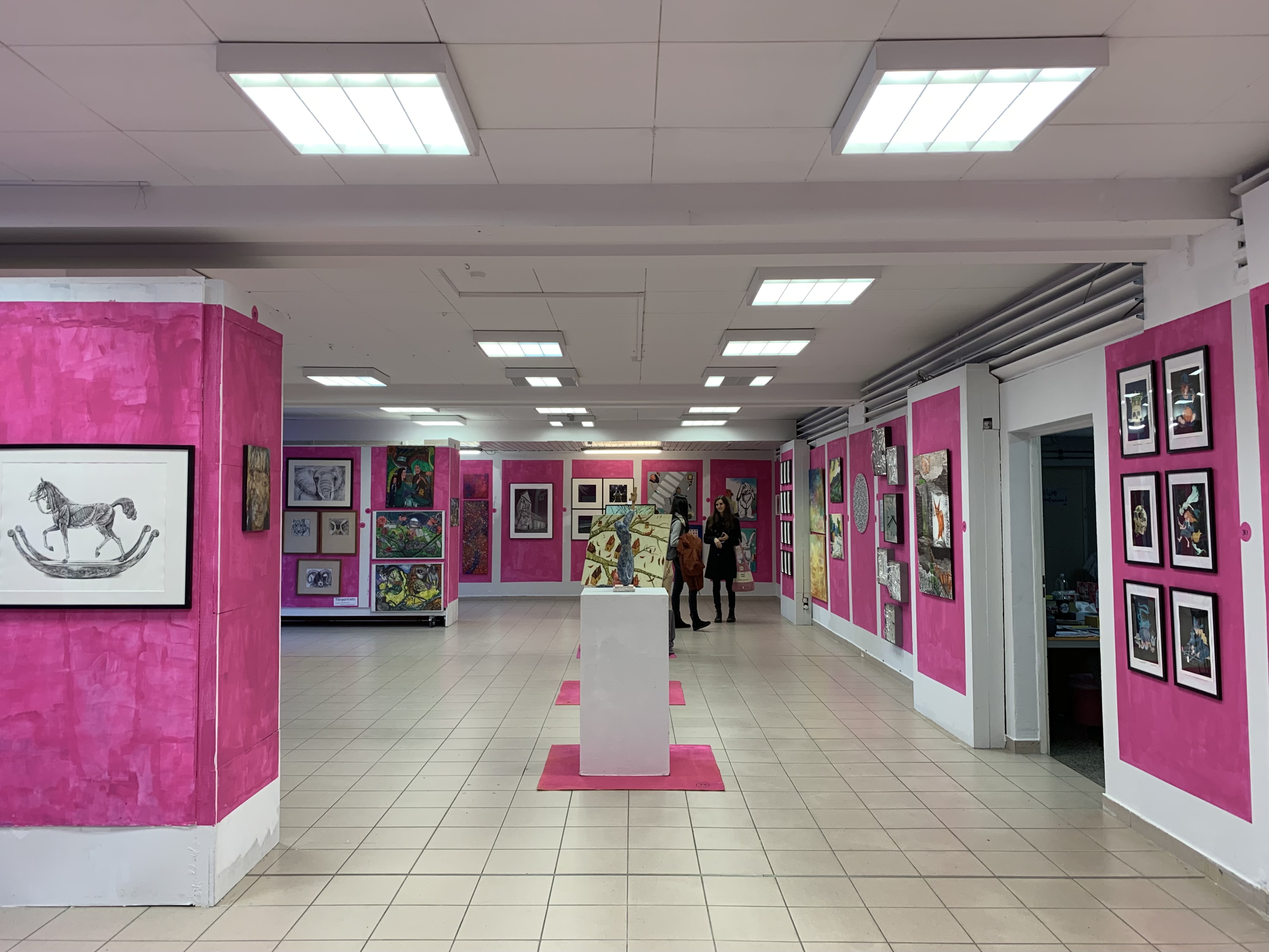
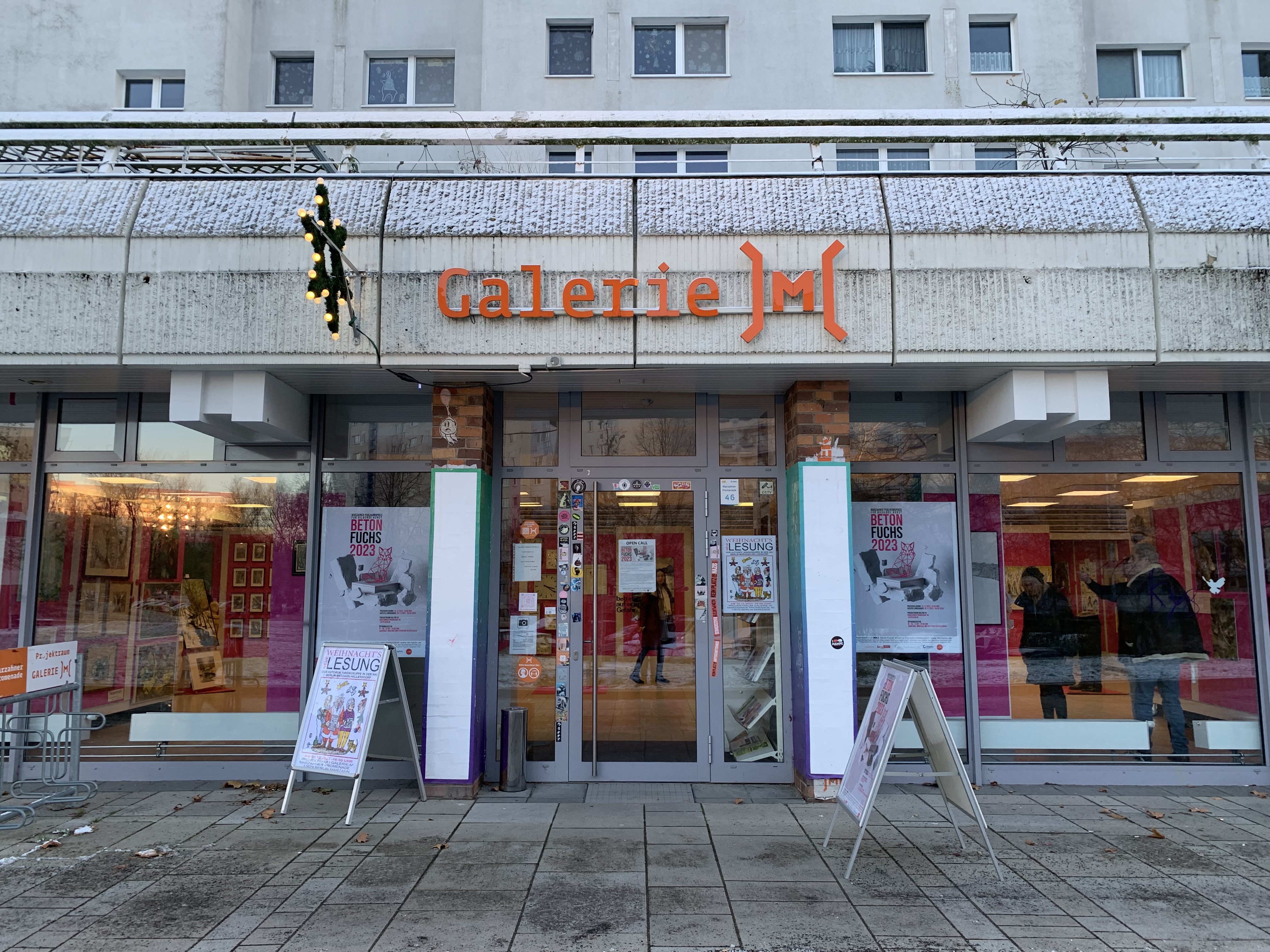
A white space surgically carved into the foundations of a Plattenbau, illuminating the grey. Inside, 77 different artworks vie for the Marzahner Publikumspreis “Beton Fuchs.” The concrete fox. Yes, that must have been what he felt like he was when he entered the gallery, a fox lost in the urban jungle, head lowered, eyes shifty, though looking, looking for something to open up to him, something that would open him up.
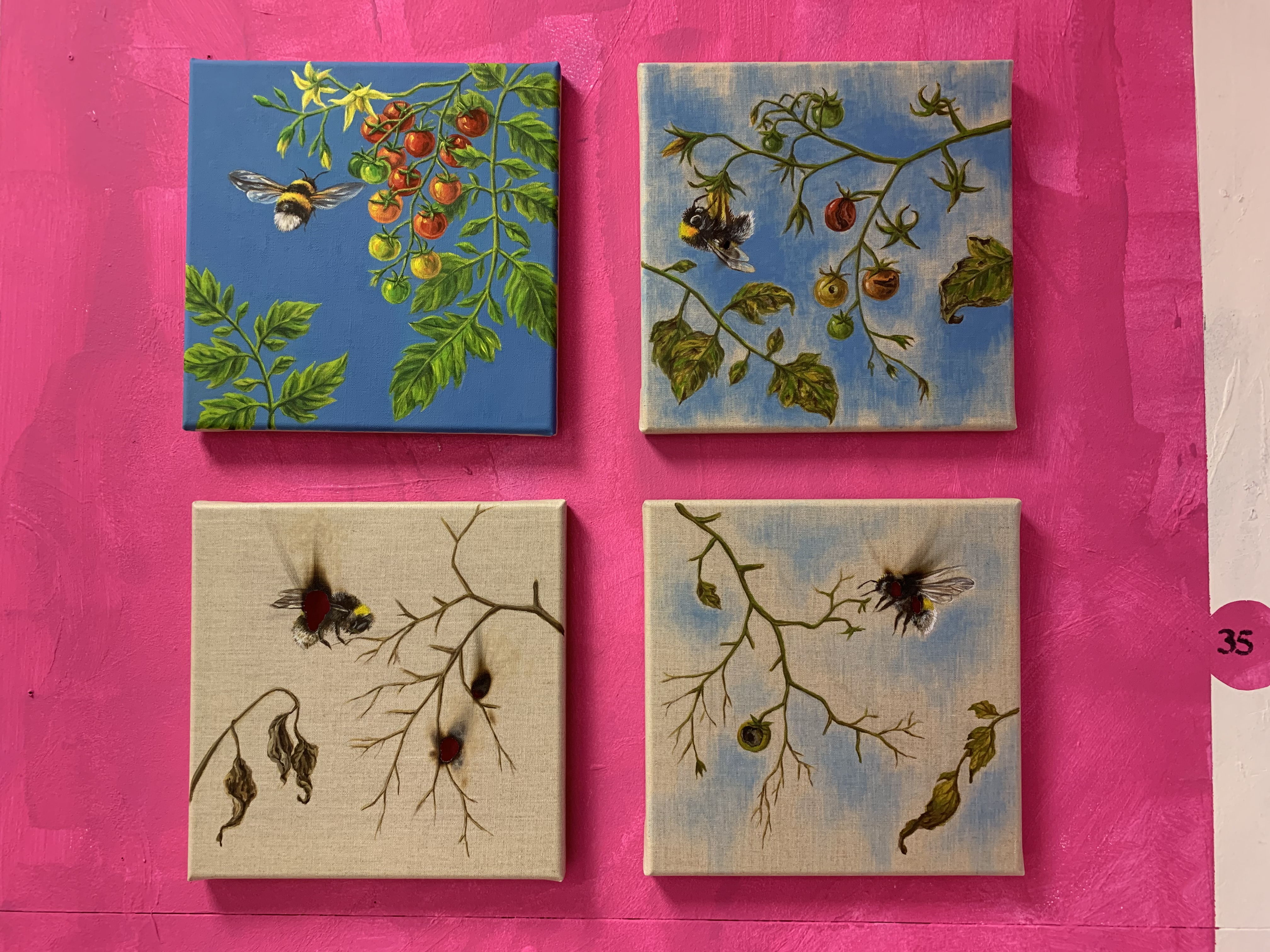
Exhibit #35: Bees pollinating, nature’s blue-collar workers in yellow hi-vis jackets. They die. On the canvas, a hole is burnt through their bodies. The palette dulls. The plants wither.
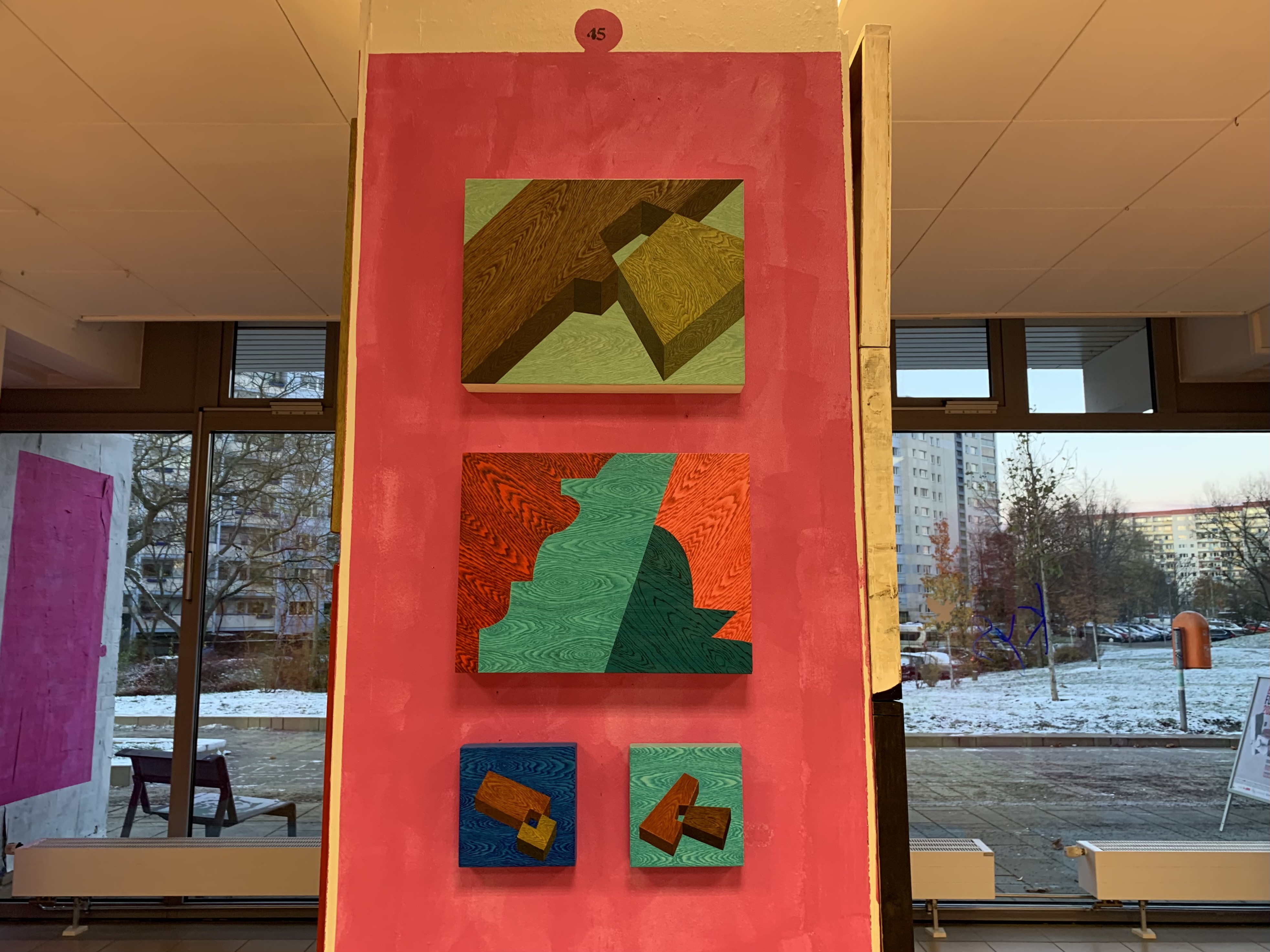
Exhibit #45: Refined wooden blocks, meticulously shaped, colourful backdrops. A miracle of man’s enterprise and manufacturing prowess. But the blocks don’t fit, a gaping hole where nature should be.
He speaks to the two artists. They talk about their art and their motivations. He nods and listens, thinks about his own writing, how futile it is sometimes as the world burns. Yet when he imagines a world without art, without literature, he cannot imagine himself in it.
Projektraum Galerie M opens Tuesdays to Saturdays 12-6pm. Voting for Beton Fuchs has to be done in person and ends on 15th Dec 2023.
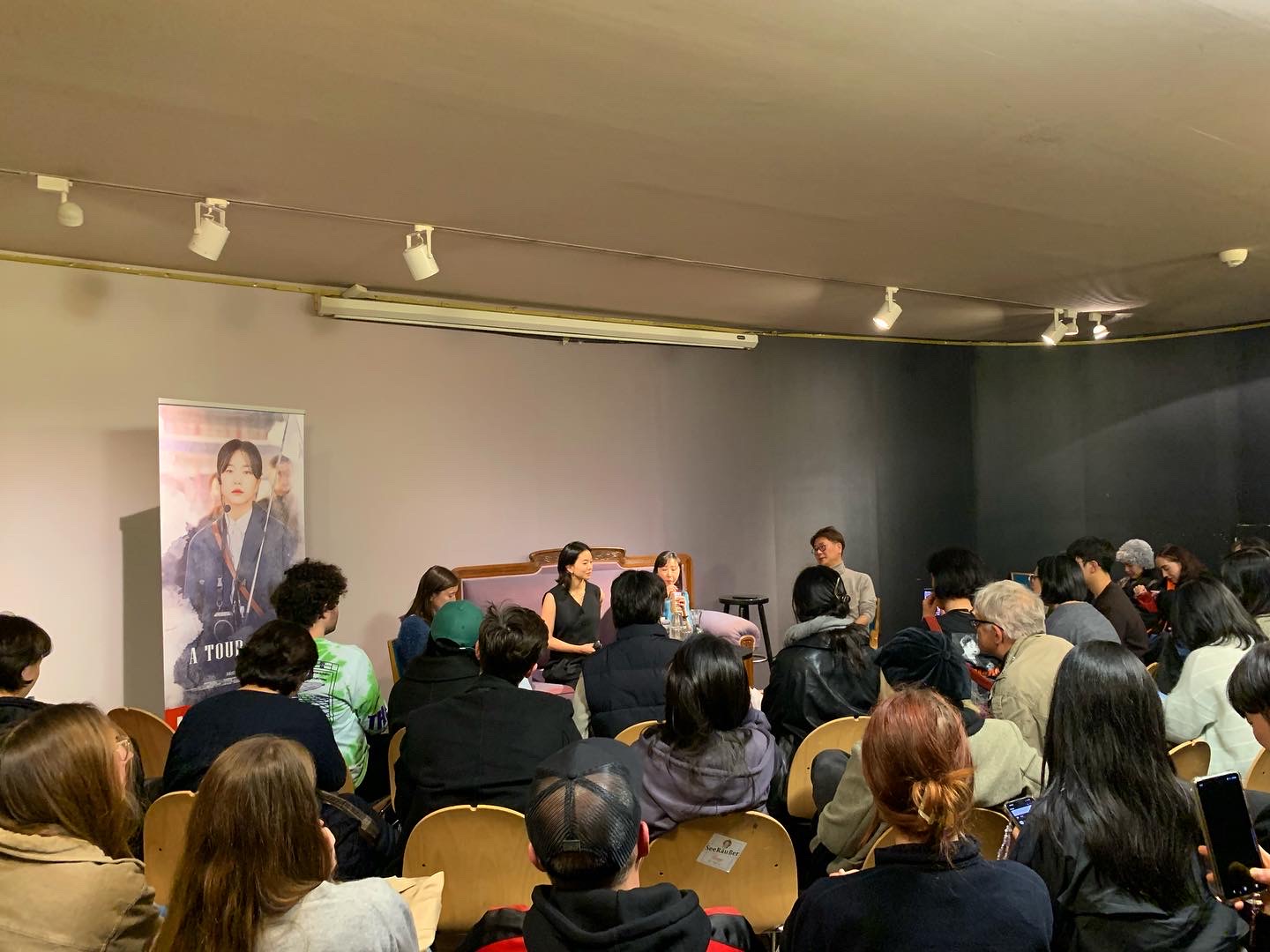
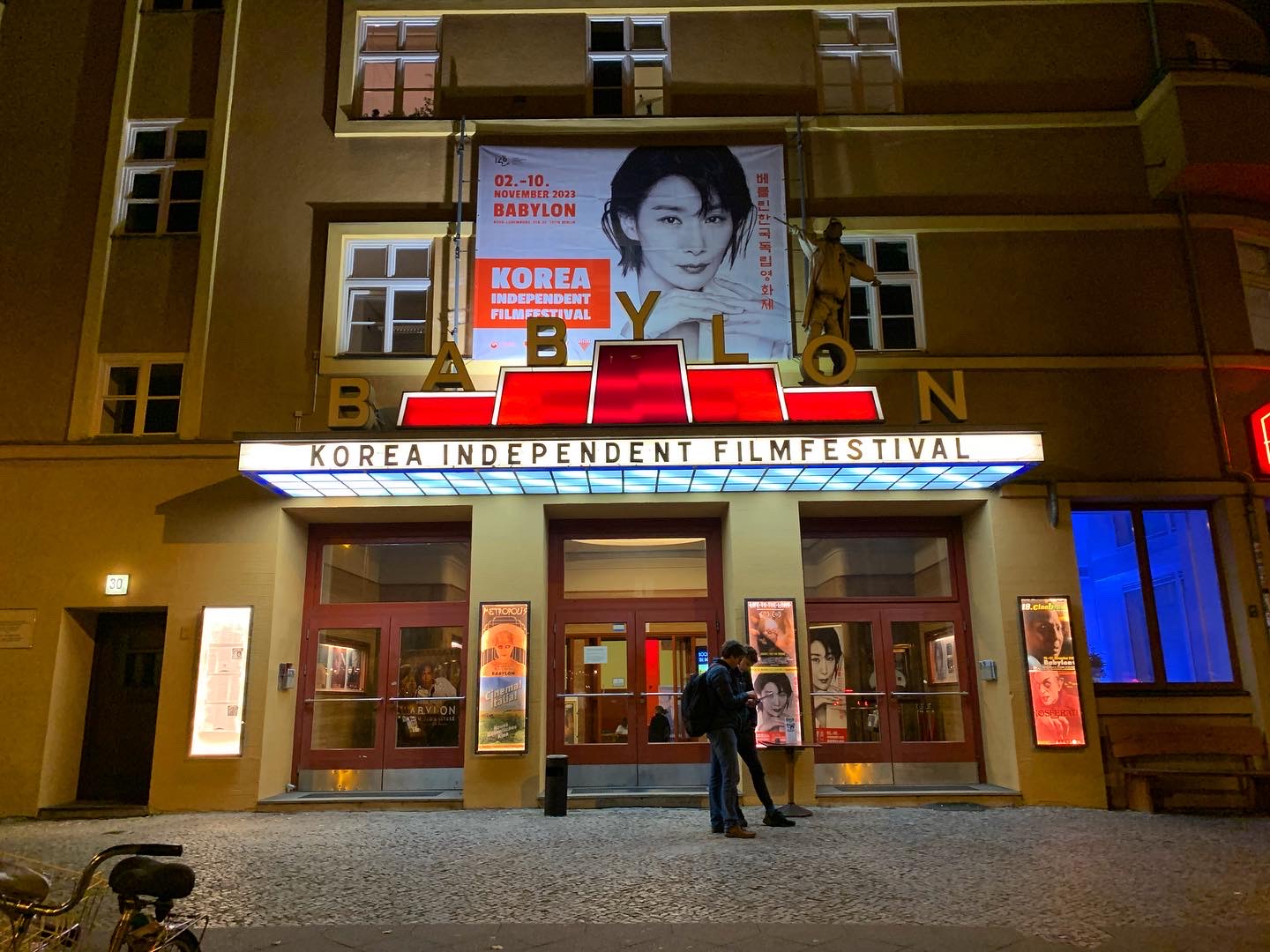
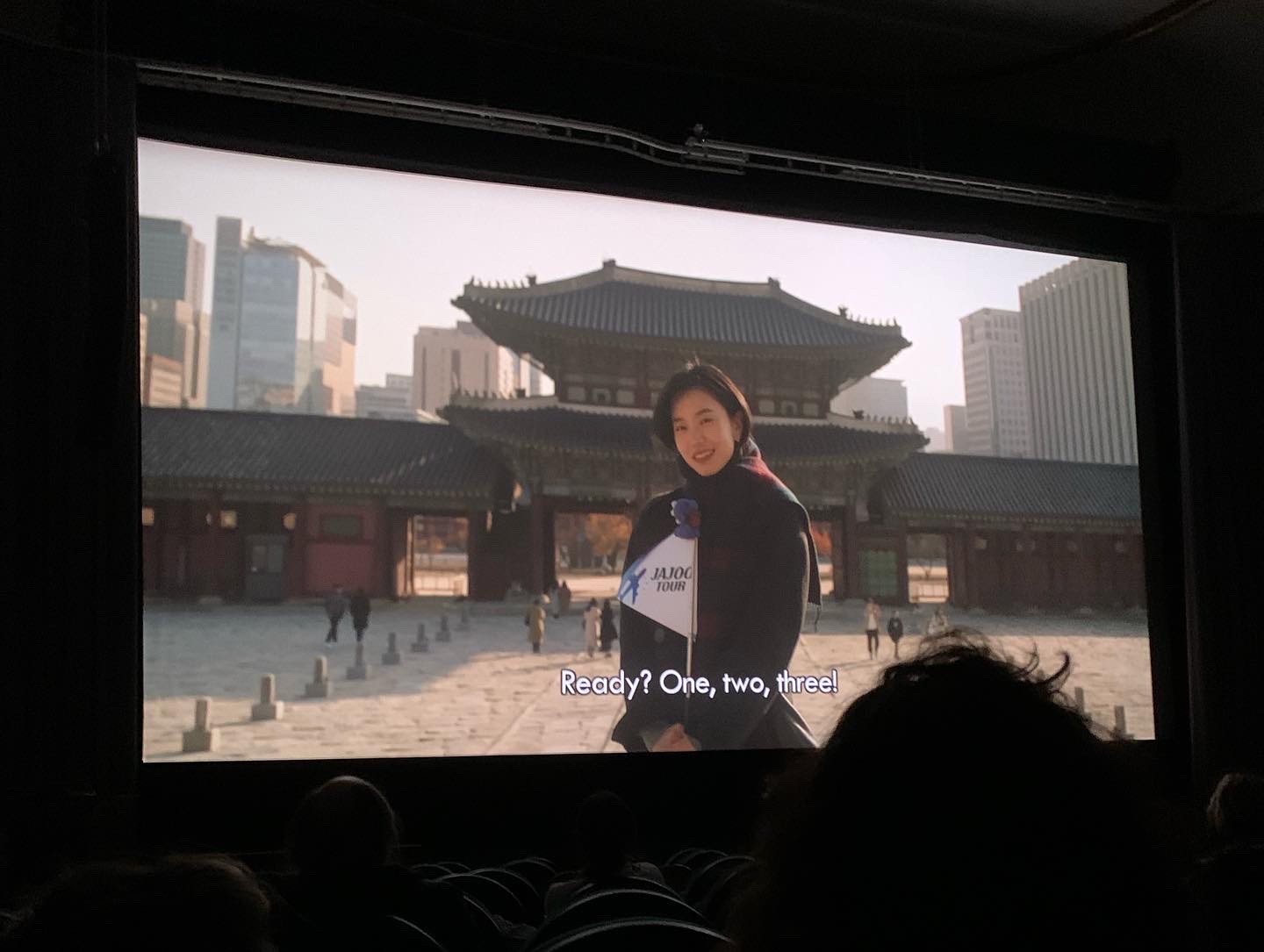
Kwak Eun-mi’s debut film, A Tour Guide (믿을 수 있는 사람), spotlights the life of a North Korean defector living in South Korea (Han-young, played by the effervescent Lee Seol), who works as a tour guide for Chinese tourists, introducing famous South Korean landmarks she is alienated from. Han-young may look like a South Korean but her accent and status as a refugee elicit constant consternation and suspicion and she struggles to make a home out of a foreign land. The limbo facing a refugee is captured superbly by Eun-mi as the audience are shown, in a slice-of-life manner, Han-young’s life in South Korea, three years of struggles punctuated with some happy moments.
During the Q&A session after the movie, Lee Seol spoke briefly about her role as Desdemonda in Shakespeare’s Othello. It brought to my mind Desdemonda’s quote from Act 4 Scene 2: “His unkindness may defeat my life/But never taint my love.” It is these lines I paired with Han-young’s face of defiance in the movie’s ending shot, just as she is about to leave South Korea for an unknown destination. The dearth of kindness dealt to Han-young is reciprocated in equal measure, her unwavering resolve to forge a home for herself. It matters not where Han-young goes in the end, whether back to North Korea to see her mom, or to Germany to see her best friend, Jung-mi (played by the equally impressive Kyung-Hwa Oh), a fellow North Korean defector, or to somewhere else entirely. Especially for a migrant leading a precarious existence, home is not a single destination but a journey.
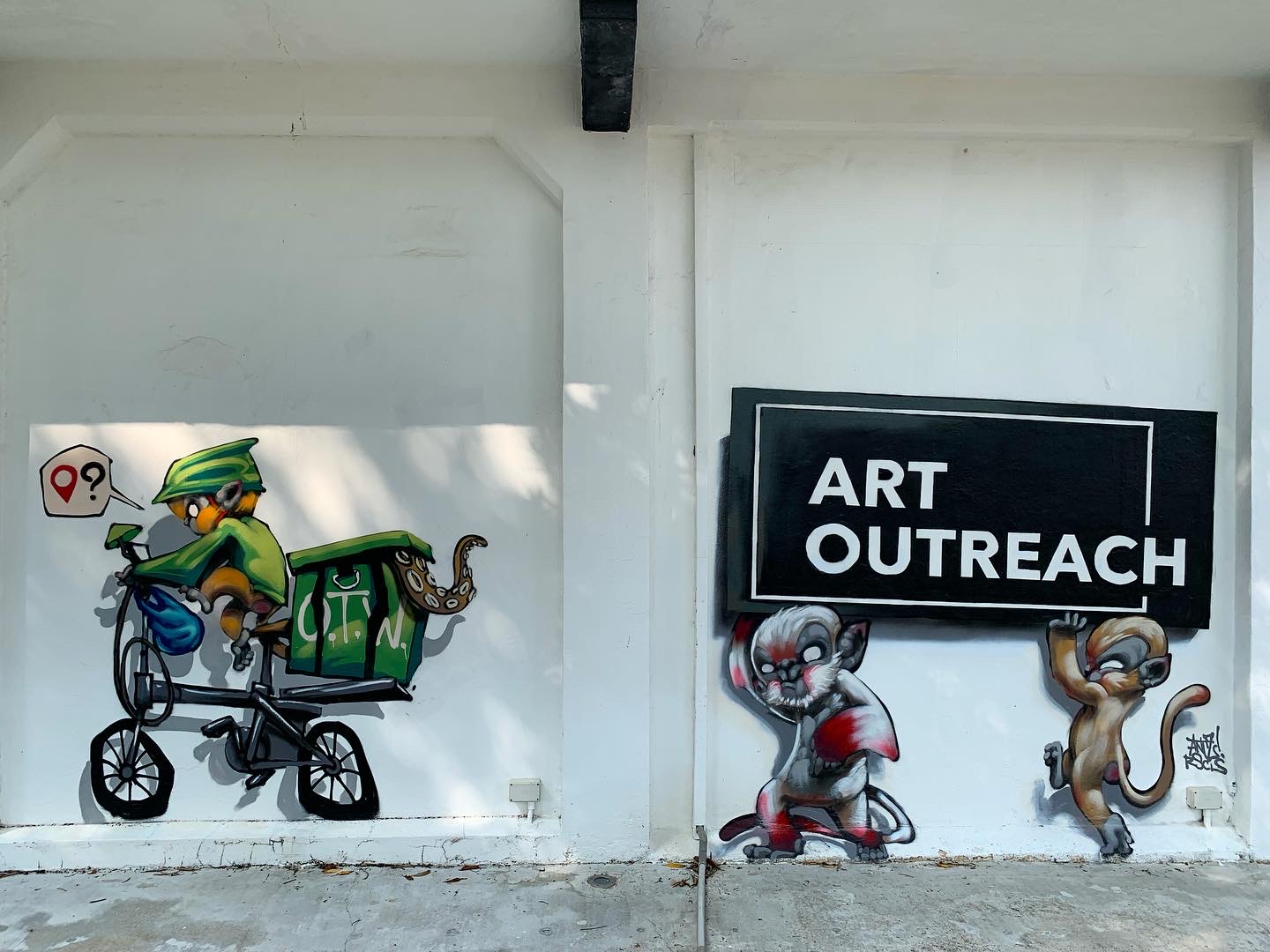
At Gillman Barracks, a gallery assistant explained the Art Outreach to me: “non-profit, art not just for consumption.” But then he shook his head, “I think it’s hard for Singaporeans to appreciate art outside of consumption. They come just once, take a few pictures, and leave.” He asked me what I thought and I said that I agree though I also confessed to having an image of #singapore that is 7 years dated. Once rife with socio-political iconoclasm, my preoccupations with the little red dot nowadays are mostly familial – I overeat to make up for lost time, milk nostalgia out of a rapidly changing city. Each time I leave, I feel immense sadness, but quietly too, I detect excitement in returning to the inchoate mess of a life I’ve forged for myself. I think about my 160×200 bed with the cheap bedsheets and my six pillows and giant teddy bear, about cleaning my fridge and then going out to buy enough ingredients to make a big pot of chicken congee. I think about acquaintances, friends, lovers, those inbetweens and those not-yet-to-come.
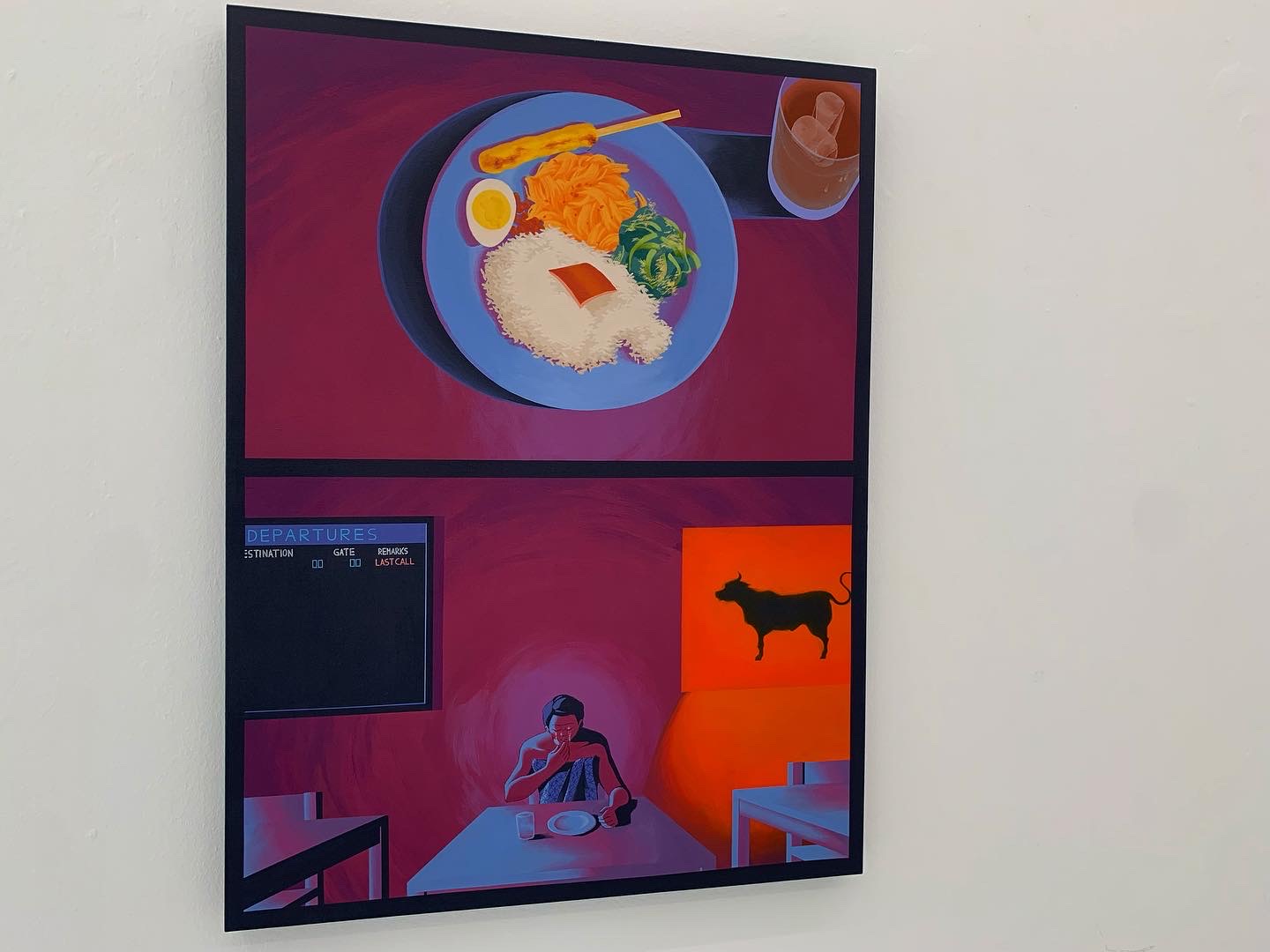
A day before my flight back to Berlin, I returned to Gillman Barracks. At the Homecoming exhibition by Pucuk Cemara, I lingered around one painting in particular. A person wrapped in a sarung sits in front of an empty plate, presumedly after having finished their nasi campur, an Indonesian rice dish paired with iced tea that is commonly served in a warung, a small, usually family-owned eatery. The joy from a hearty, homecooked meal is glaringly absent. Instead, the person is solemn, mournful even. In the background the final boarding call flashes ominously, one last chance to stay… or go. I did not return to the Art Outreach that day. Was I, in that manner, more Singaporean because I did what the gallery assistant had feared? That I took a few pictures and never visited again. Or did it make me more of a stranger playing out the inevitable transience of touristing?
Heat and humidity conspired to wake me up at 3am, where lying on my sweat-soaked sheets as a thunderstorm lurked outside made me feel like I was lying on my bed not in Berlin but in Singapore. The maudlin meteorological conditions, coupled with the recent passing of the summer solstice, gave me a sudden urge to cocoon myself under my duvet with a book and some tea while music played softly in the backdrop and the room smelt faintly of burned sandalwood.
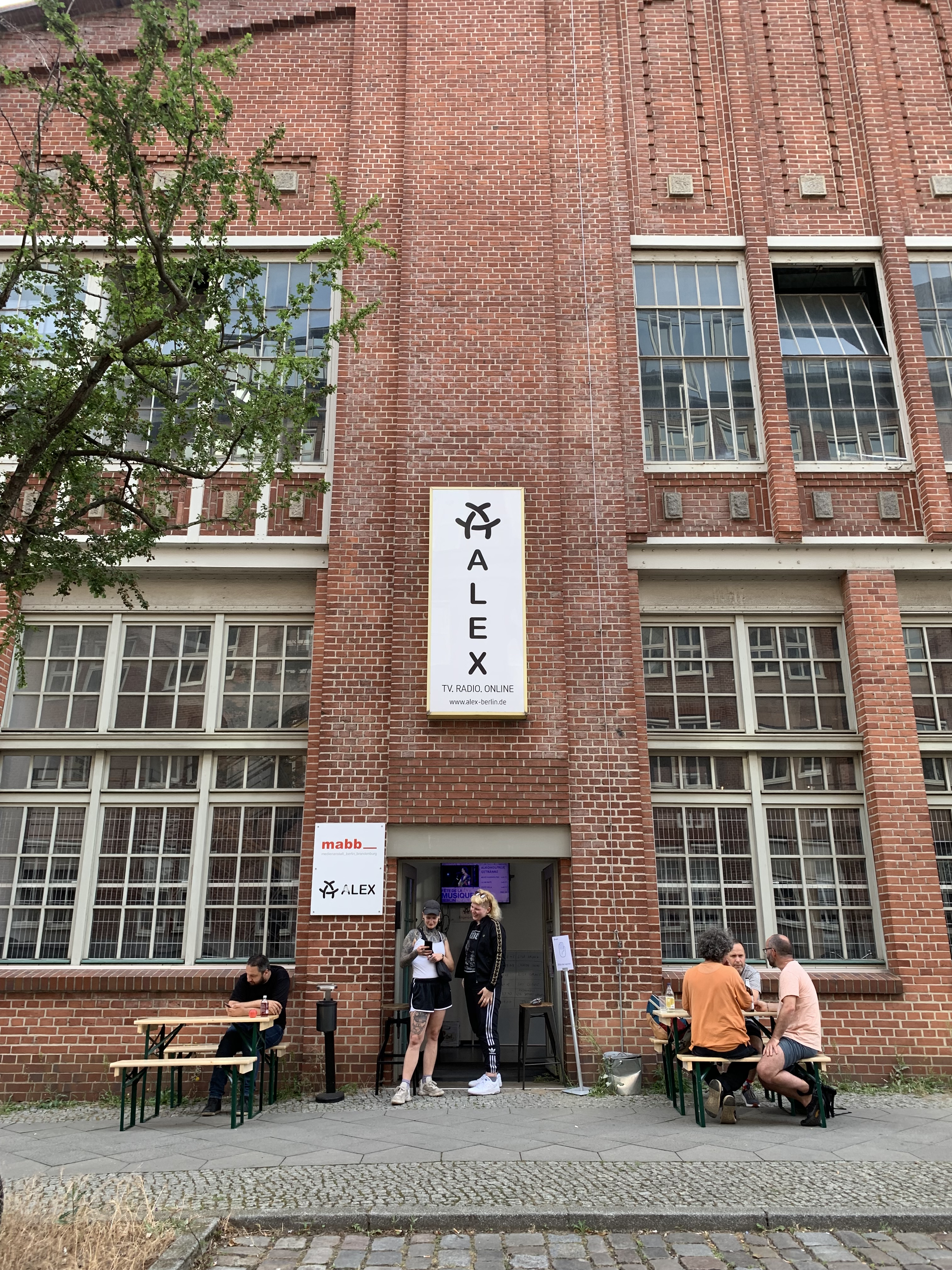
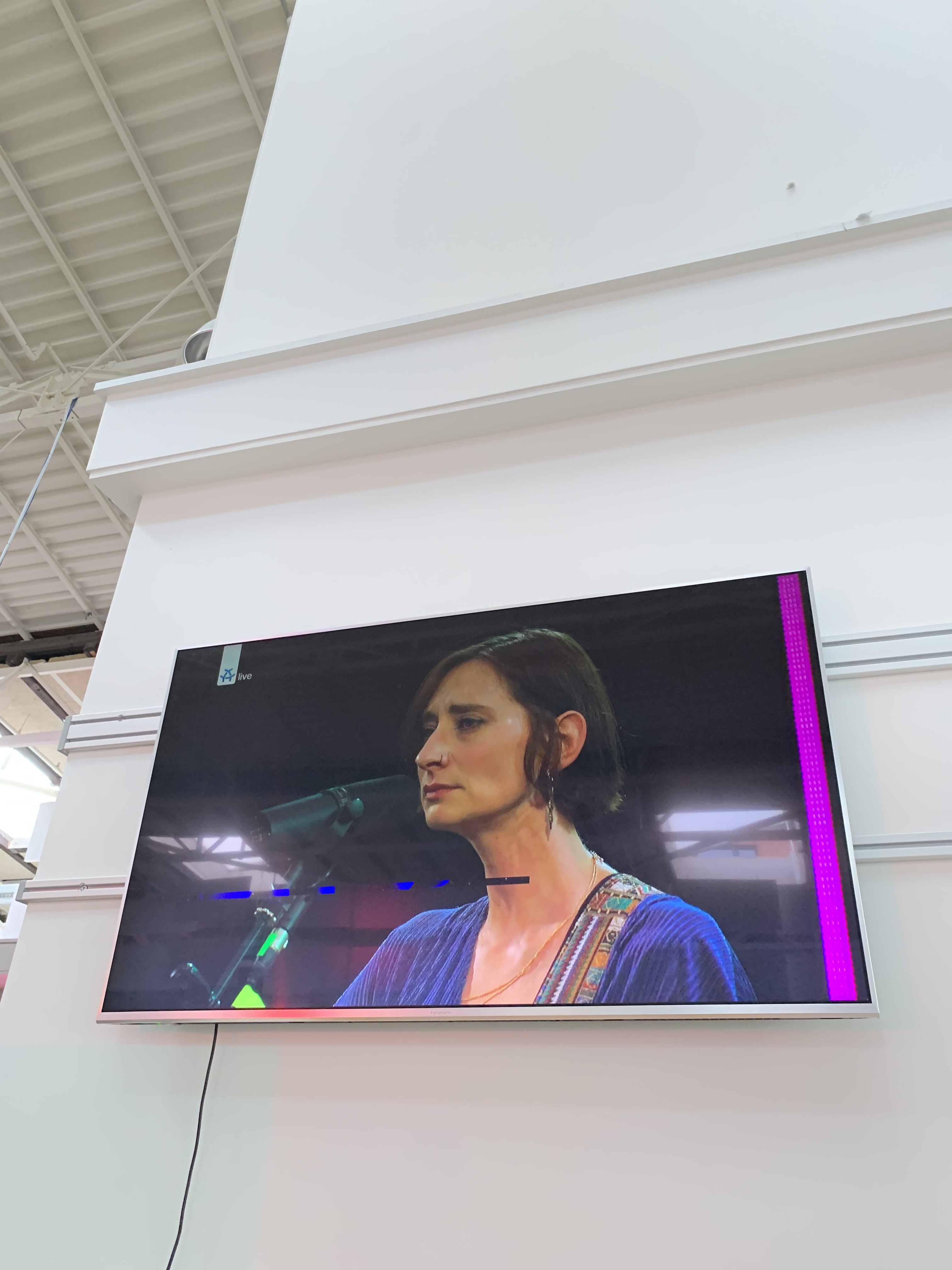
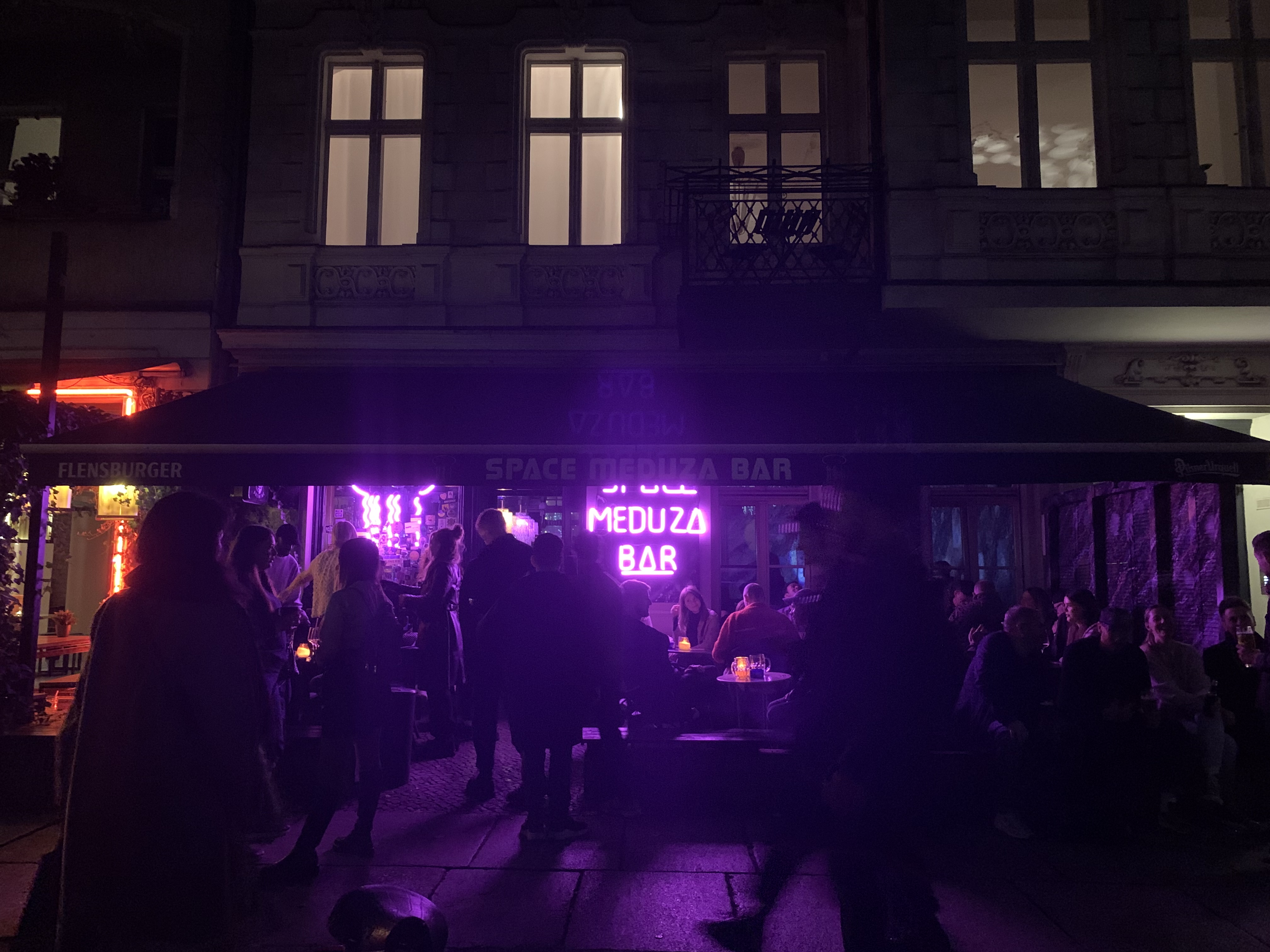
At Fete de la Musique, I was lucky to hear @lisaakuah perform songs from her debut album, Outgrowing Nymph. I met the psychedelic folk singer about 2 years ago at Space Meduza, where I was immediately entranced by her voice which seemed to expand endlessly into the neon-lit interior of the bar. Though Alex offered more of an industrial setting, the effect remained the same, her voice reverberating through bricks walls and steel beams to project an acoustic center into an abstract, cosmic space: “worlds endlessly wide,” as she would sing in “Dancing Trees.”
On a night where the past echoed into the present, and the wind outside stirred storms in my heart, I found Lisa’s music more penetrating than usual.
I’m close to the earth I breathe in the world Lying down on the ground That’s how I came to see In the breeze, the dancing trees
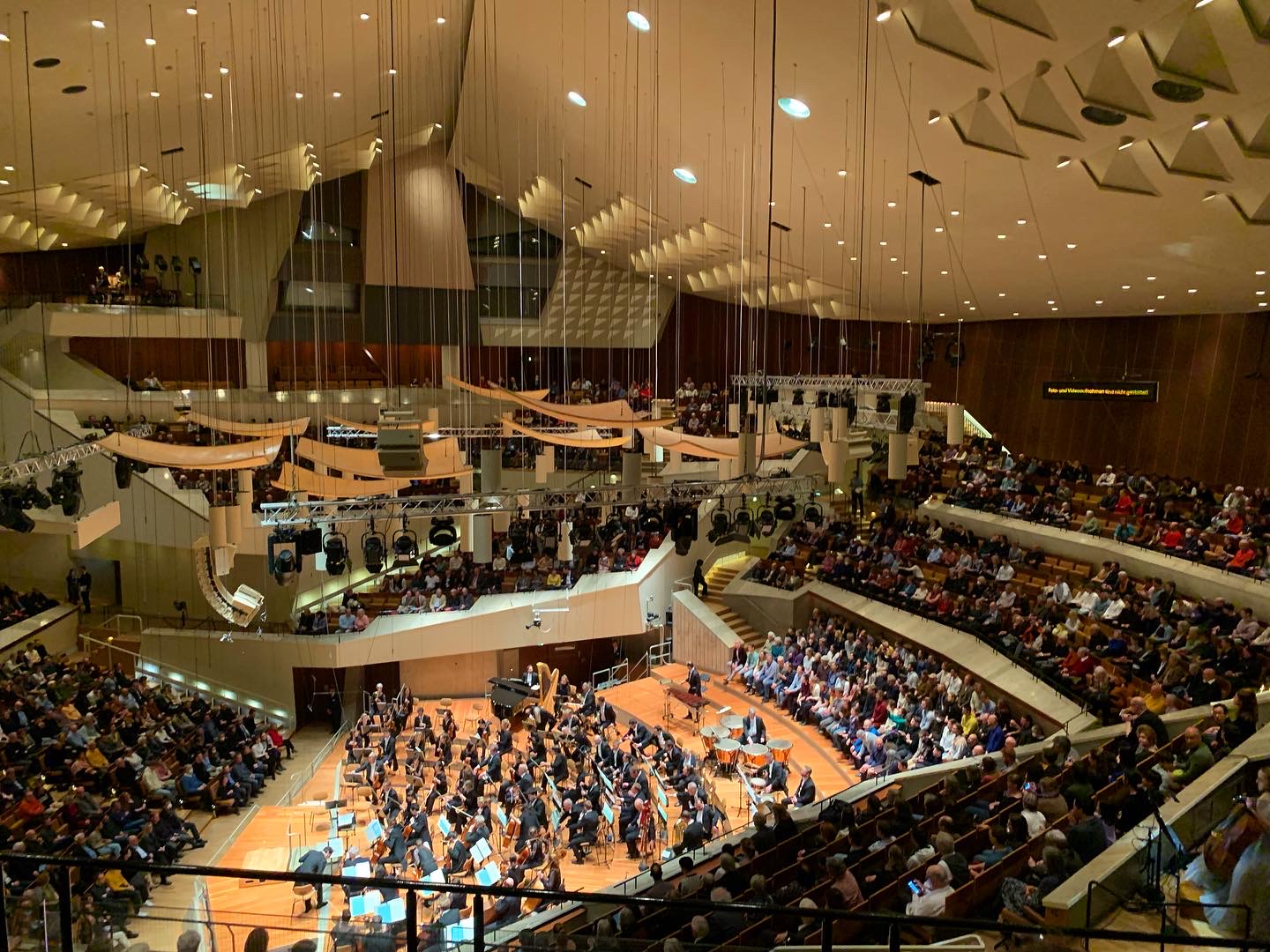
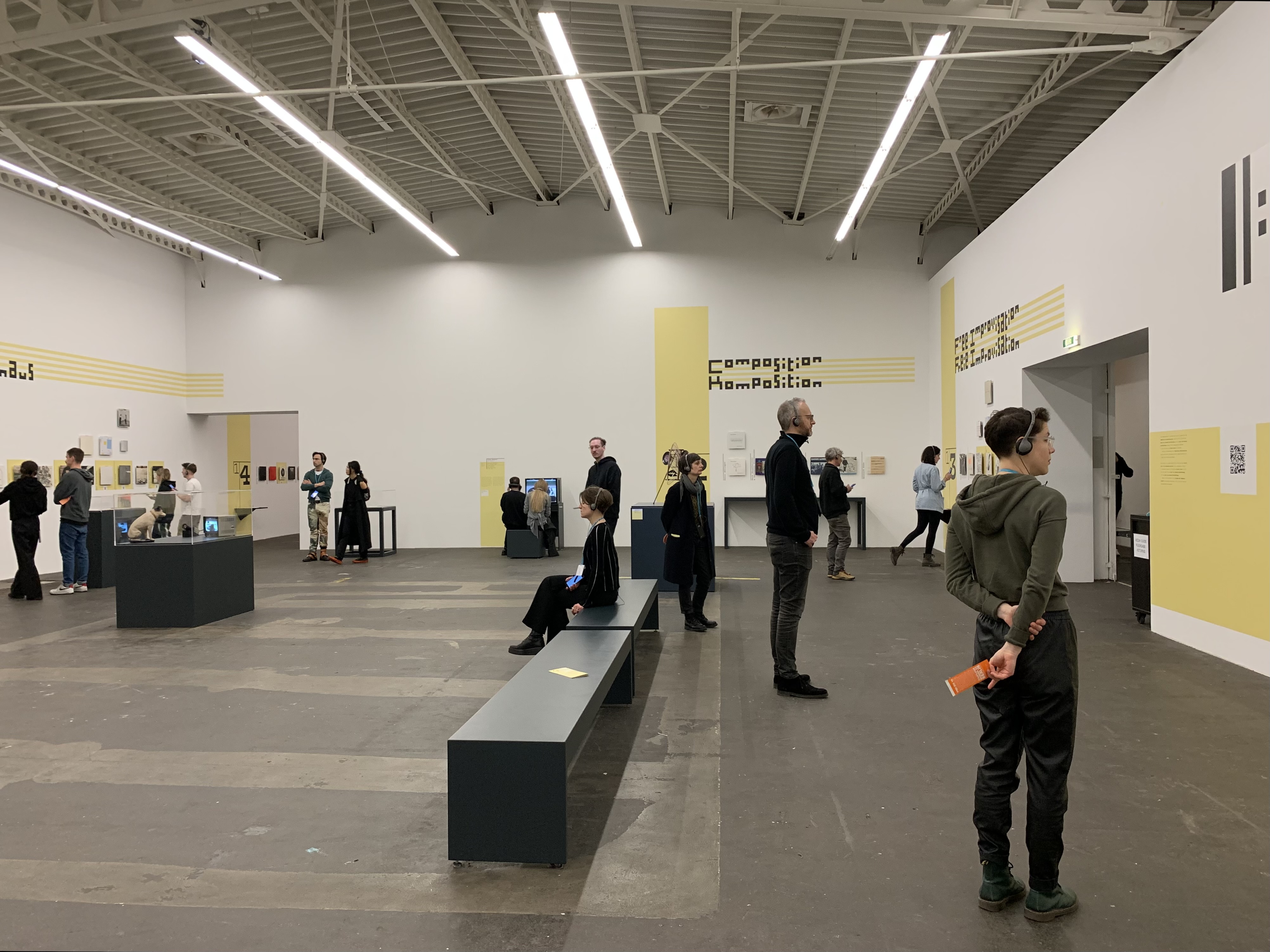
Monday’s weather continued from the weekend’s, the sky forlorn, the rain speckled. After Gil and I parted ways at the Berlin Central Station, I was assailed by a revelation of the emotional fullness of the days, which had began Saturday night with Elgar’s elegaic Cello Concerto at the Philharmonie, later reiterated on screen in the movie, Tàr. With Elgar’s melancholic strings still percolating in my head, I slept fitfully, then woke to go to Hamburger Bahnhof for the abstract, but in my head at least, tortured figures of Christina Quarles’s paintings. I ventured deeper, into a separate exhibition on broken music, charting the history of experimentations and innovations in music for the past few decades. A free audioguide is passed to you, on which you can scan QR codes to listen to the sounds from various curated themes in the exhibition – minimal/maximal music, techno, artists’s labels. I was immediately drawn to John Giorgio, who founded the Dial-A-Poem telephone service at the height of the 60s counterculture movement where a random poem is selected for the caller, usually poems with leftist leanings – anti-Vietnam war, pro civil rights, anti-capitalist. Eventually, it got shut down by the FBI in the 70s, not an unusual act of censoring materials that did not fit the status quo. In the Suicide Sutra, inspired by Buddhist chants, Giorgio’s voice is overlaid several times, each phrase, an echo of the last: “you can’t remember, you can’t remember, where you are, where you are, you have forgotten, you have forgotten, who you are, who you are.” Returning to the Central Station, Elgar’s contemplative tune was acoustically superimposed onto Giorgio’s mournful poetry, along with the visceral visuality of Quarles’s paintings. The overall effect was heavy, not the lightness of being of love and sex and living in the moment, but the vague feeling that all of these things have happened to you before, in a past life or an alternate reality. I took that feeling to Beate Uwe, where I met Fiona for the first time, and danced my heart away.
 Chan Wai Charles Wong