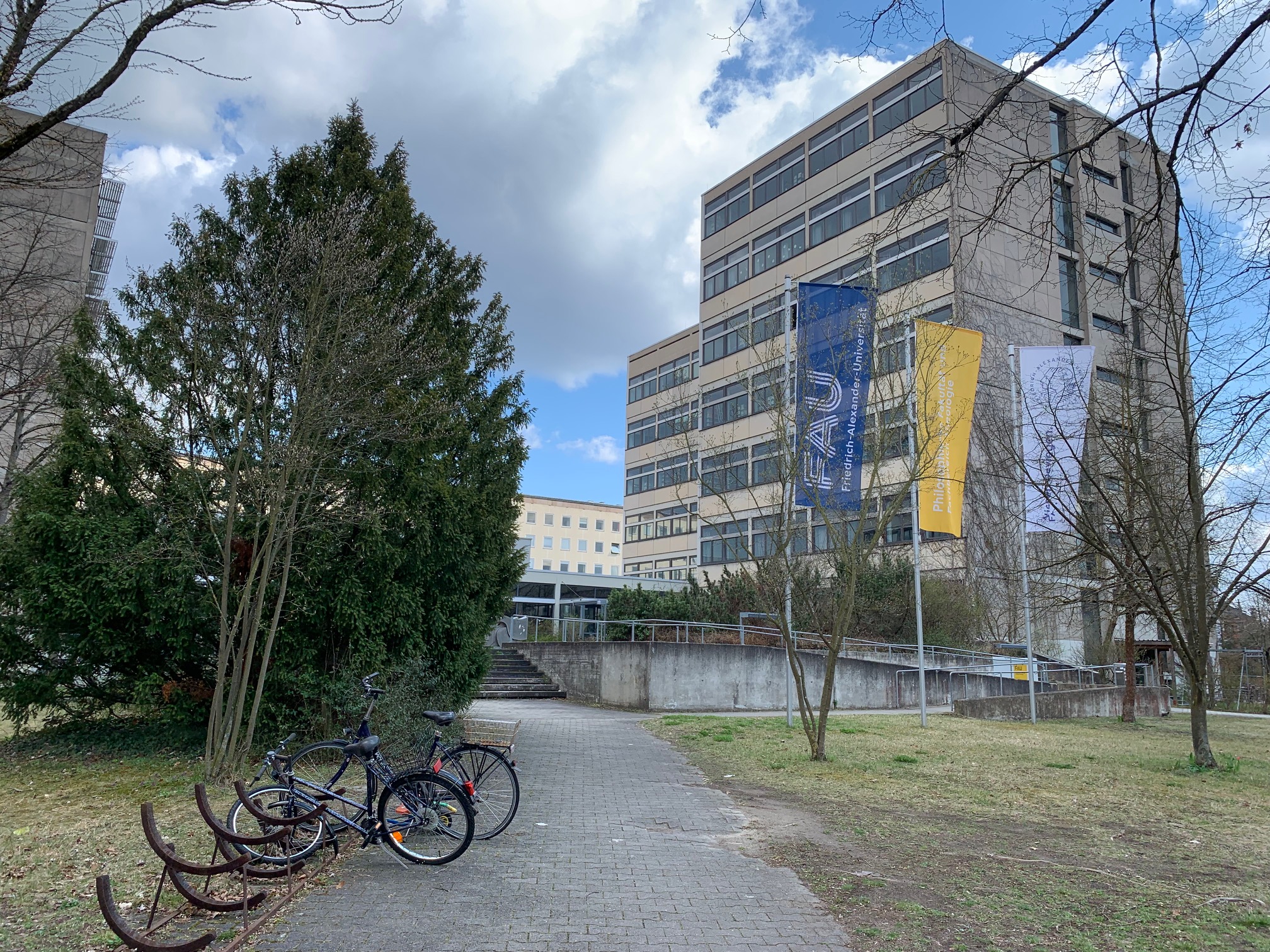
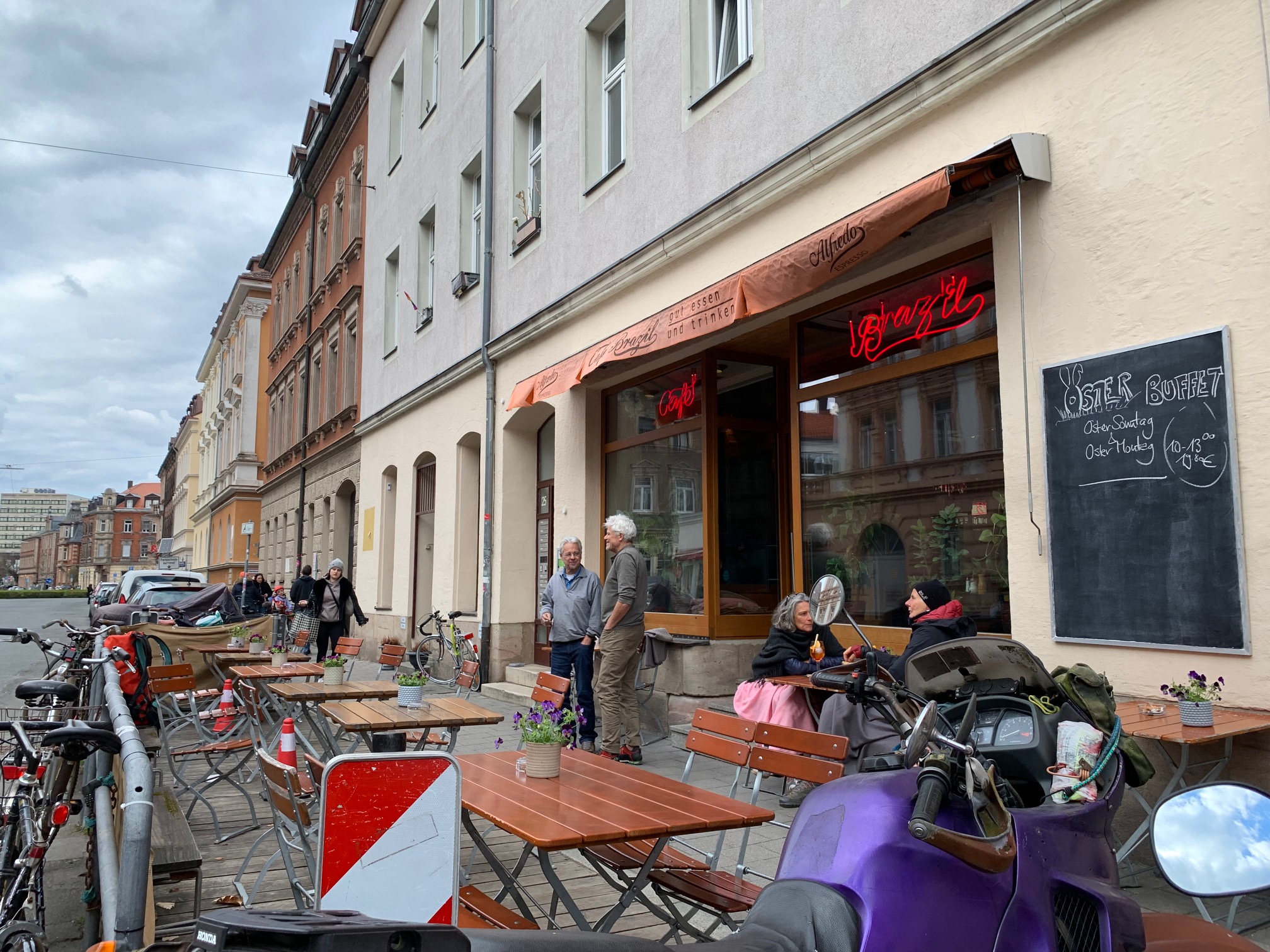
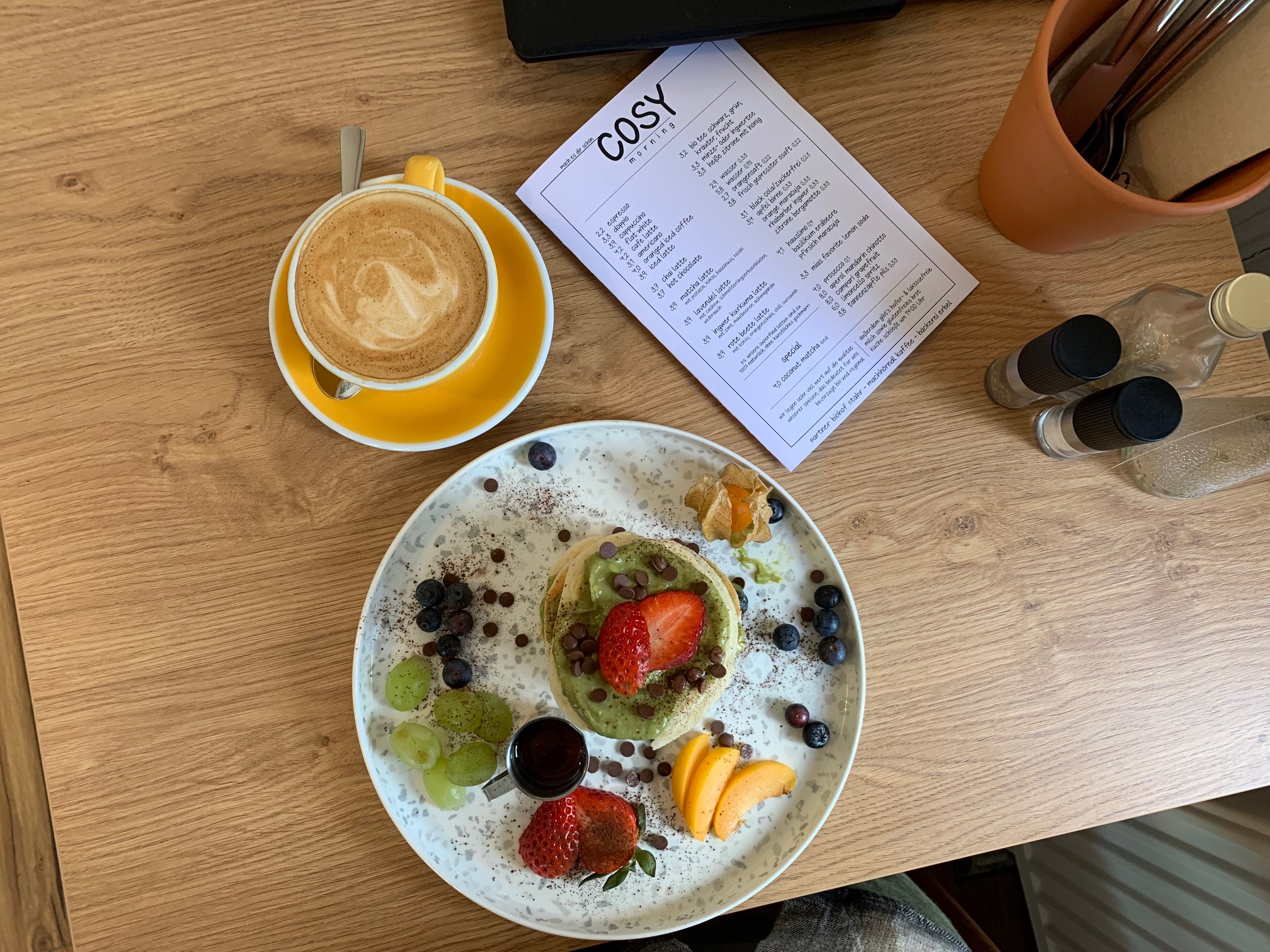
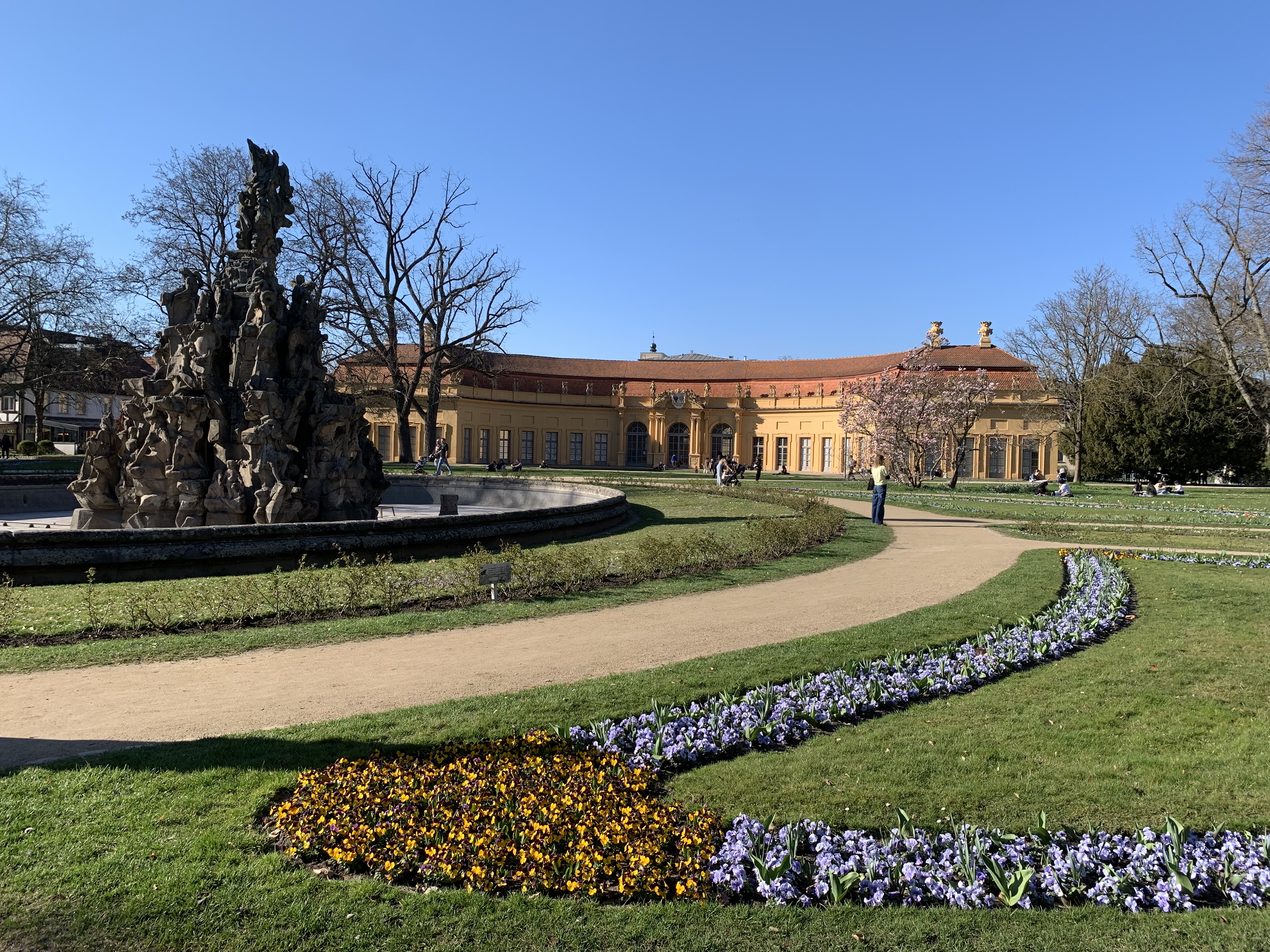
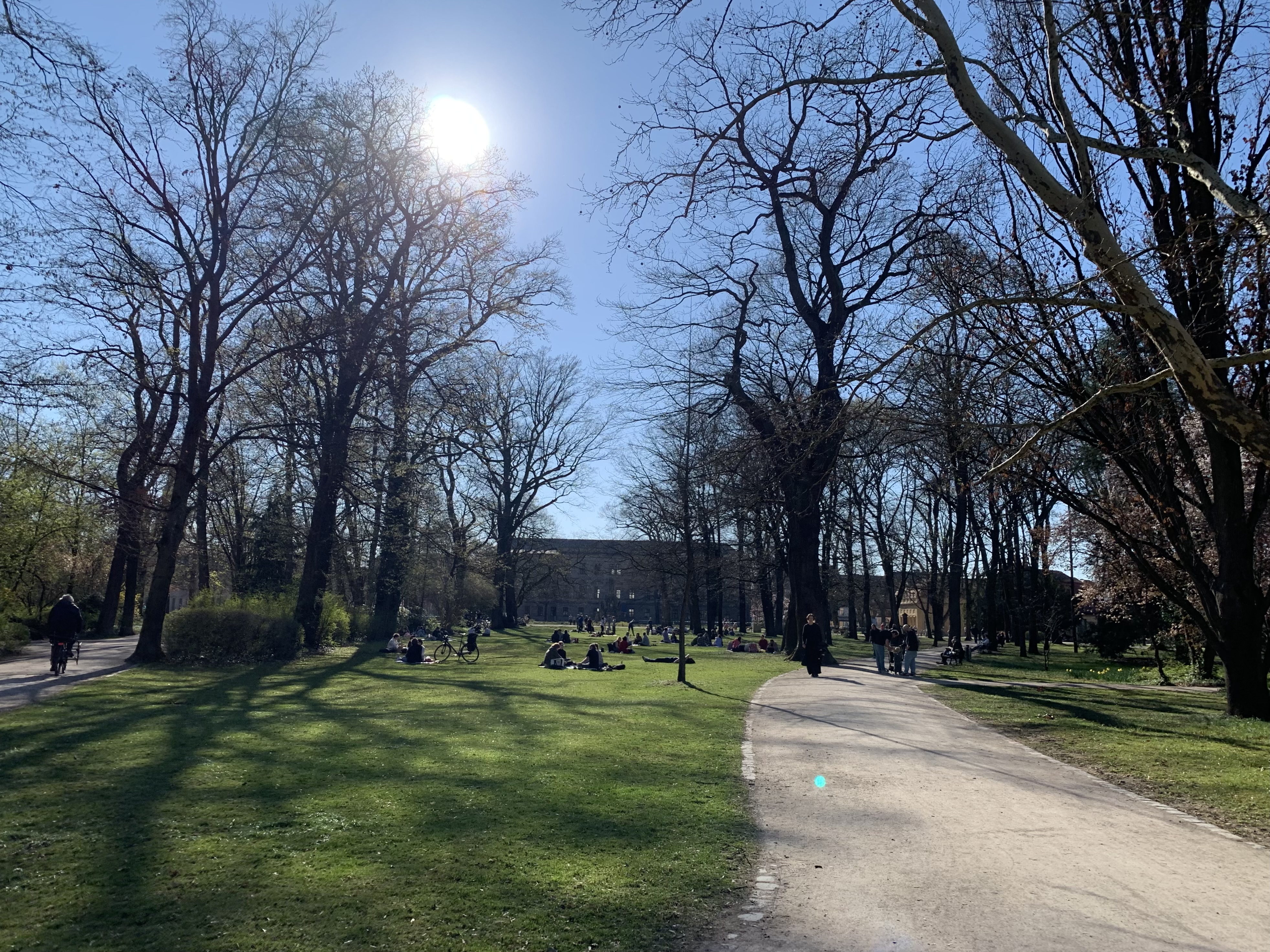
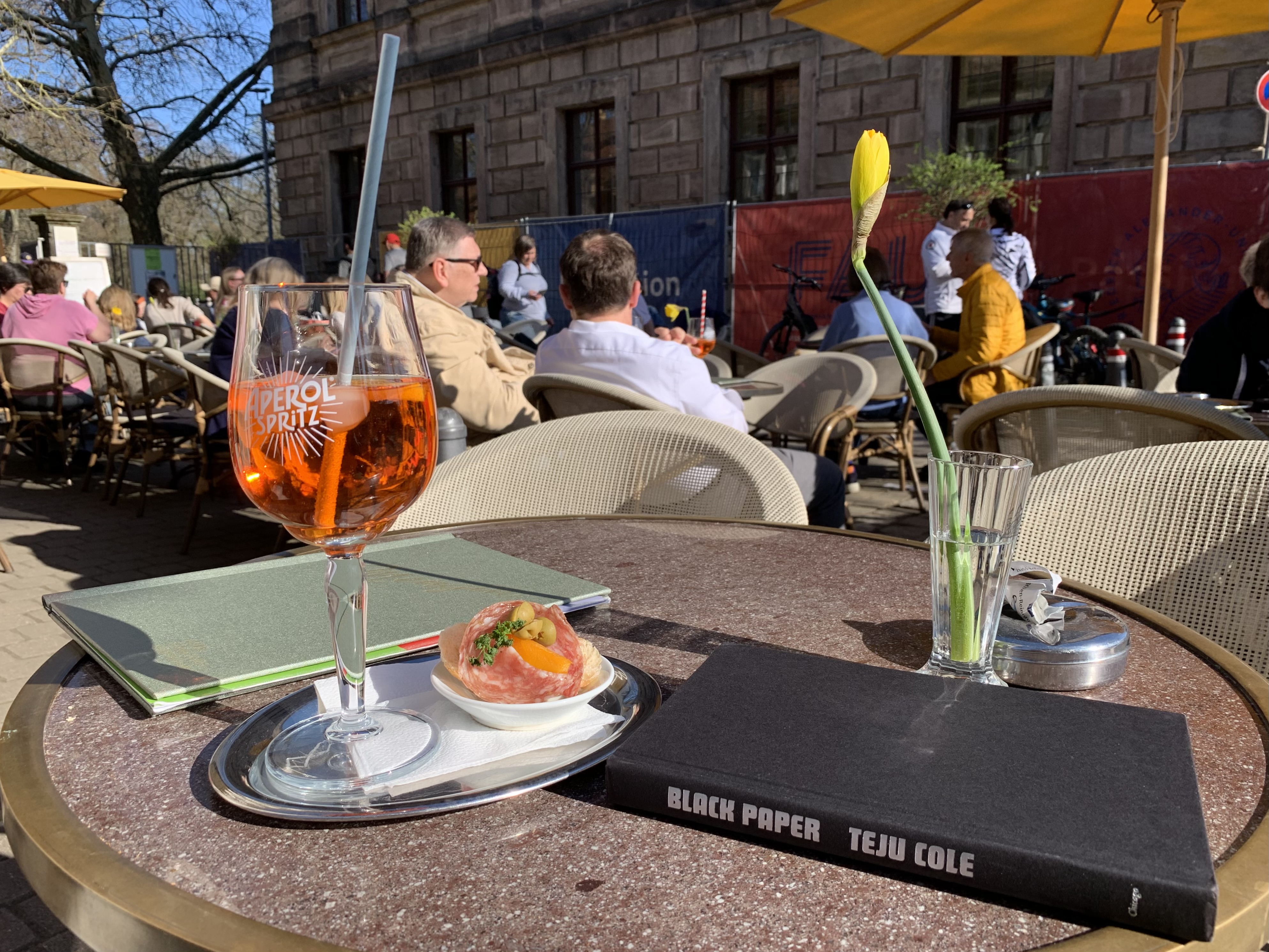
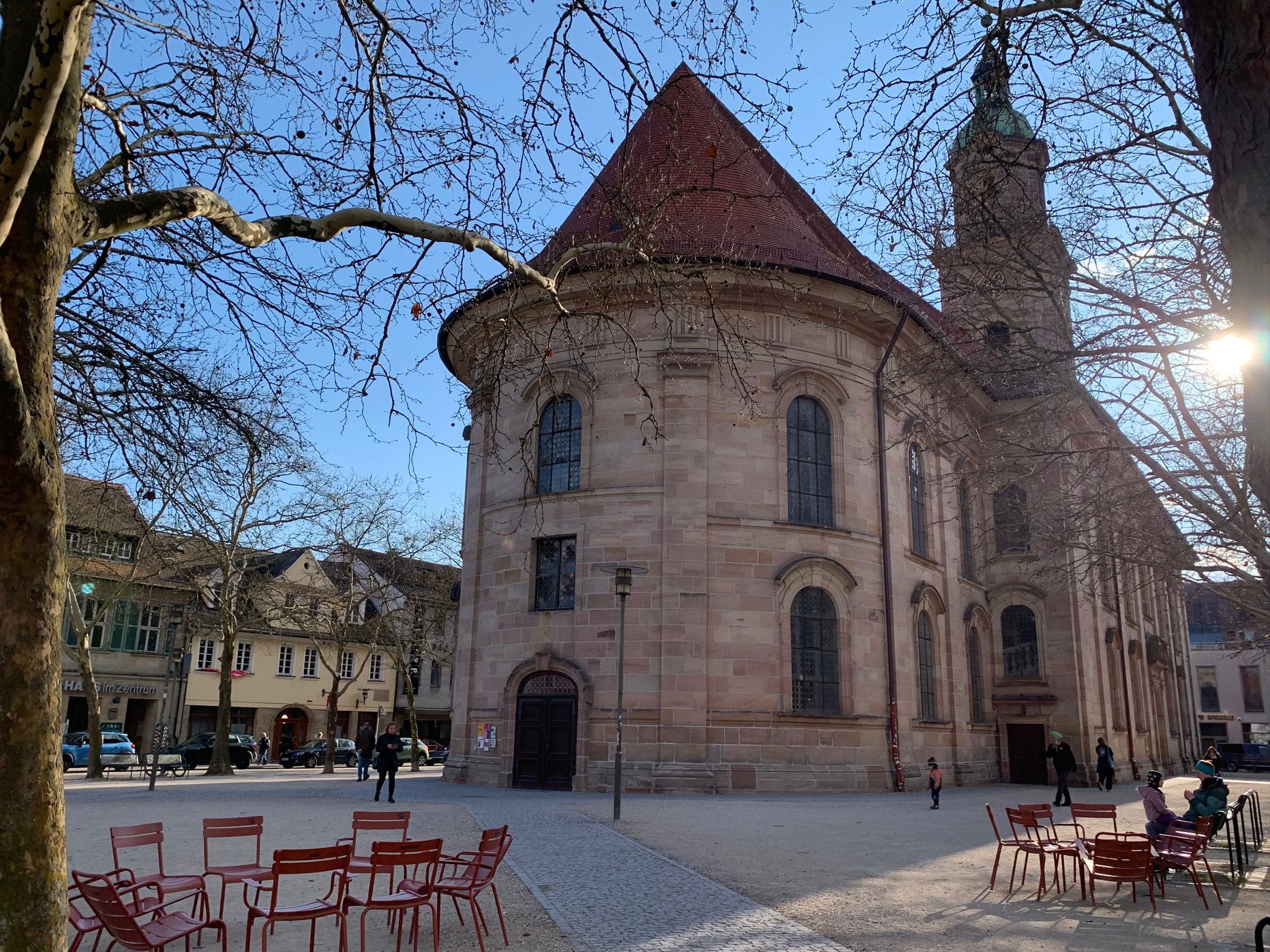
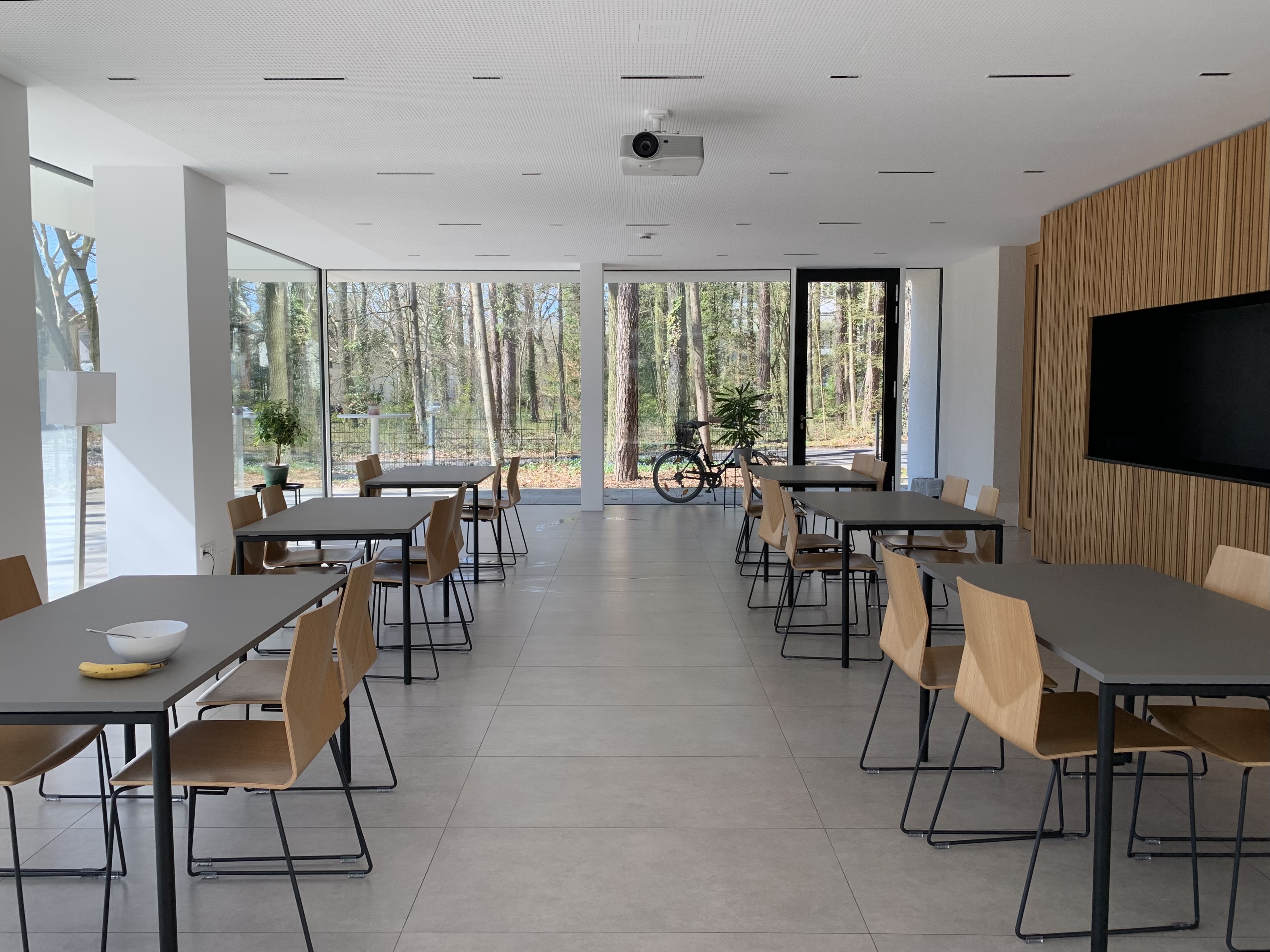
The first few days I spent wandering around the city, reading at the university park, occasionally cocooning myself in cafes to look for flats and register myself with new doctors. I am housed temporarily in a university apartment in #erlangen for international researchers, an overly bright, glass-panelled three-floor building that reminds me of the office in the Apple TV series, Severance; I guess the resemblance is apt because I feel that there is always a certain amnesia involved every time one moves away into a new environment, as memories of the past contest for space with the unfamiliar. There are supposed to be 11 other residents living in the building though I’ve only seen one of them once, after I inadvertently scared him in the common kitchen when I tried to grab some snacks at midnight. He left before I could properly apologize or say hi.
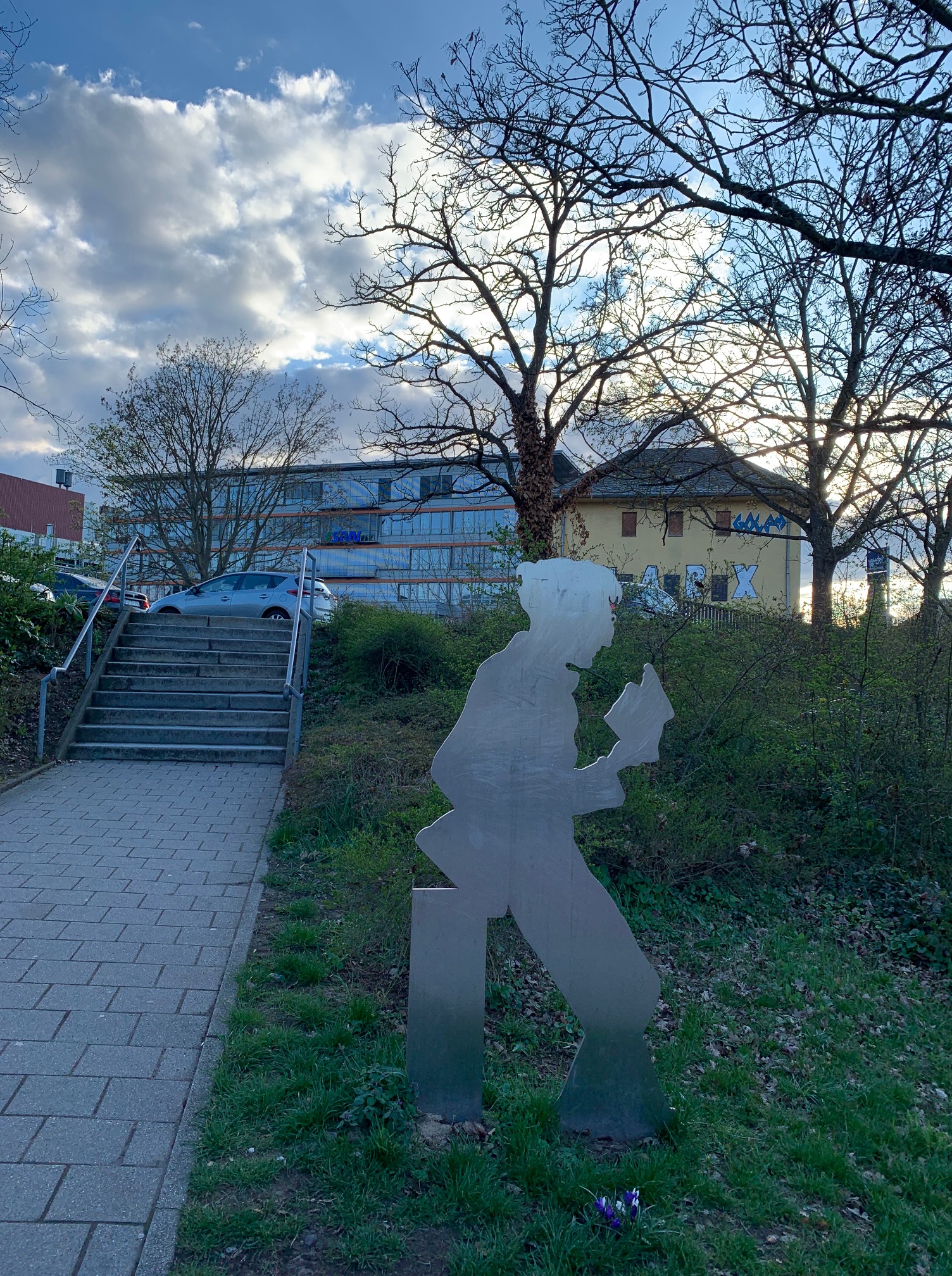
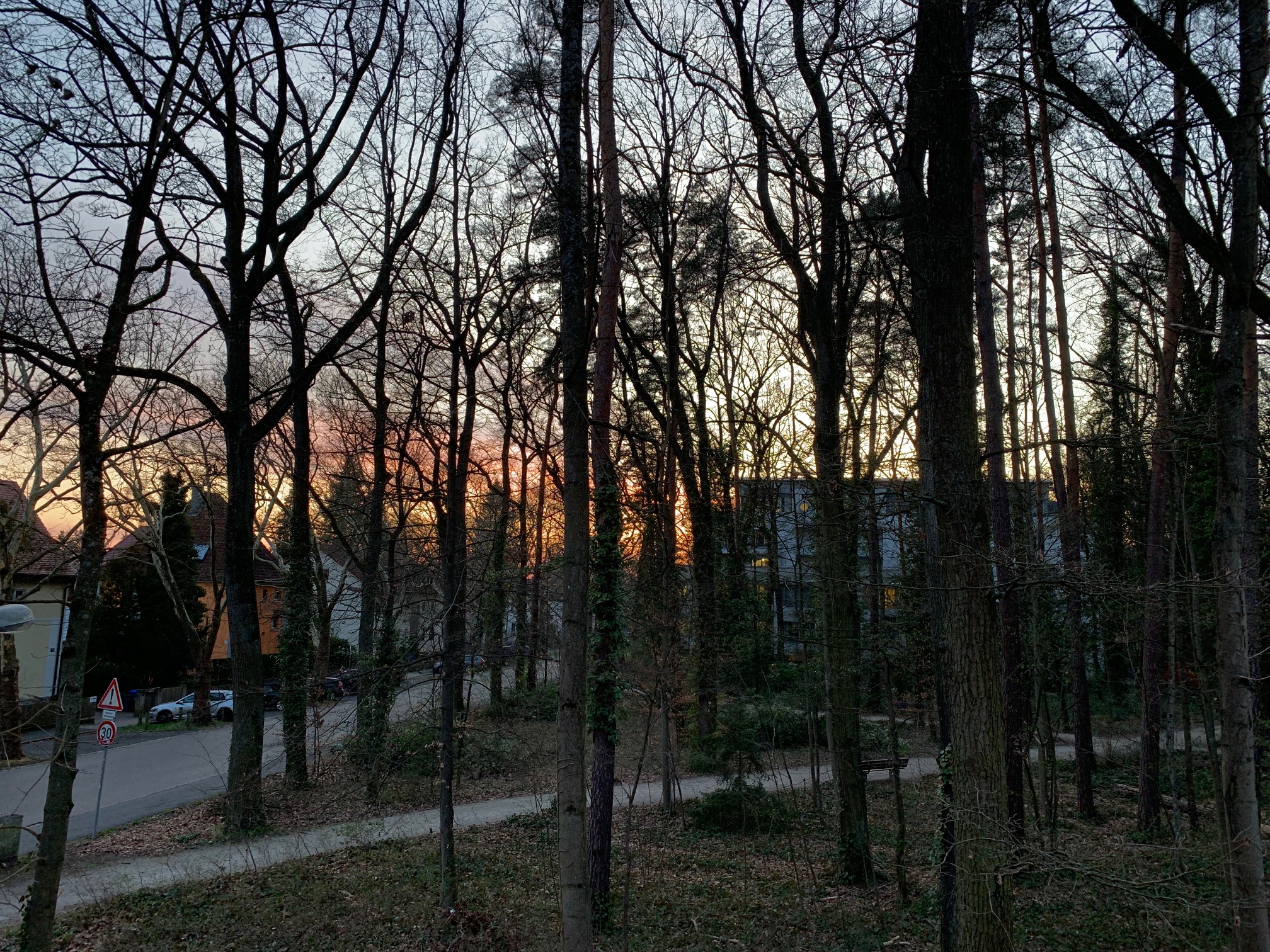
The evenings can sometimes get quite lonely. After the daylight absconds and the anonymous small city charm reconfigures itself into rambunctious gatherings between families and close friends, I get pangs of homesickness – for Berlin or for Singapore, I’m not too sure, though I suspect it’s a little bit of both – but I’ve also found some daily respite wandering north of the apartment into the woods separating Erlangen from smaller villages in the vicinity. I cherish these moments because once I get my keys to the office, and the programme officially begins at the end of the month, a more familiar busy sets in, one that may allow for less introspection. Anyway, sending lots of love to everyone from Franconia, Charles.


Dear [intended], I am writing to say hello and thought I also frame my greeting as a continuation of a response to the fascinating question you posed yesterday, on how Berlant’s work might be politically useful. I guess my answer now isn’t too different from my initial answer to your question, except the words that absconded from me yesterday have perhaps found a more distinct shape today. I still can’t quite remember where I’ve read it from or from whom I’m citing, but it goes along the lines of how revolution isn’t achieved through the utter domination of the opposition but it only truly arrives when you have found an ideological cause that would compel even the opposing soldiers to drop their arms and stop fighting. When Berlant tries to deconstruct the fantasies sustaining hegemonic structures of power and reconstruct a new kind of “commons” from the dissociative middle, I see a similar impulse towards this kind of ideological cause. I am quoting from pages 123-124 here: “when one’s attention is bound to something that organises one’s energy or interest,” it “provides an infrastructure for understanding and moving through a situation or world” and by freeing this “energy and attention,” you can redirect them towards “recomposing the world, causality, and possibilities.” I don’t want to romanticise and over-determine Berlant’s political usefulness and suggest that reading Berlant will translate to material transformations in the sociopolitical realms, especially with a world out there that seems so keen to move so fast with its violence and destruction, but I found the whole notion of ‘unlearning and relearning’ very emboldening against an easy fall into conformity and nihilism, to think about disrupting our attachments to the status quo and slowly feeling our way towards affective foundations that might eventually transcend late capitalist logic. As Nicholas Brown says in Autonomy (2019), “the power of an argument is of an entirely different order from the power of a union. But you can’t have a union without an argument” (182). And for me, Berlant’s work certainly makes a compelling “argument.” Dreaming of another world, [subject]
 Chan Wai Charles Wong