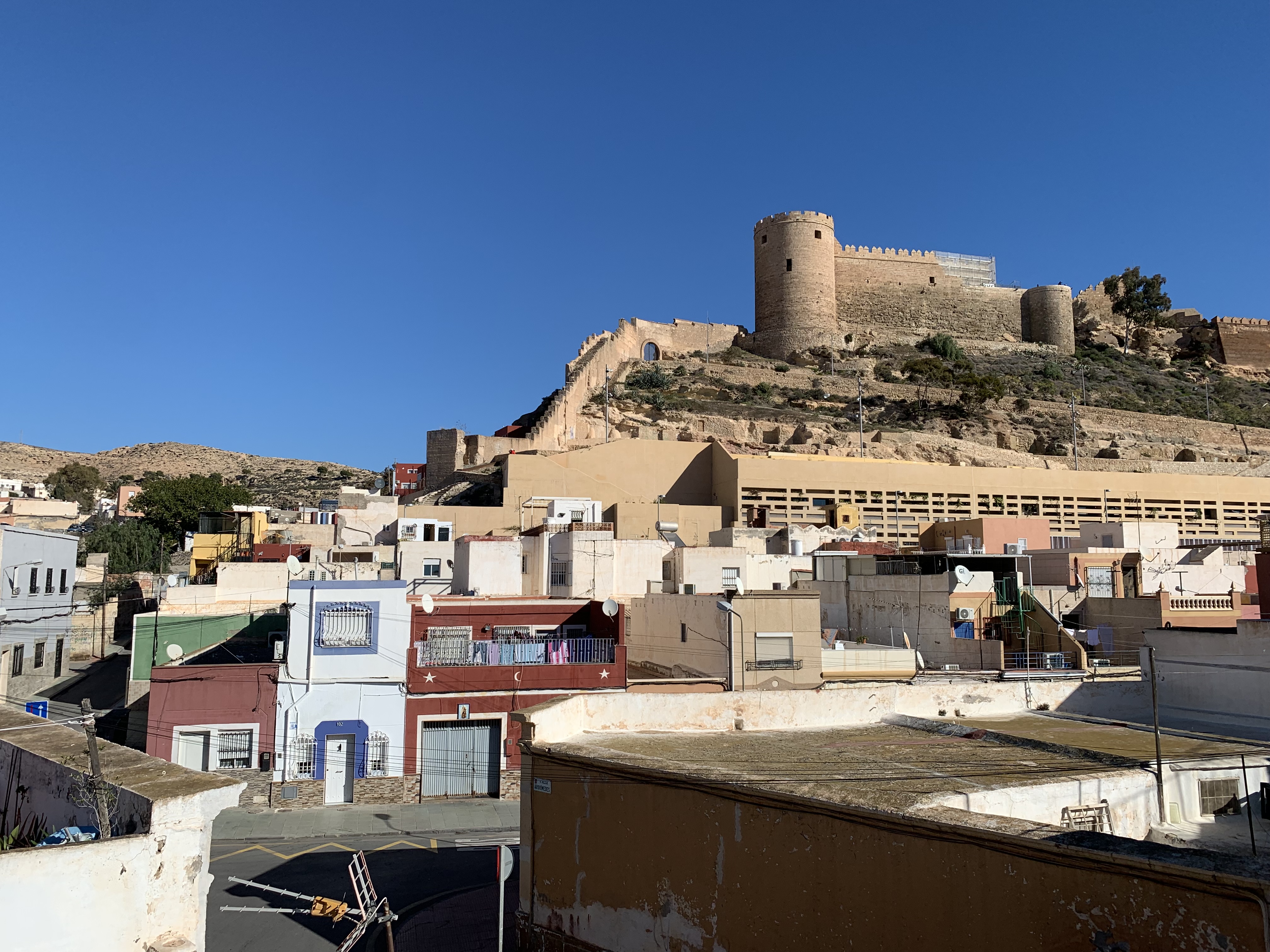
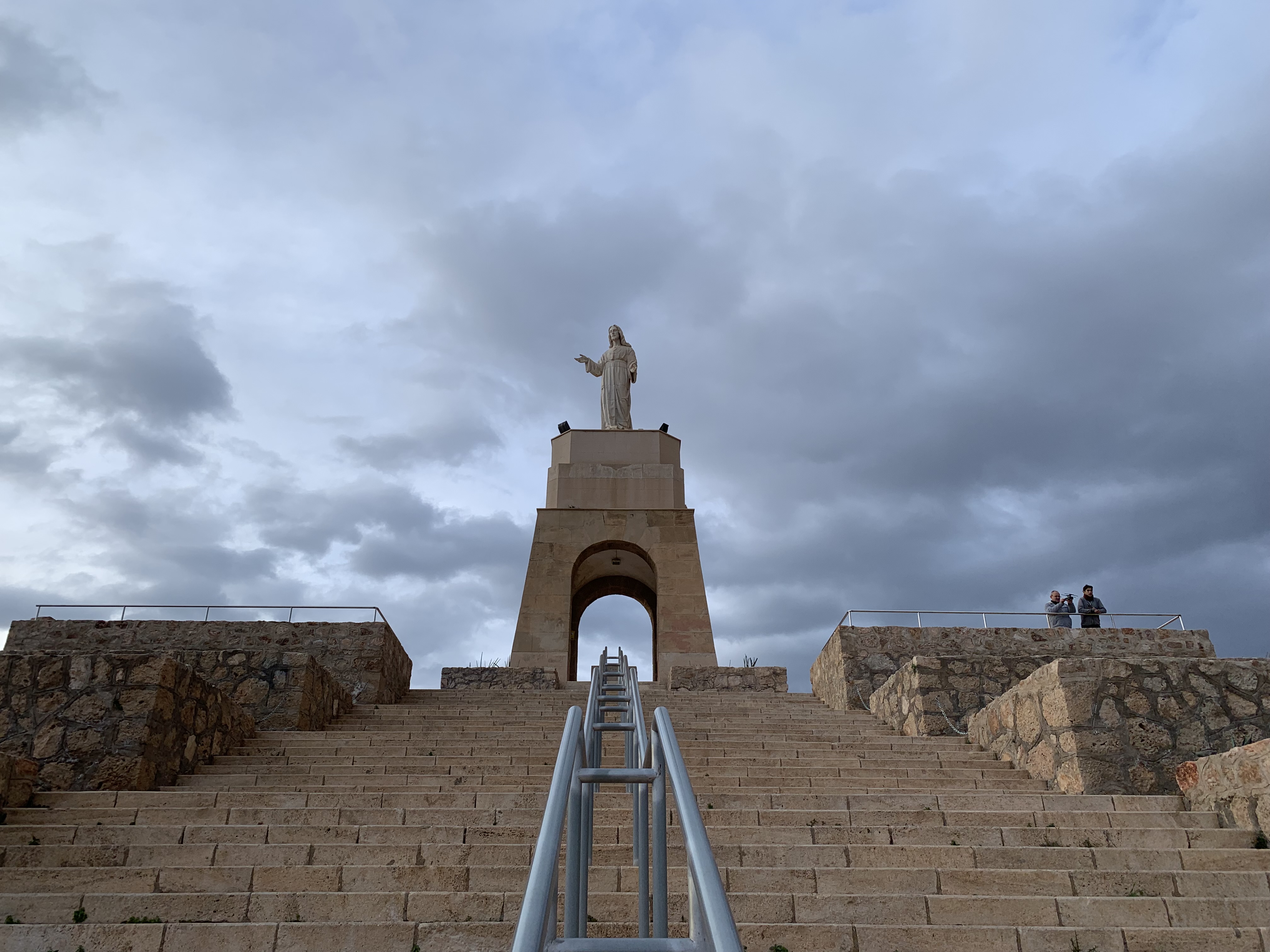
Hot Milk begins with a chapter in #almeria. It is with this book I start my day here, where I will spend the next few weeks under a blue sky that is reflected in my reading screen and the Alcazaba which casts its mournful eye over my sojourn. It is here I hope to be burdened with clarity.
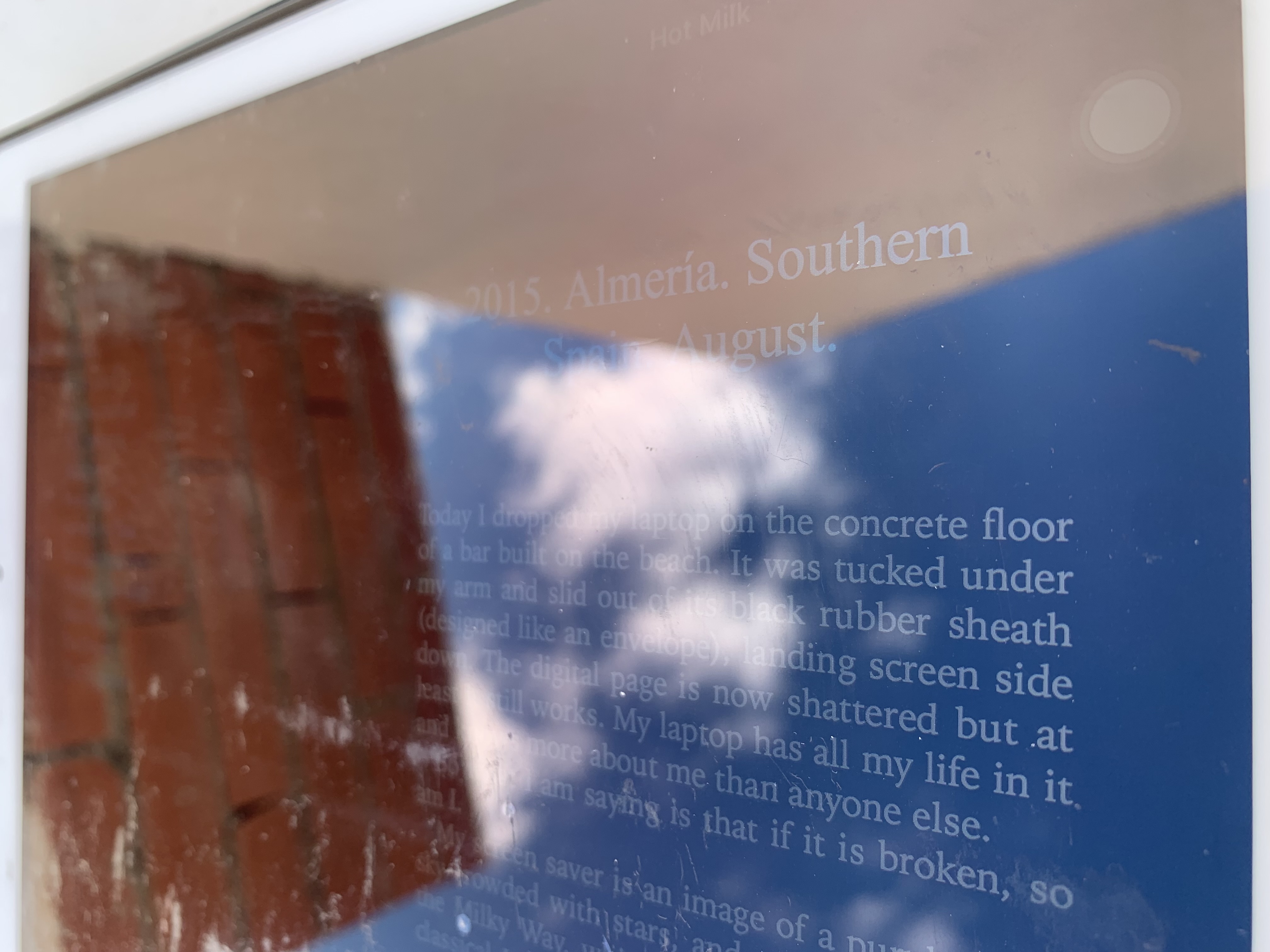
"Today I dropped my laptop on the concrete floor of a bar built on the beach. It was tucked under my arm and slid out of its black rubber sheath (designed like an envelope), landing screen side down. The digital page is now shattered but at least it still works. My laptop has all my life in it and knows more about me than anyone else.
 So what I am saying is that if it is broken, so am I."
           - Deborah Levy, Hot Milk
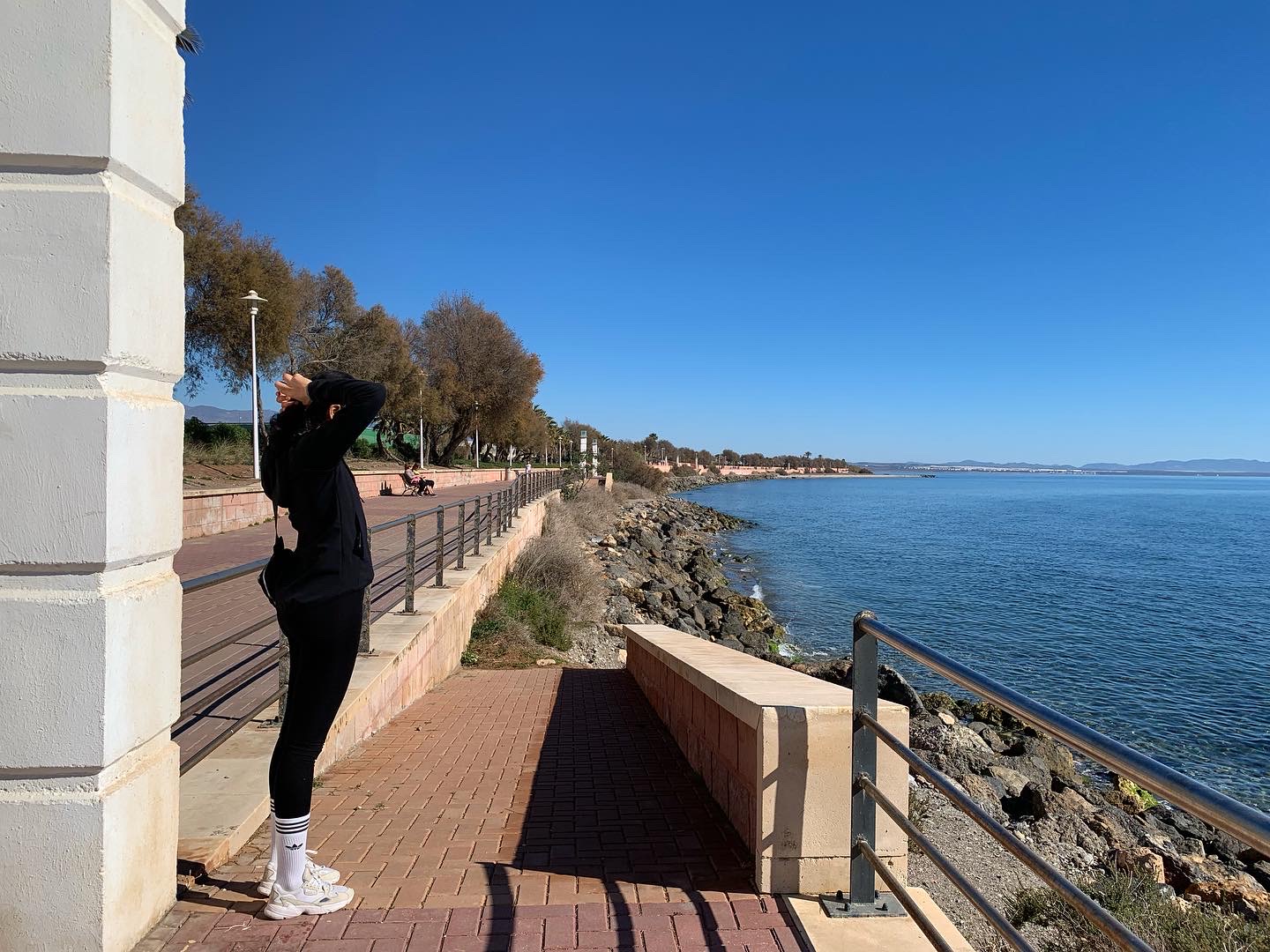
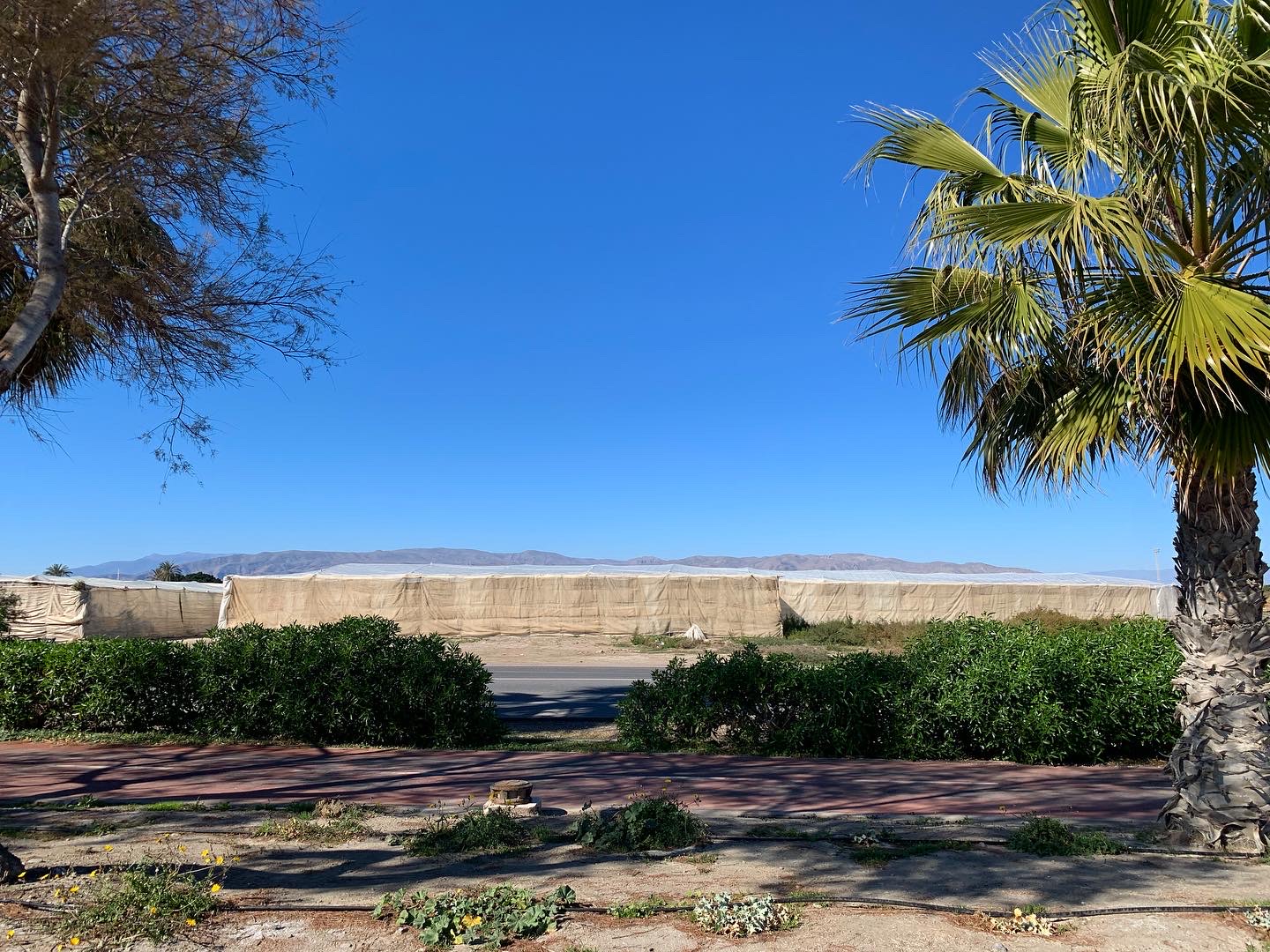
We walked to the university along Paseó Marítimo, a 6.4km stretch straddling desert and sea. On our way we saw white tarps plastered over the hills, greenhouse farms fielded by mostly underpaid North African migrants. “You’re gonna see a lot of them,” Ik said. “Agriculture is Almeria’s biggest industry. Most of Europe’s food is practically produced here.”
Every time I looked at her, Ik was always untying and tying her hair in slow, meticulous waves, mimicking the ebbing of the tides. The view, of two unrelated motions in sync, had an air of finality about it, just as the tomatoes will continue to be harvested and exported, and the workers exploited.
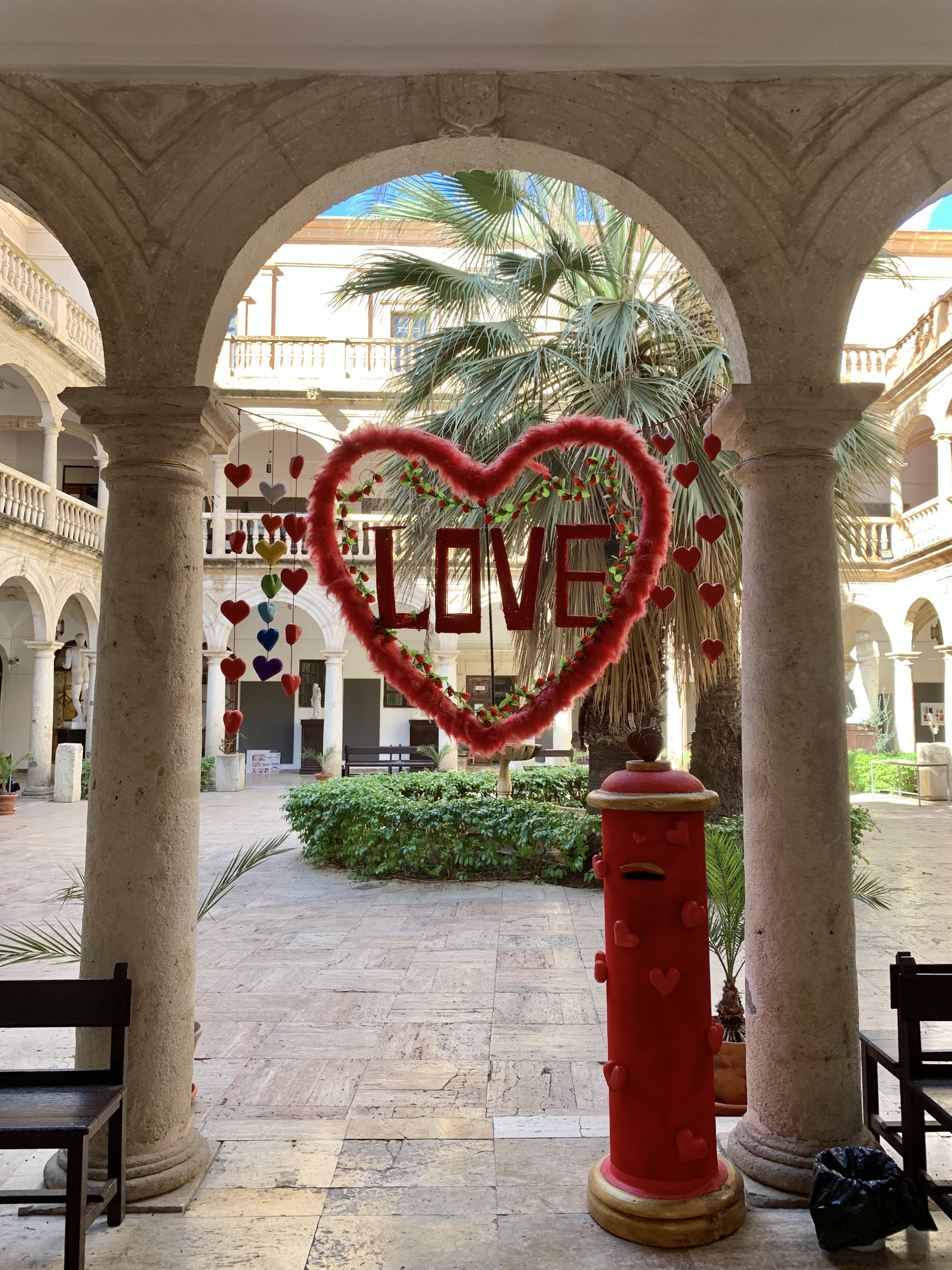
I’m thinking of love today partly because it’s Valentine’s, partly because today’s weather in Almeria is anomalously grey so I’ve been confined to an interior space, with news of global crises splayed out across B’s 65” TV like chaos incarnate and it left me wondering if heart-shaped chocolates can save us.
I’m thinking of love today because it is someone’s death anniversary, near or far, and while we are often bombarded with pictures of love being jovial and amorous, we often forget that grief is also an expression of love, and an expression we wear more often, and I’m trying to remember if it was Spanish philosopher, Miguel de Unamuno, who said that love arises out of shared suffering and compassion for others?
I’m thinking of love today because Moth taught me about penguin pebbling and gave me insights into neurodivergent ways of loving and how during our trip to a stationery store they had seen me eye a green-leathered notebook and bought it for me in secret, around the same time I had seen them marvel over a book-shaped wooden box and bought it for them in kind, after which we got coffee and headed down the Paseo to visit an Asian supermarket where I spoke Mandarin with the shopkeeper.
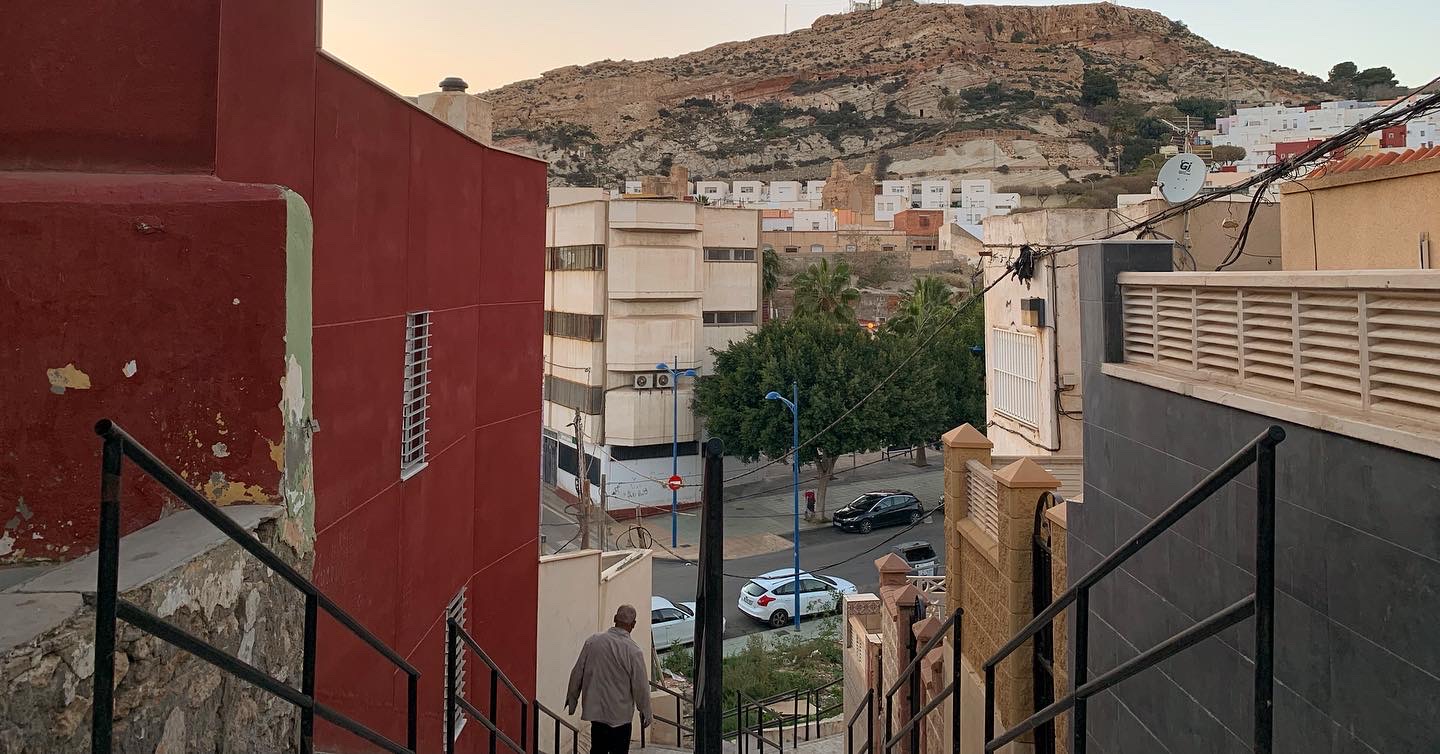

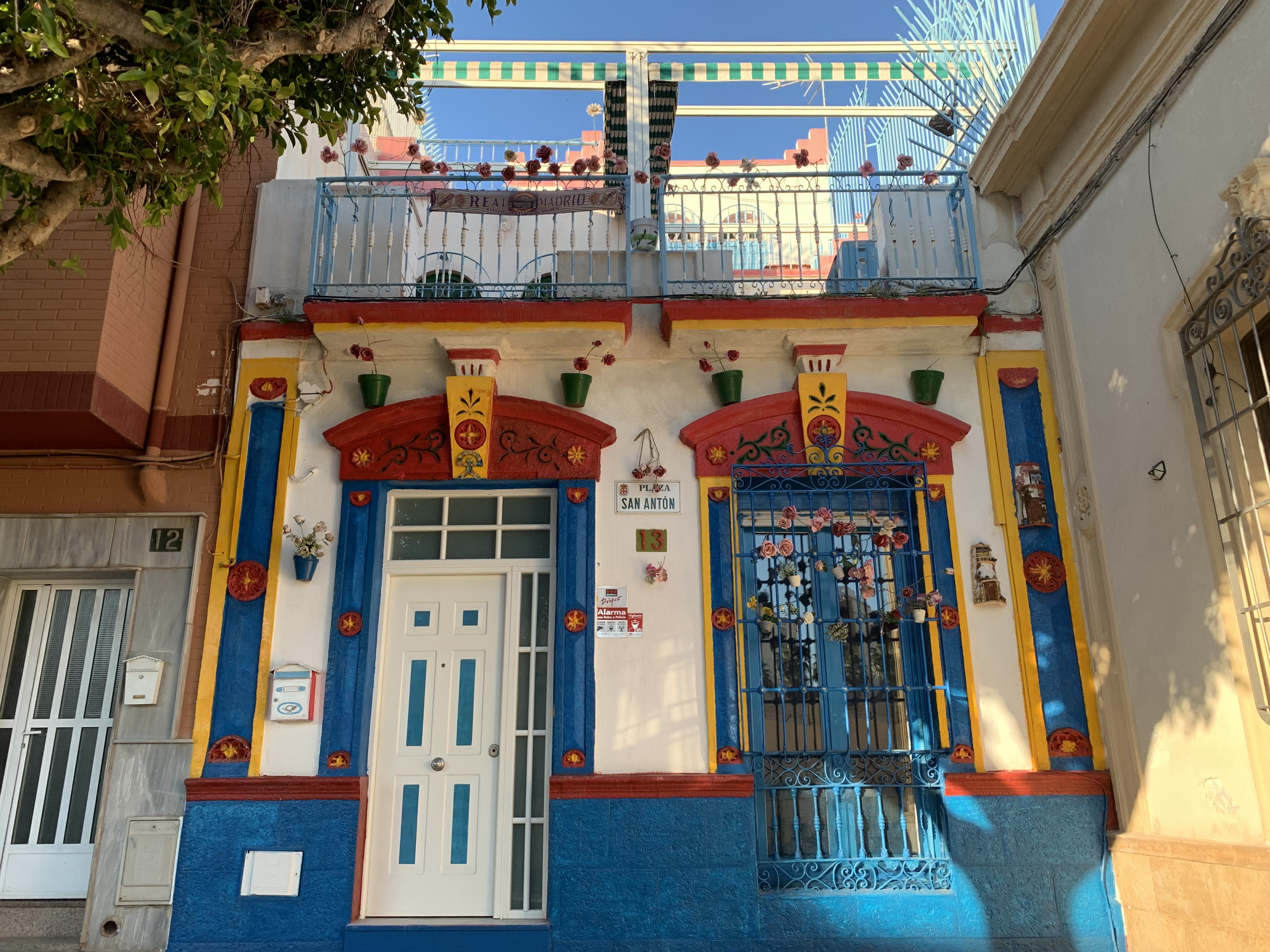
A metal walkway separates B&H’s neighbourhood from La Chanca, a commune carved out of the Colonia Morato caves, home today to fishermen, gypsies and Moroccan migrants. Its colourful facades obscure its impoverished state, its steep streets strewn with rubbish and improvised promenades, refused to be reached by city services except for a bus line that runs reluctantly through every half an hour. Yet life thrives, through various corner stores pedaling different wares, boisterous kids kicking balls about, residents under fig trees seeking refuge from the heat.
In his eponymously titled novel (1962), Juan Goytisolo marvels at La Chanca’s “[overwhelming] geological violence, the nakedness of [its] landscape…” Downtown, at the Museo de Arte Doña Pakyta, which houses a permanent exhibition for Almeriense art from the 1880s to the 1970s, La Chanca was a recurring motif. Through Goytisolo’s words, I can see why La Chanca has captured artistic imagination across the ages: the sublimity of its hazardous beauty, the resilience of the people who call the hills home, like sprouting mushrooms at the end of the world.
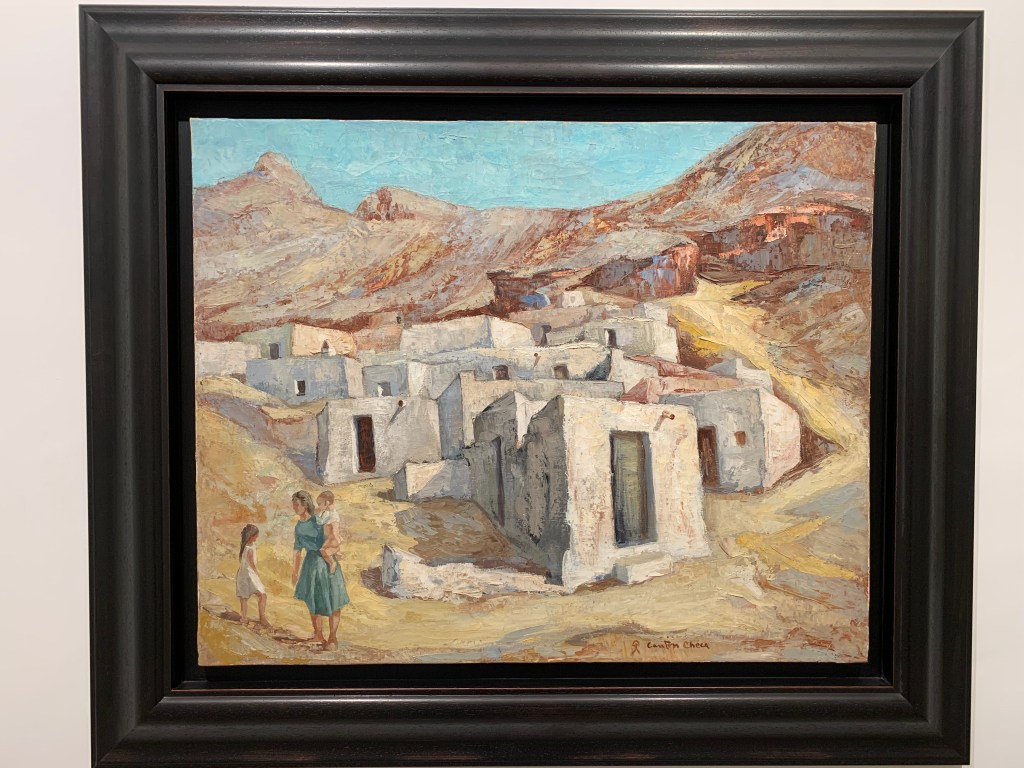
Miguel Cantón Checa
(Almeria, 1928 – 2004)
Chanca
1965. Óleo sobre lienzo / Oil on canvas
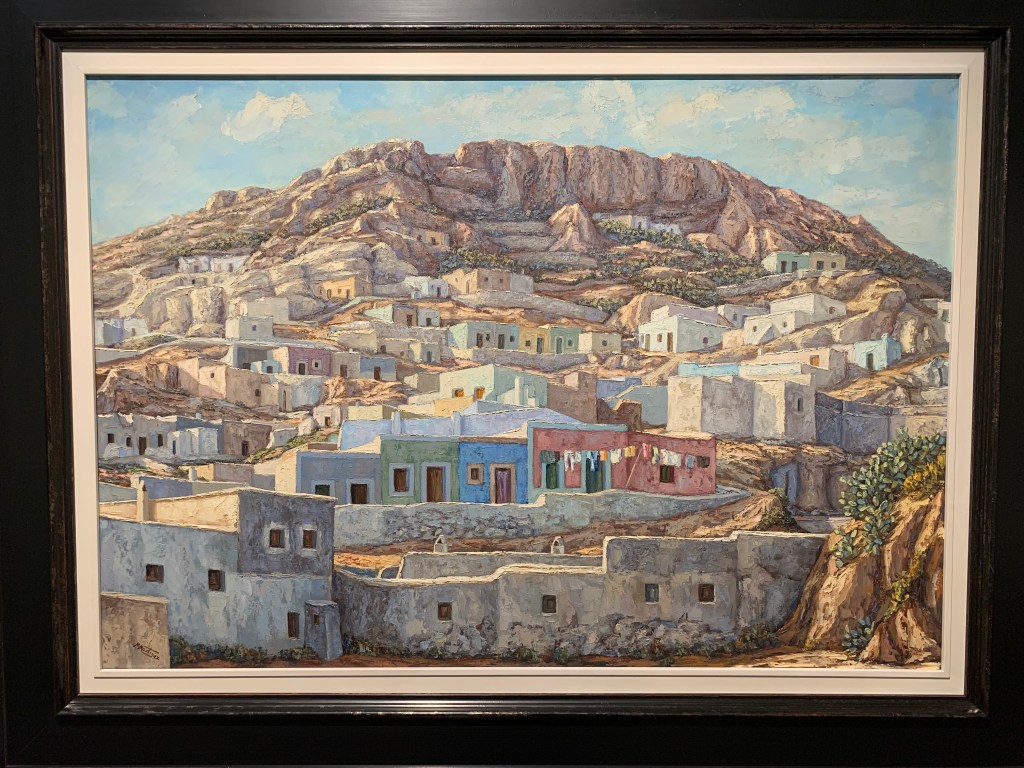
Miguel Martinez Gómez
(Almeria, 1920 – 2003)
Belén Almeriense (La Chanca)
Circa 1980. Óleo sobre lienzo / Oil on canvas
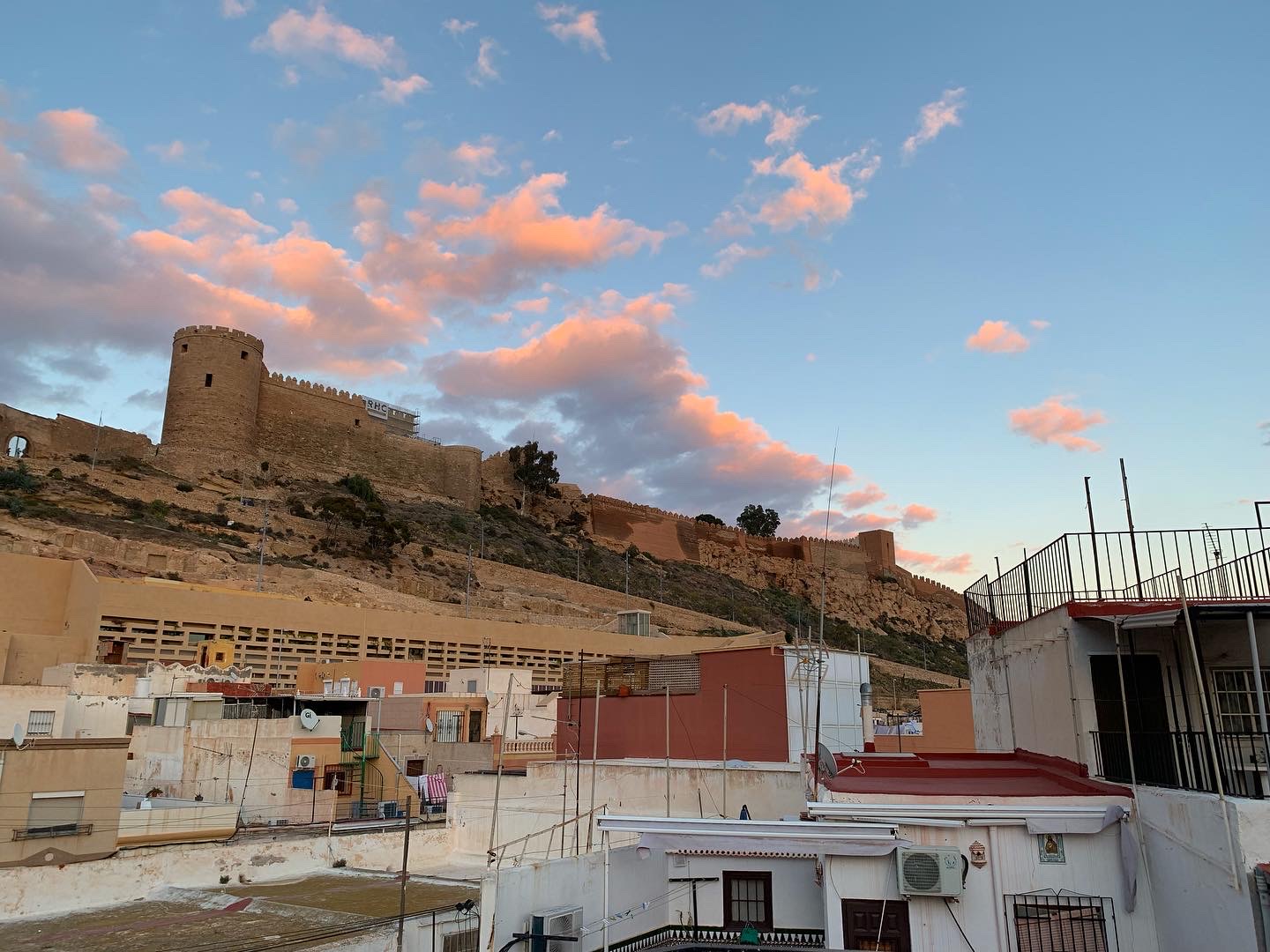
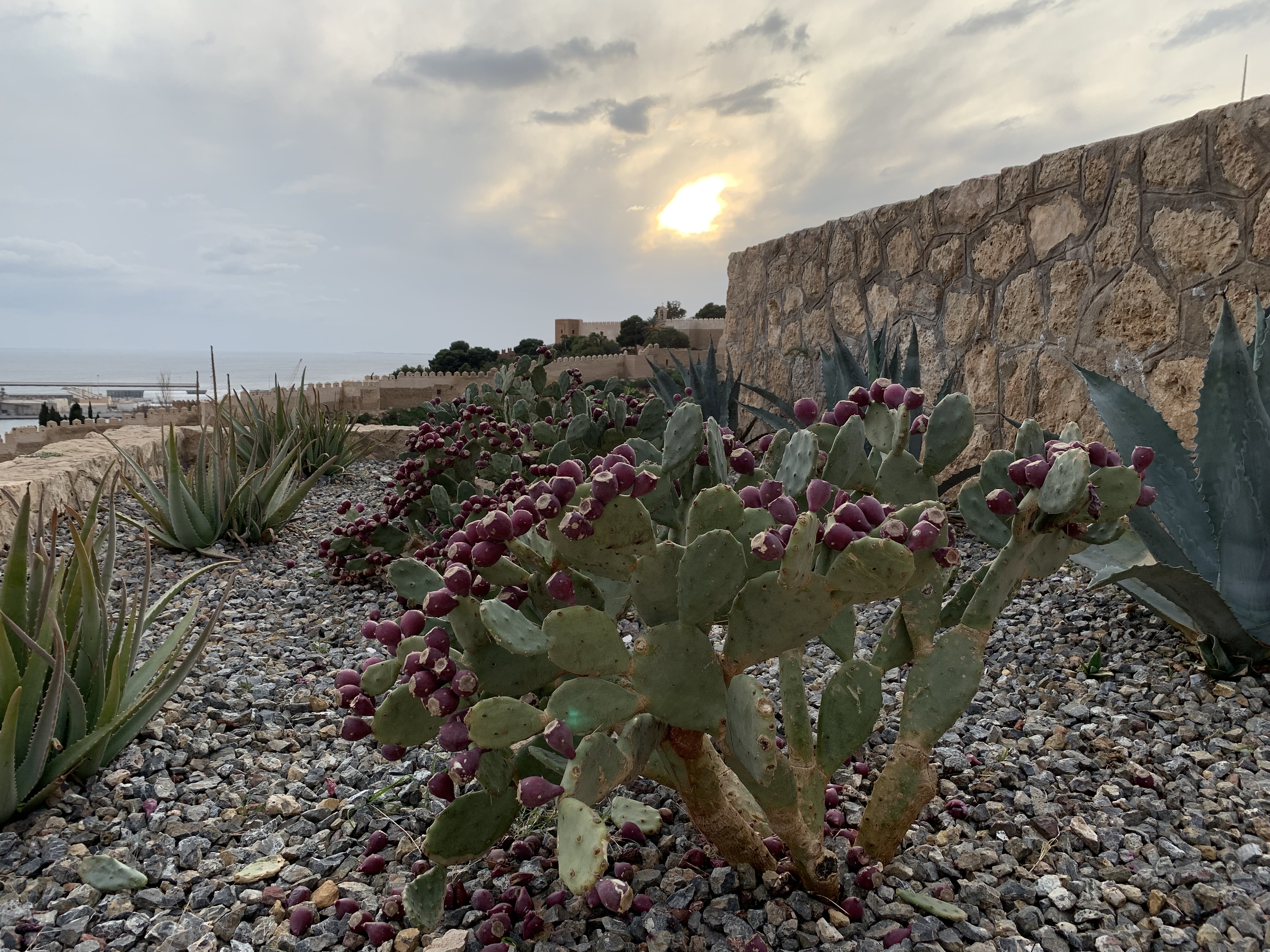
Around 6pm, the murmurations begin, over the port which is visible from B&H’s sunroof. On the other side of the roof the Alcazaba stands. Every day, it faces the rocky hills from which its walls are made, a moody child separated from its natural environment: dignified on a clear day, solemn in grey. Today, the sky is dusted pink.
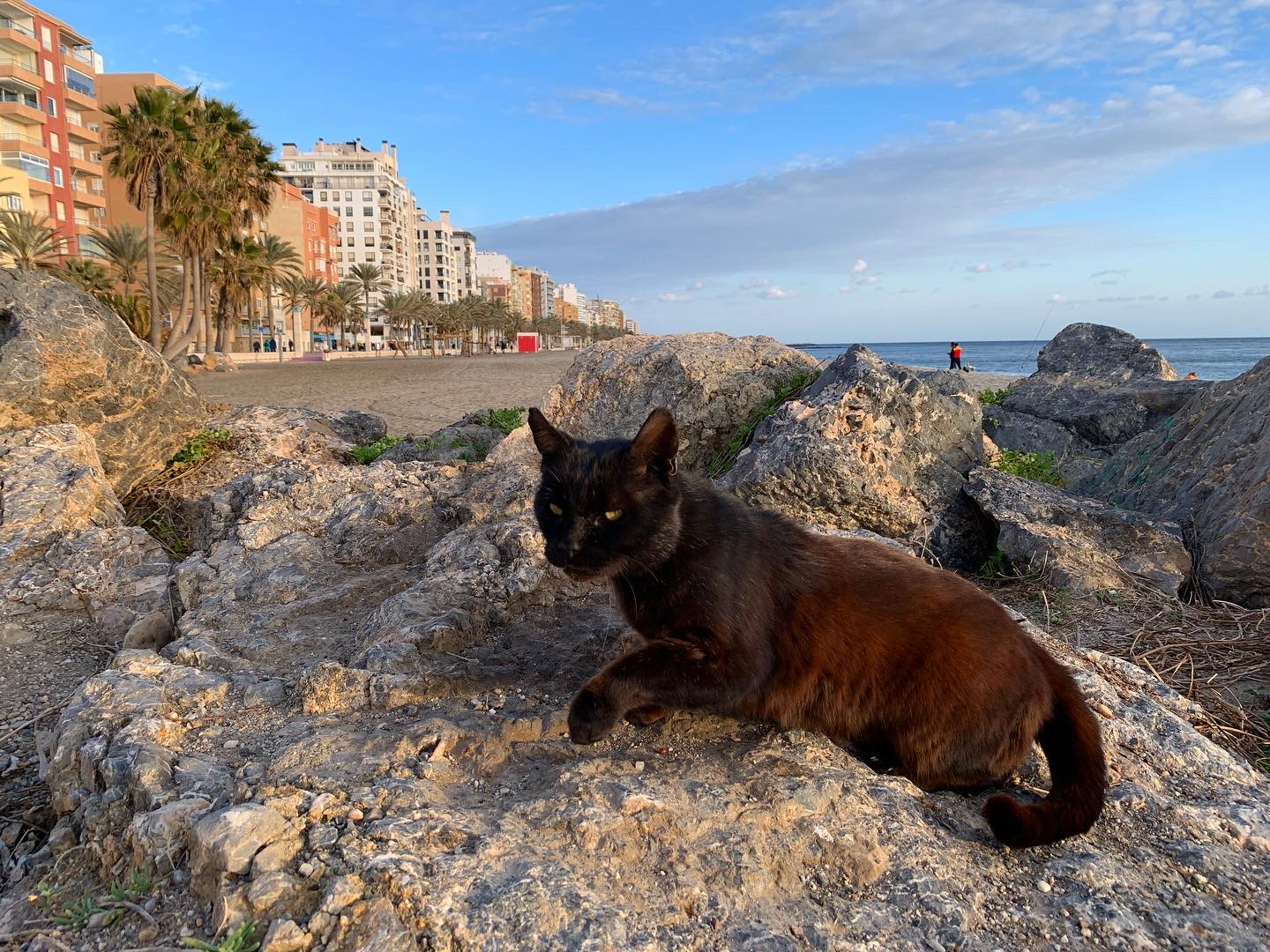
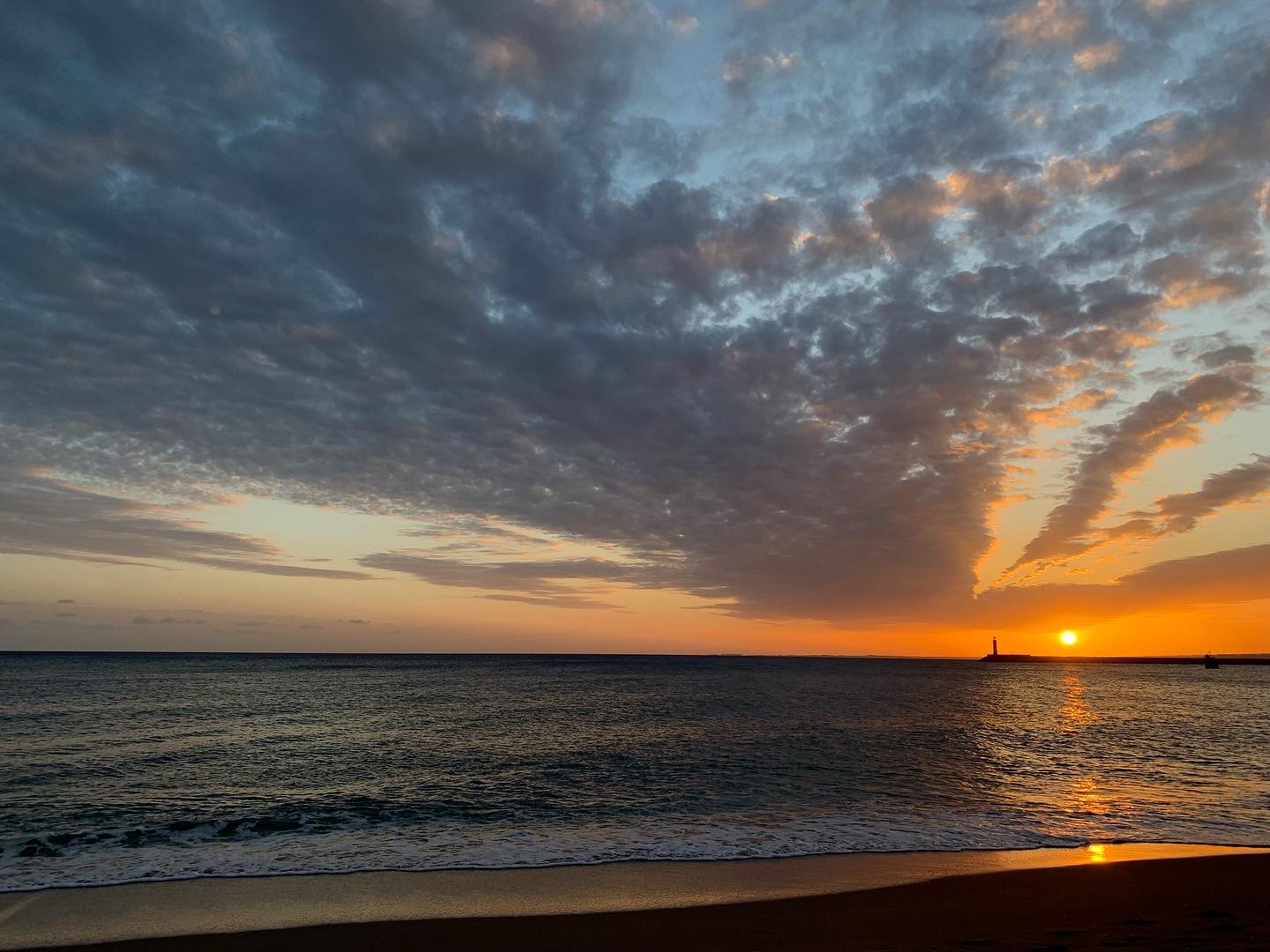
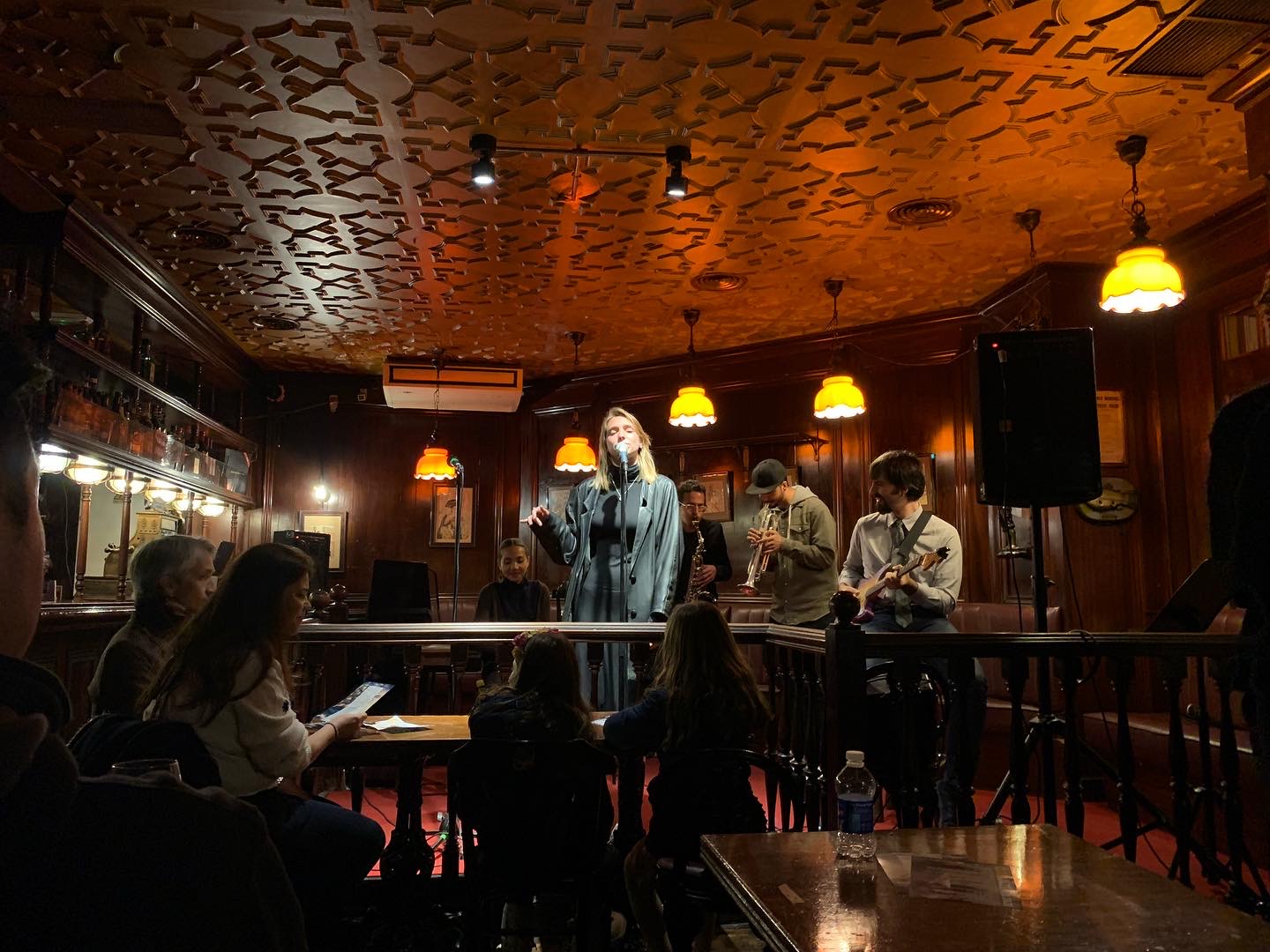
I have not quite decided on what to do with my evening but I already know I will make the 20-minute walk to the beach where horse-cat will greet me with its hoarse meow and the sun will take its time to set, like an overdramatic actor exaggerating their exit scene. When it is finally dark and the streets slowly fill up with expectations, I will make my journey back, past the Moroccan teahouses on quaint alleys, past the jazz bar mounted with a Big Mouth Billy Bass, past gossiping neighbours seated on big plastic chairs. I will open the front door to the smell of homemade tortillas and watch a horror movie over vermouth and crunchy noises. I will remember that notions of home are like sea tides, cascading layers of waters gently beating the sand into formlessness.


 Chan Wai Charles Wong